Choose fewer tools around a small garden’s real tasks
Use a task map and existing-kit inventory to prioritise purchases for a compact outdoor space.
Updated:
Map the surfaces before making a list
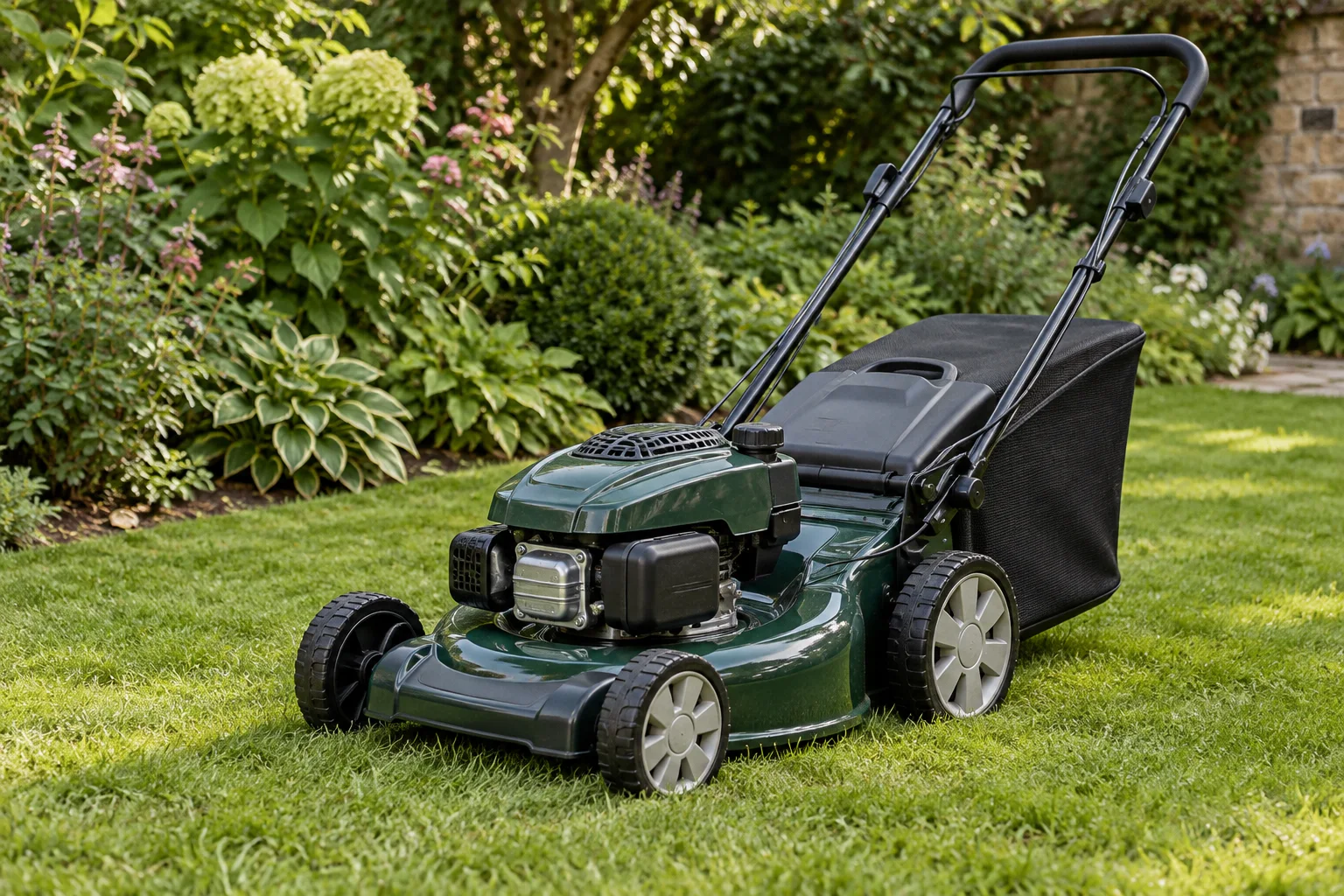
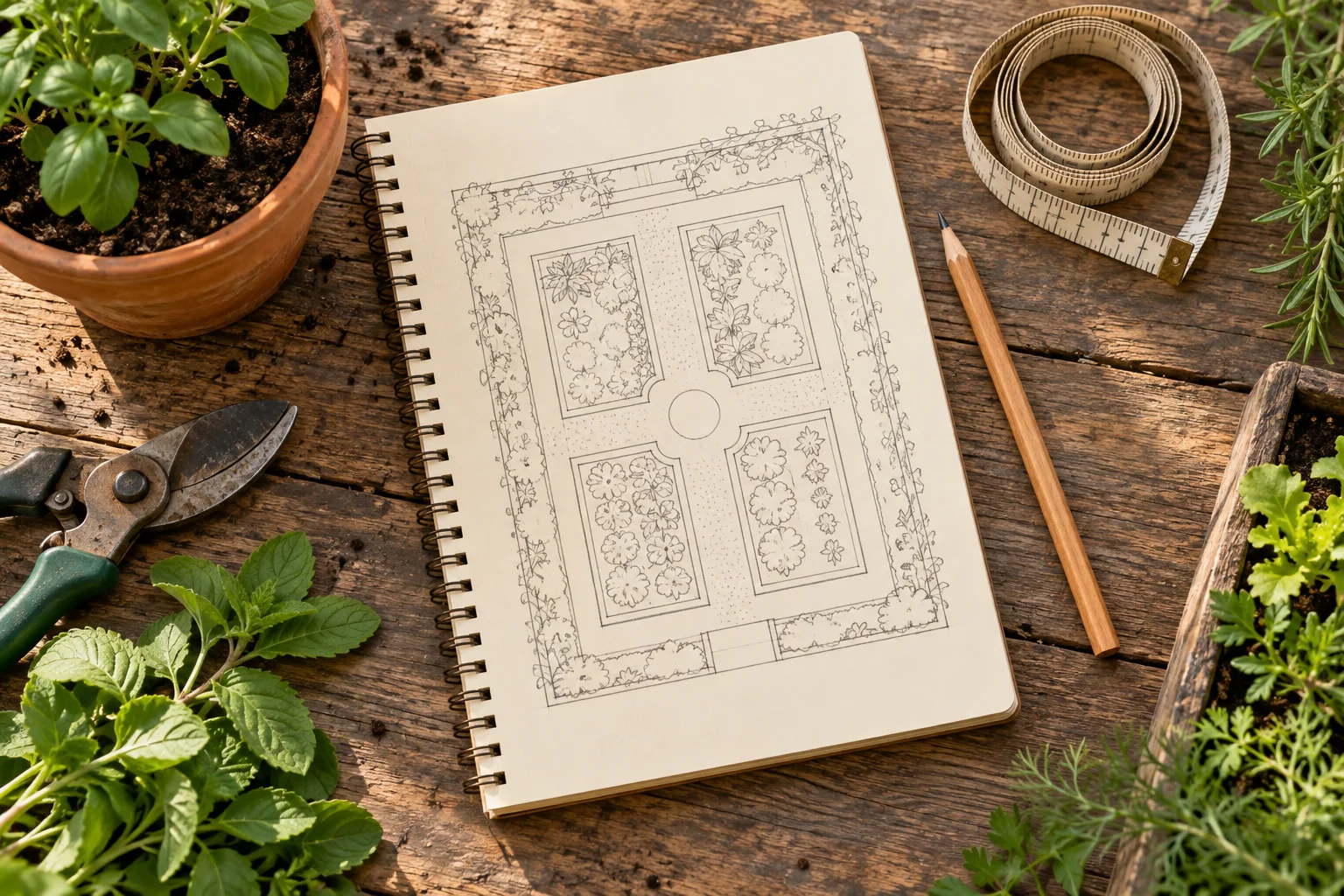
Measure or sketch the lawn, paths, containers and planted areas separately. The RHS mowing guide notes that hand-push mowers can suit smaller areas, while also recognising the extra effort they can involve over larger spaces. That is a starting point for considering fit, not a rule that every compact garden requires the same mower.
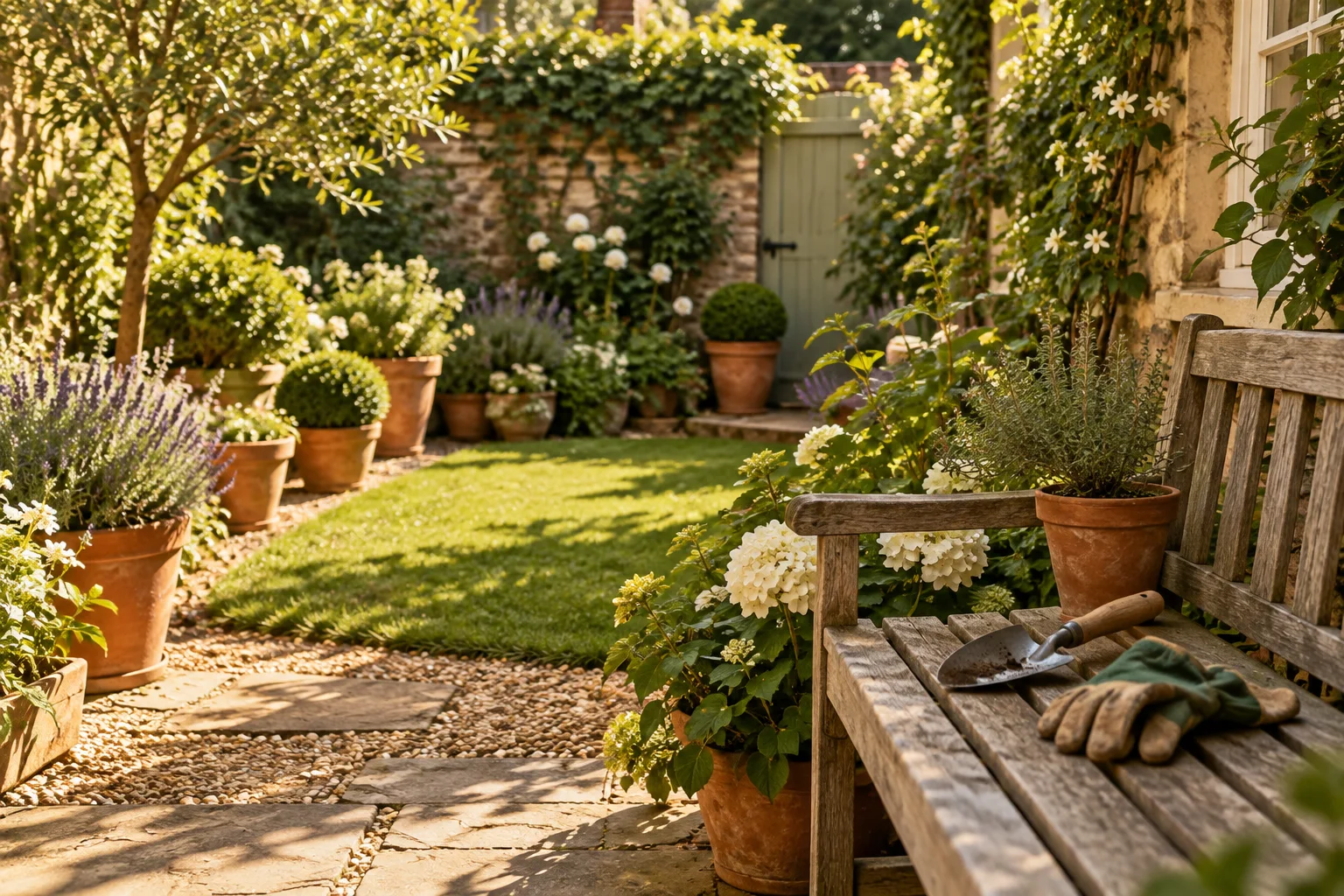
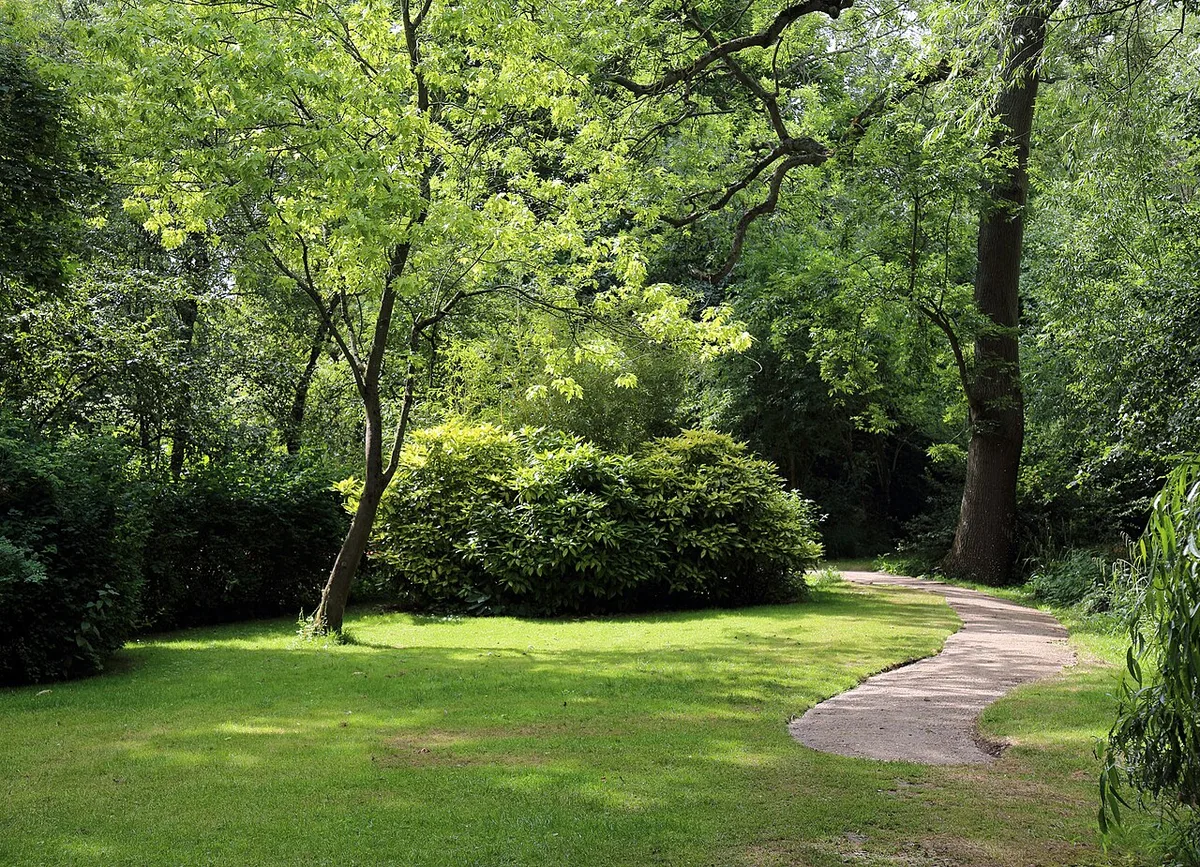
The garden photograph shows a curved path beside grass and planting. A small space can contain several distinct tasks even when the total area is modest. Write down the work you actually intend to undertake and the access available, rather than treating small garden as a complete specification for a tool collection.
Distinguish regular work from occasional work
Create separate lists for recurring tasks and occasional projects. A tool used for a planned annual change may need a different purchase decision from one used frequently. This guide does not assume a universal mowing or pruning calendar, because the plants, weather and intended finish influence what is needed.
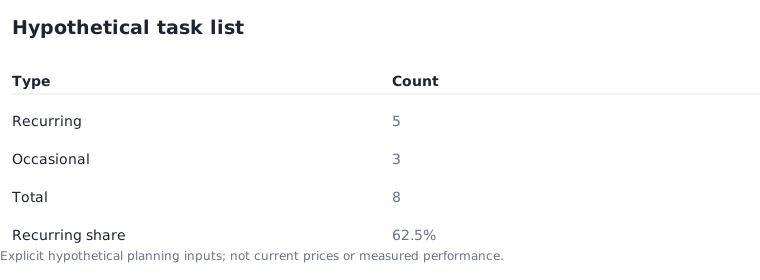
For a hypothetical task list with eight entries, suppose five recur and three are occasional. The recurring share is 62.5%. That arithmetic helps organise the list but does not justify spending 62.5% of the budget on it. Frequency is only one factor alongside suitability, access, handling and the equipment already available.
Check whether a hand tool suits the actual plant
The RHS hedge guidance distinguishes tool choices according to hedge size and growth, including different approaches for large-leaved evergreen plants. Do not buy secateurs solely because they look compact, or assume a powered hedge tool is needed because a boundary contains shrubs. Identify the task and check appropriate plant guidance first.
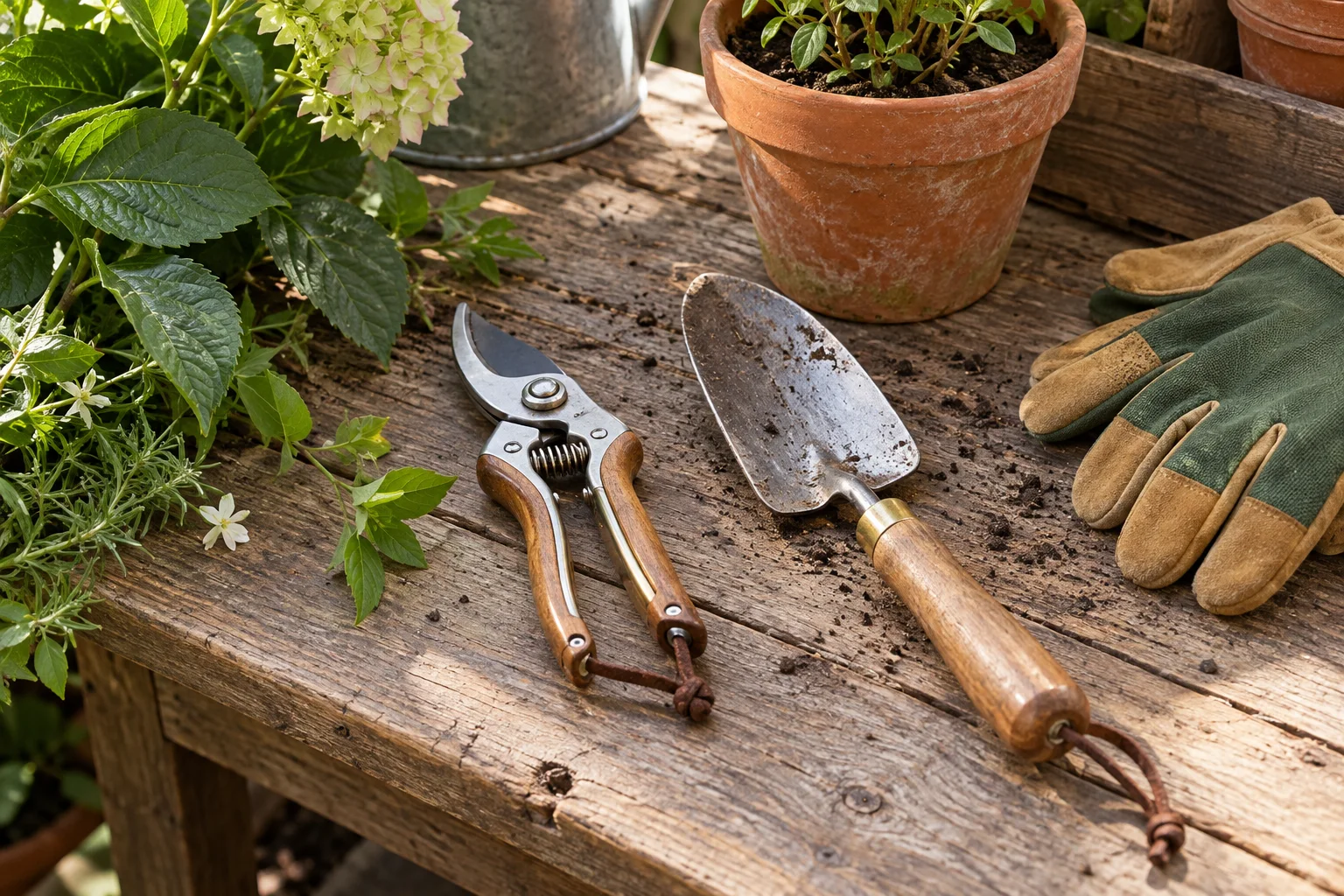
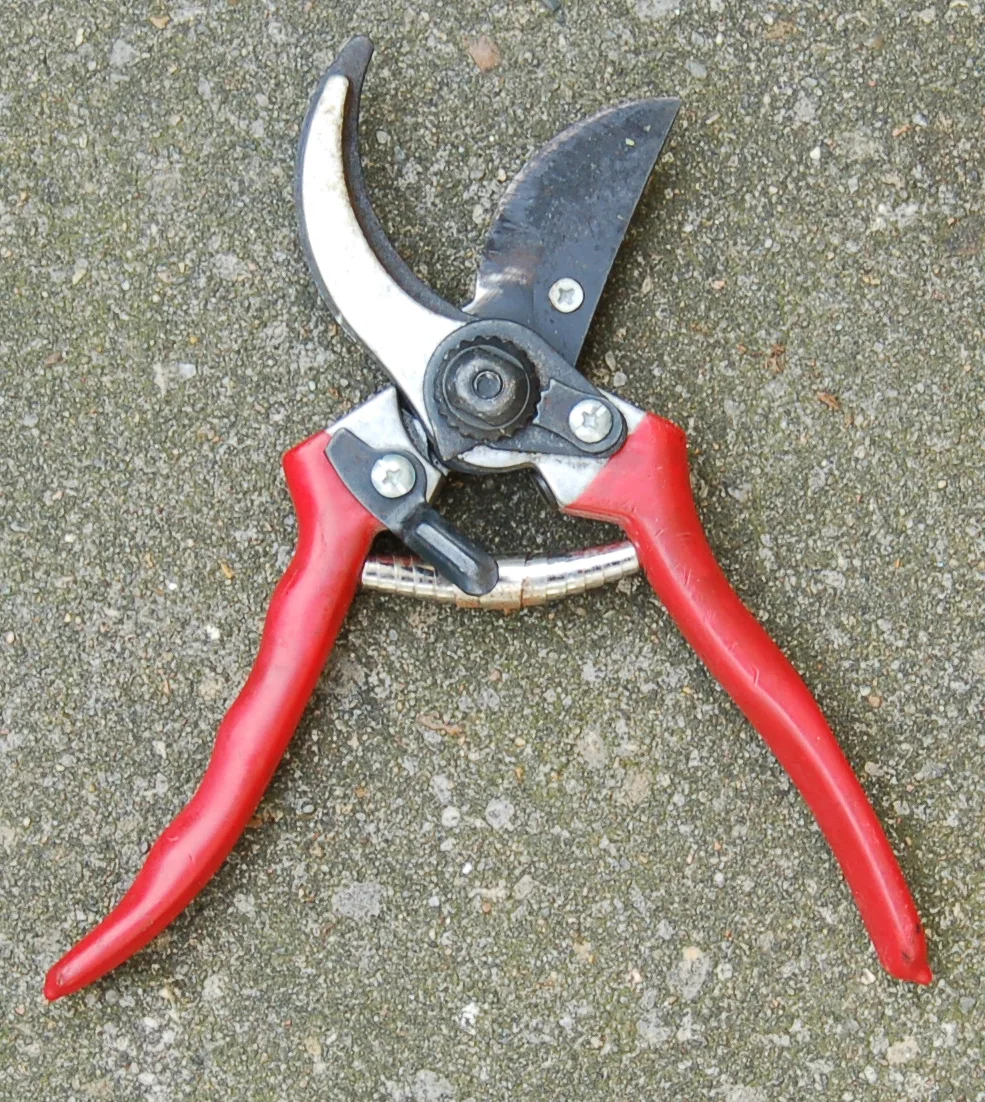
The secateurs photograph illustrates one hand-tool form rather than a universal pruning solution. If the intended work requires knowledge or access you do not have, seek suitable help before buying equipment. Choosing a smaller tool does not remove the need to understand what is being cut and whether the work is appropriate.
RHS: choosing tools and planning hedge trimming ?
Inventory what can already do the job
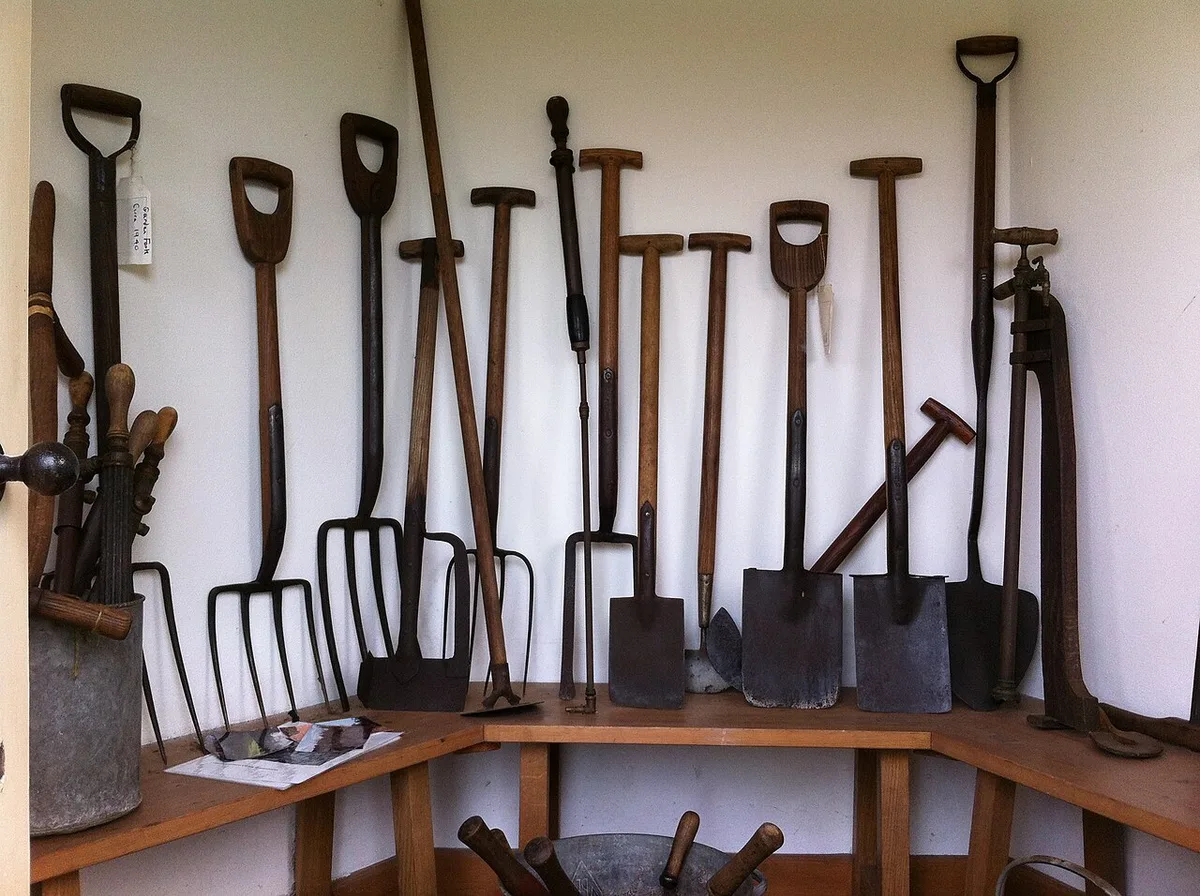
The historical hand-tool display shows how many different forms can exist in a collection. Check your own tools for identity, condition and suitability rather than buying a new set simply because it is sold together. The RHS recommends cleaning hand tools after use and keeping them dry; include the space and care needed for any additions.
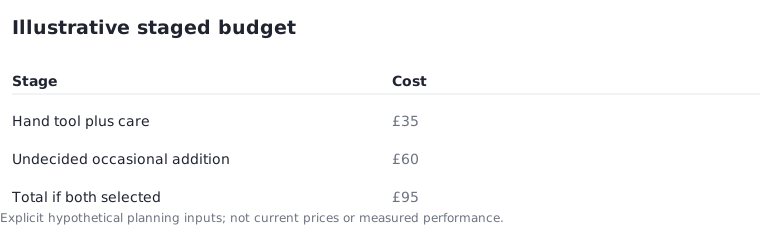
An illustrative first-stage budget might contain a £25 suitable hand tool and £10 care supplies, totalling £35. A separate £60 occasional-tool purchase could remain undecided, making the complete proposed list £95 if later chosen. These are invented amounts, not current prices or a claim that the smaller purchase covers every garden.
Make each addition answer a named need
Before buying, write one sentence explaining the task the item will perform, where it will be stored and what official instructions or compatibility checks are required. If that sentence is vague, return to the task map. A product bundle can be convenient, but its contents should still be examined individually.
Review the plan after completing a few real sessions. Record tasks that remained awkward and whether the cause was missing equipment, access or a need for advice. The aim is a deliberate collection that fits the space and person using it, with room to change the plan as the garden develops rather than a fixed list presented as essential for everyone.