Measure the grass, not the whole garden
Separate lawn rectangles, paths and planted exclusions to build a useful area estimate for a mower shortlist.
Updated:
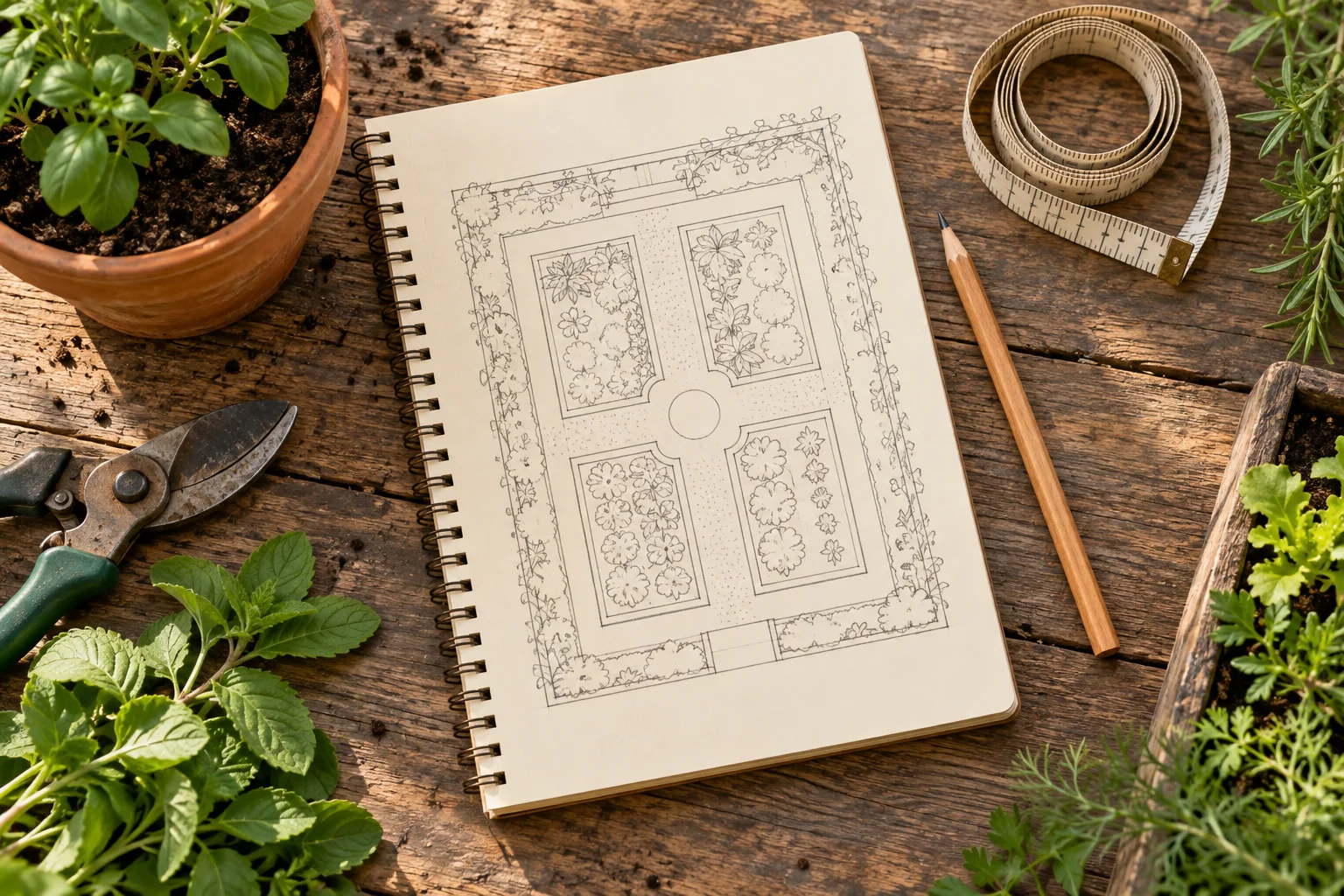
Draw the parts you intend to cut
Start with a sketch of the grass you actually plan to mow. Mark planted beds, paths, trees and any longer areas you intend to leave. The RHS explains that mowing routines depend on the style of lawn as well as weather and growth, so the whole garden boundary is not necessarily the right starting area.
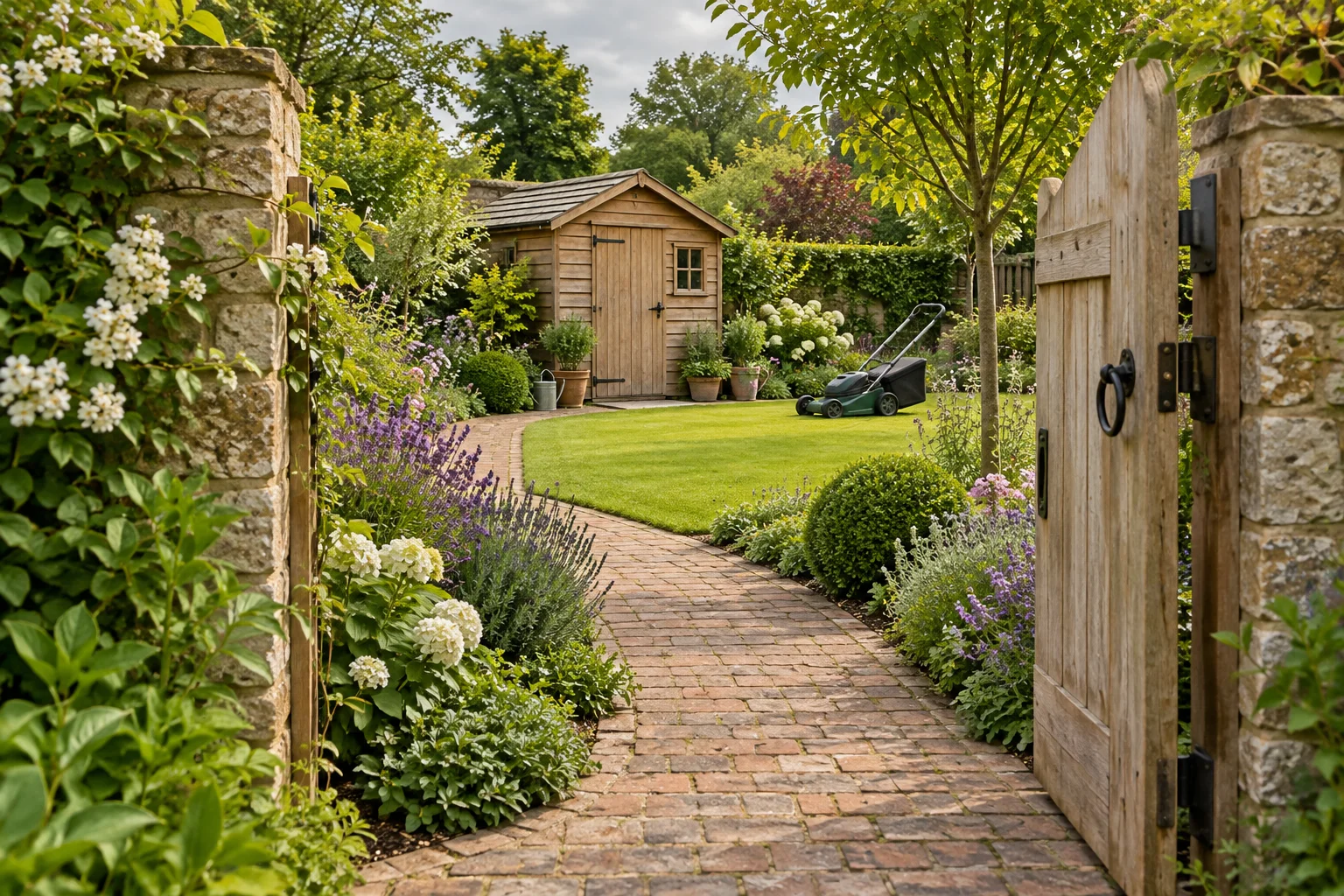
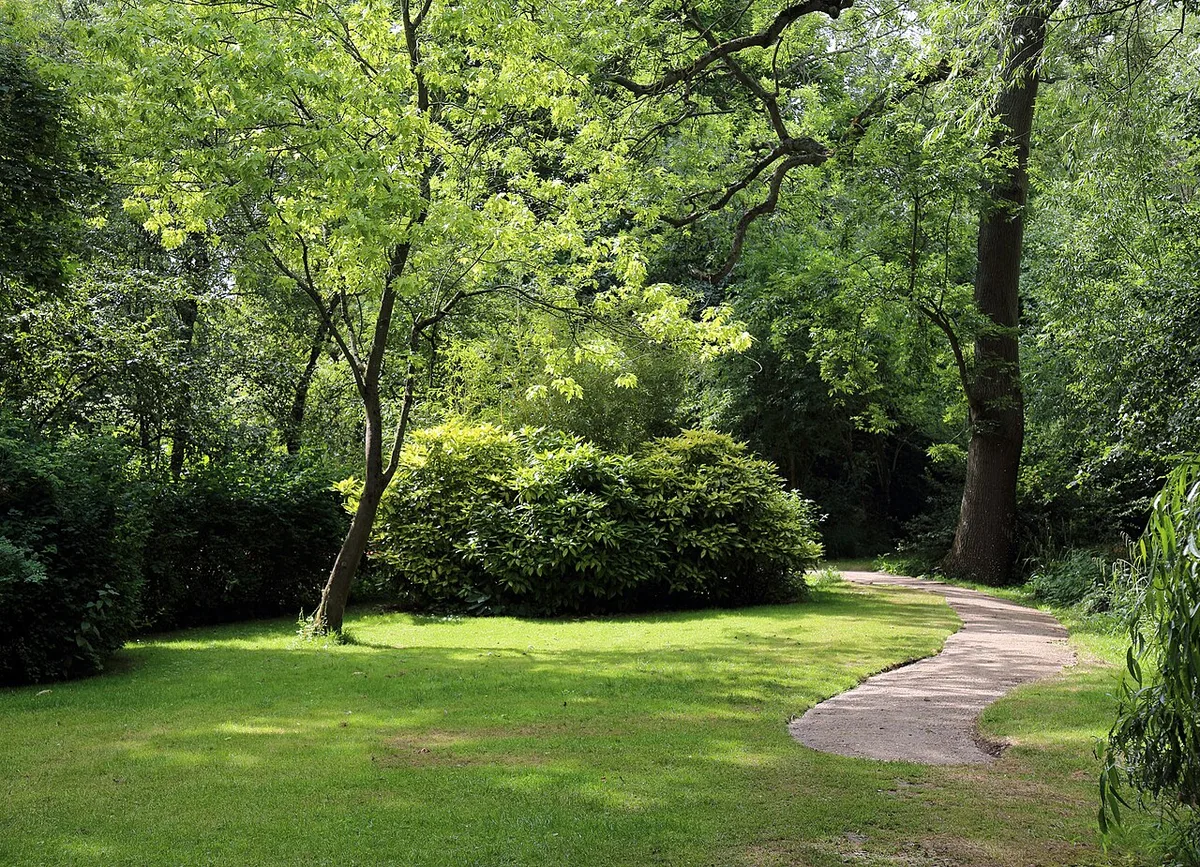
The Gibberd Garden photograph shows a curved path and planted borders beside the lawn. It is useful context for separating surfaces, but it contains no scale from which your own dimensions can be inferred. Walk the plot and label each measured section so that a later calculation can be traced back to a real place.
Use rectangles without counting twice
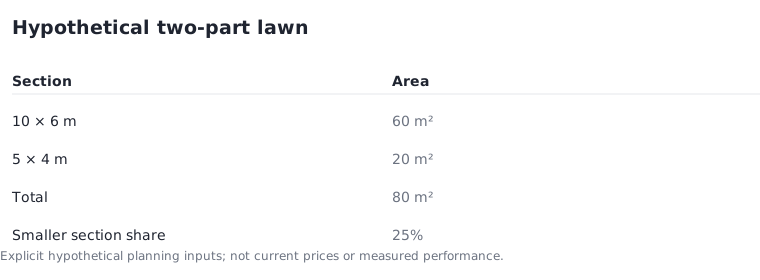
Assume one rectangular lawn section is 10 by 6 metres and another separate section is 5 by 4. Their areas are 60 and 20 square metres, giving 80 in total. The smaller section contributes 25% of that total. These are hypothetical dimensions chosen to show the arithmetic, not measurements of the photographed garden.
Make sure the sections do not overlap. If you use a large enclosing rectangle and subtract beds within it, do not also subtract the same beds from another section. Keep curves and awkward shapes marked as estimates. A useful sketch shows where uncertainty sits instead of hiding it behind a precise-looking total.
Record obstacles beside the area
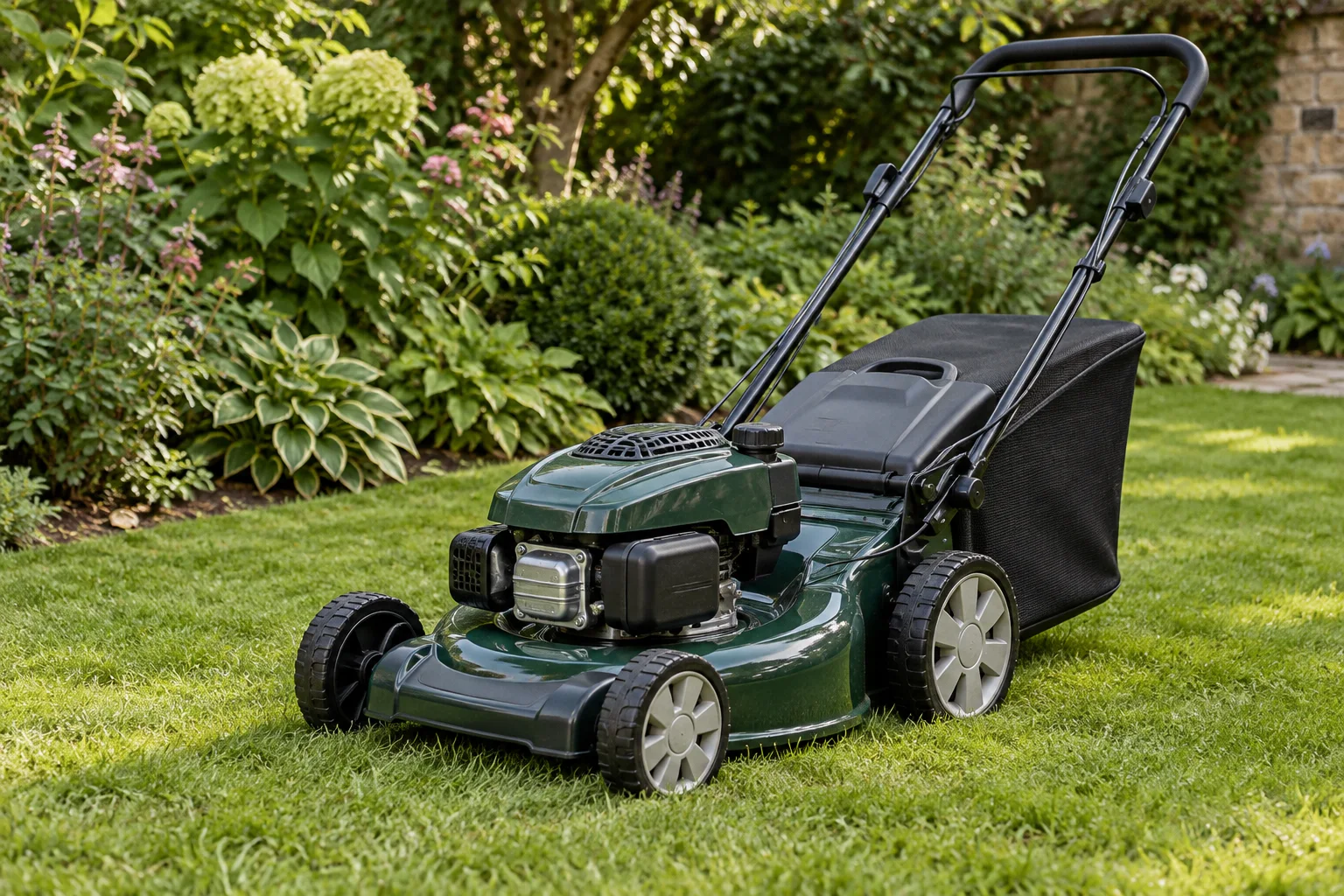
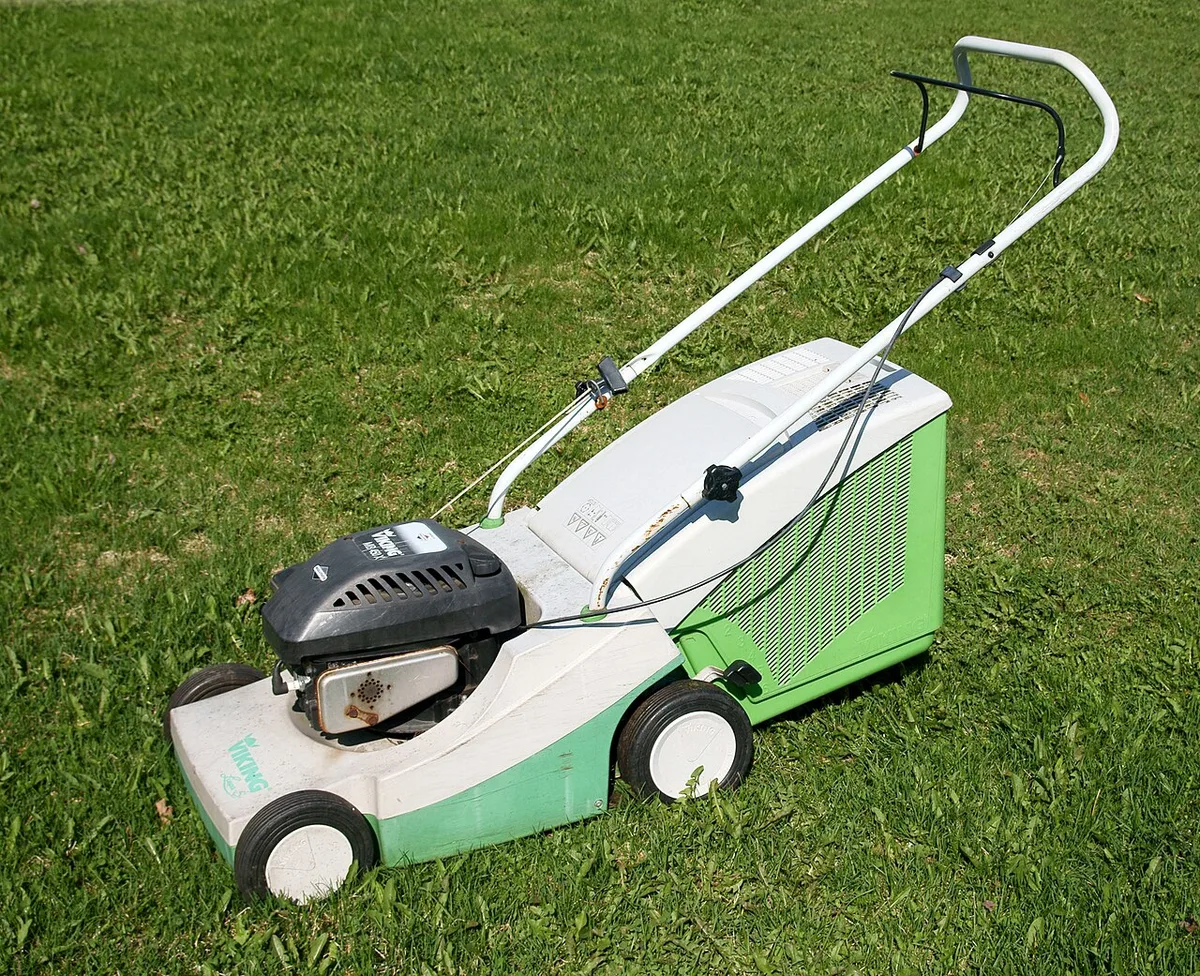
Two lawns with the same area can have different routes around trees, beds and narrow passages. Record those features separately rather than trying to squeeze them into a single number. The mower photograph shows the machine body and collection box, but its appearance cannot establish a suitable route through your plot.
Ask the supplier about the exact machine dimensions, intended terrain and model-specific limitations. Manufacturer coverage descriptions are tied to a particular product and conditions. The STIHL buying guide, for example, discusses lawn size alongside different models; it should not be read as proof that every mower in a broad category has identical capacity.
STIHL UK: lawn mower buying guide ?
Use the estimate to organise questions
Prepare one page containing the estimated area, narrowest access, slopes and storage position. This gives a retailer more useful information than a description such as medium garden. Leave any uncertain measurement visible and ask whether a site assessment is needed for the equipment being considered.
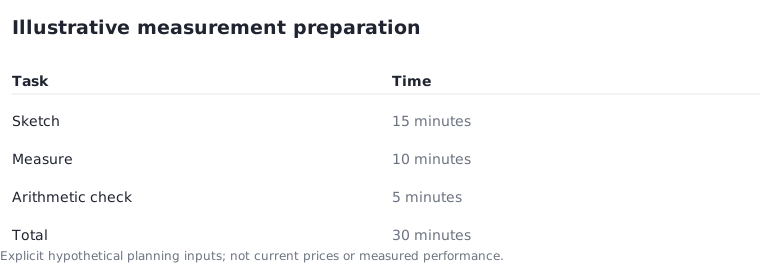
For an illustrative preparation plan, allow 15 minutes for the sketch, 10 for measurements and 5 for checking the arithmetic: 30 minutes total. These are assumed administrative timings, not a guarantee that every plot can be measured in half an hour. Larger or complex gardens may need a different approach.
Update the plan when the garden changes
Keep the sketch with the equipment record so it can be revised after adding a bed, path or new grass area. A change in the mowable rectangle may also change the number of edges or awkward corners, so update the notes as well as the total.
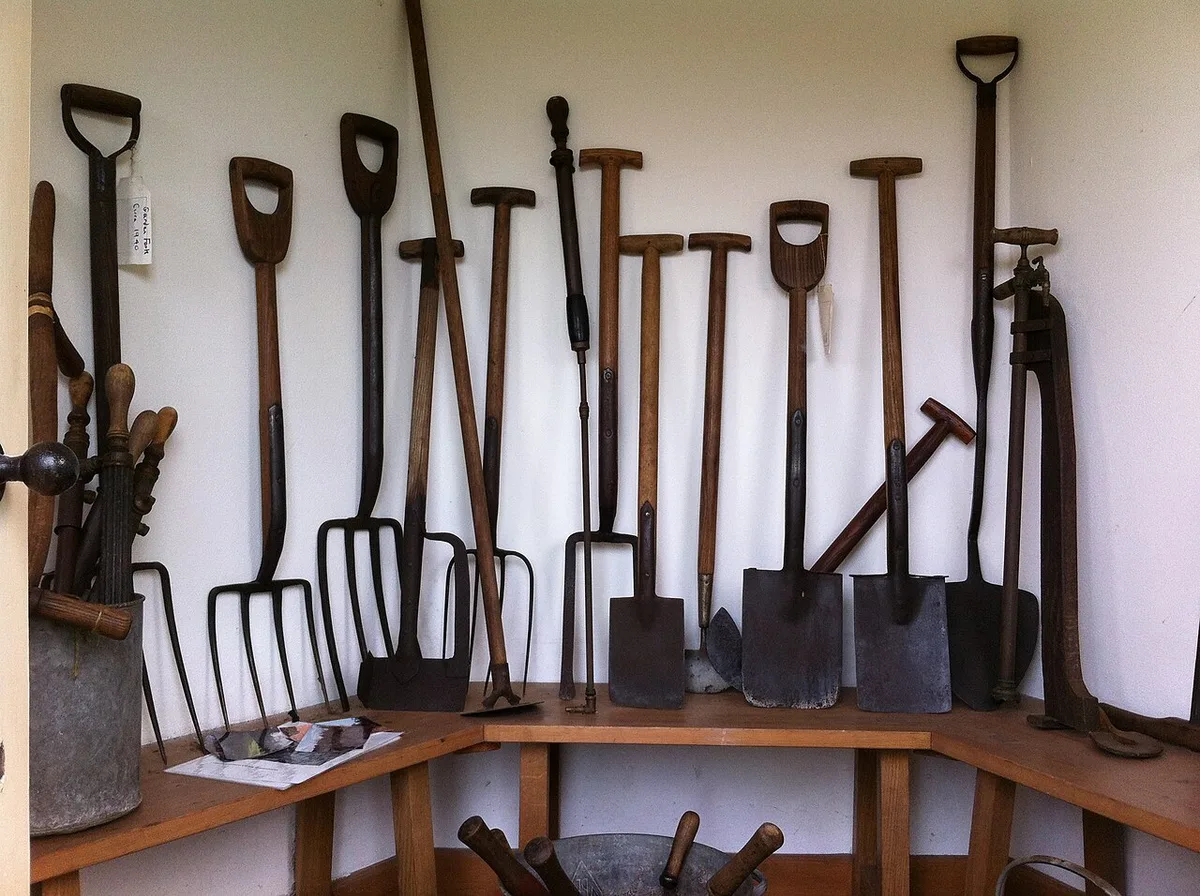
The historical hand-tool display illustrates how many distinct garden tasks can sit outside mowing. Do not use lawn area to justify every item in a tool kit. The useful result is a transparent estimate of the grass to be cut, plus a separate description of access and upkeep that can guide a more specific conversation.