Check how secateurs fit the task and your hand
Read size, handedness, intended use and maintenance details before treating a familiar shape as a suitable choice.
Updated:
Read the size and handedness information
A pair of secateurs should be checked as a specific model, not selected only by colour or brand recognition. FELCO's gardening range distinguishes sizes and handedness in its product descriptions. That is useful evidence that those details deserve attention; it is not a recommendation for a particular model or a claim that a size label guarantees comfort.
Read the maker's sizing guidance and ask for an appropriate demonstration if needed. Keep your own observations separate from the specification. This guide does not assess medical conditions or promise reduced strain. The relevant question is whether you can use the intended tool appropriately for the task under its instructions.
Match the intended use before comparing feel
Describe the material and type of pruning you plan to do, then check the exact tool's stated purpose and limits. Do not assume that a comfortable handle makes a tool suitable for every stem or that a larger-looking blade removes the need to read the specification.
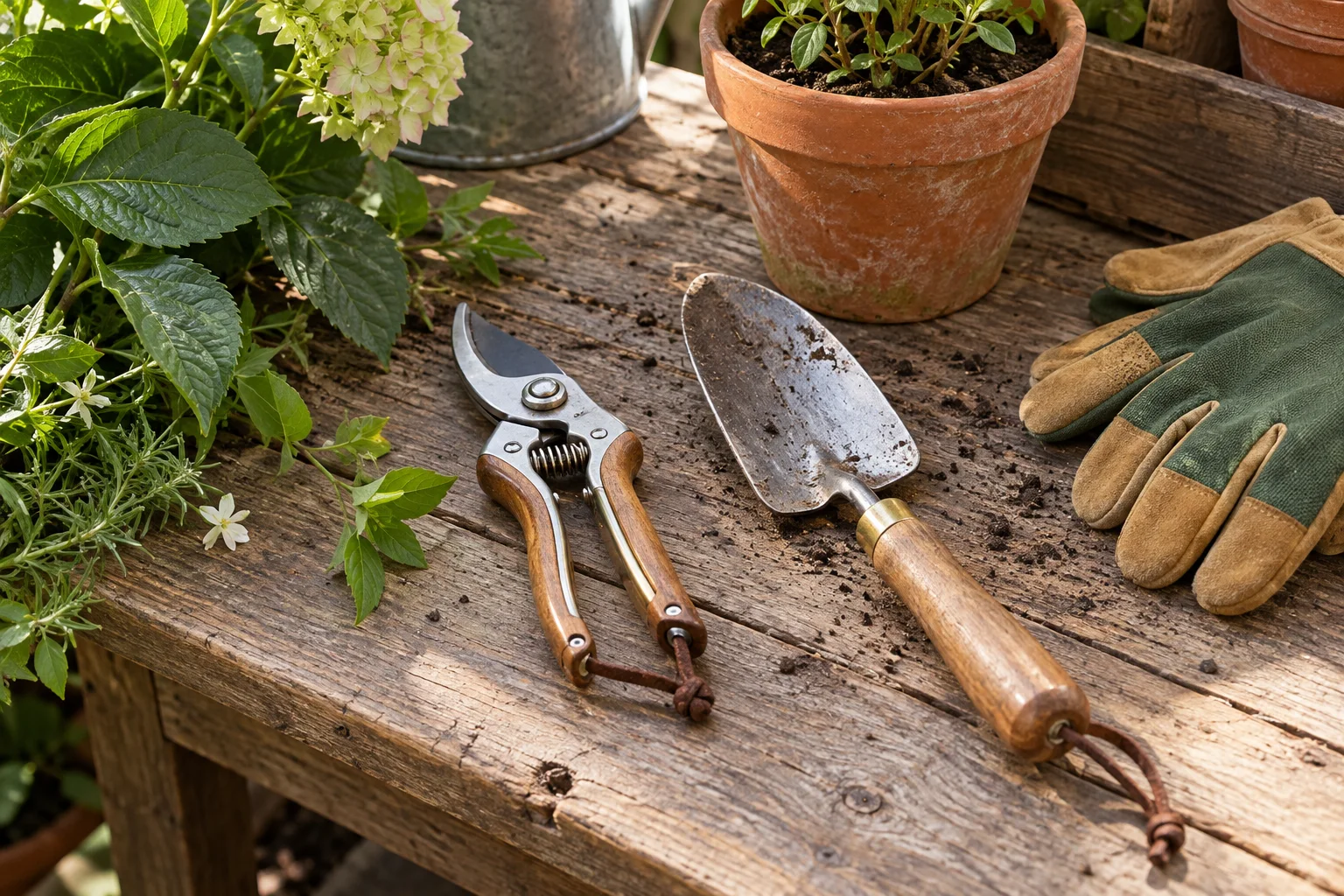
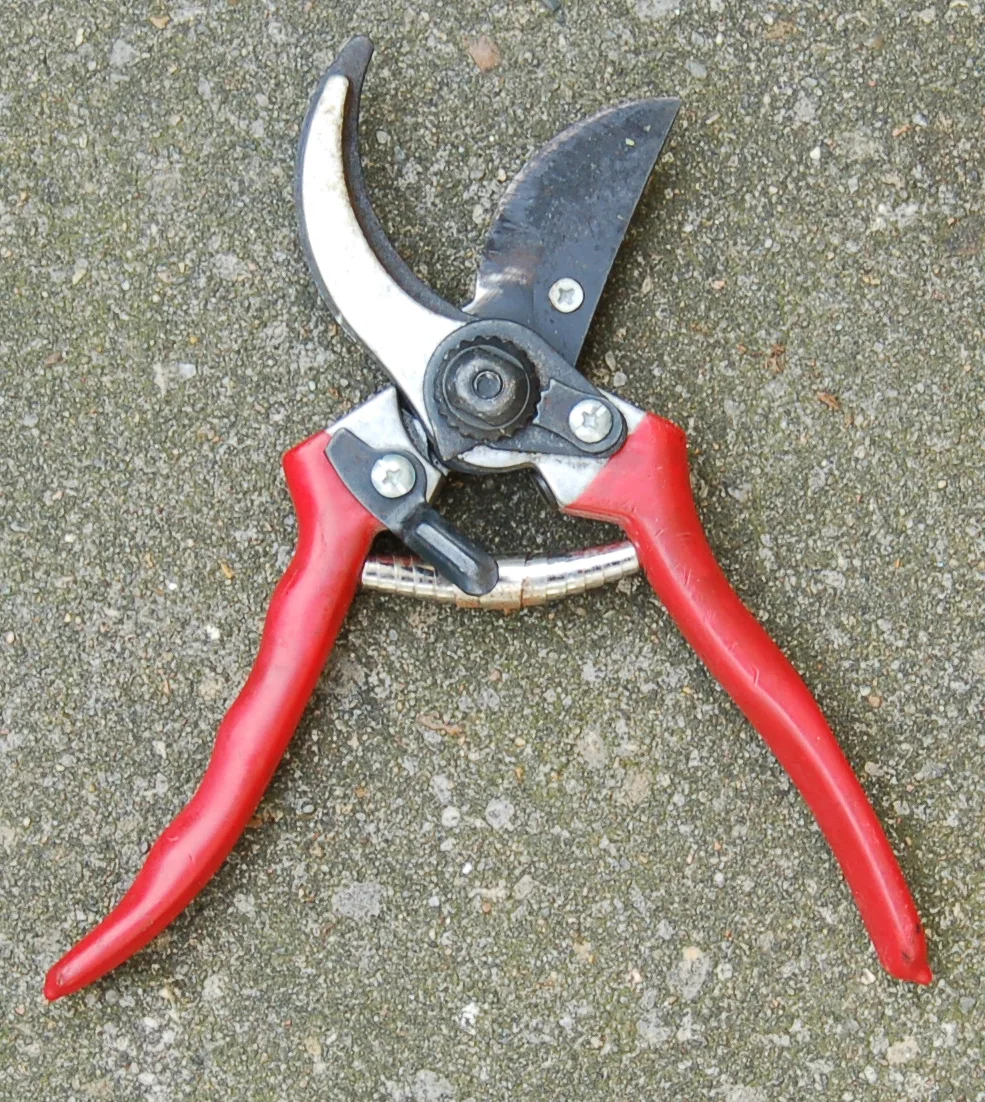
The historical secateurs photograph shows the blades, pivot and handles clearly, but it contains no measurement of cutting capacity or evidence of current condition. It is not an operating demonstration. Use the actual product documentation to settle the intended task, and avoid forcing a cut that exceeds the maker's limits.
Check maintenance access and replacement information
The RHS sharpening guide notes that not all secateurs can be dismantled. Before buying, find out what maintenance the exact model permits and whether the instructions are available. Do not take a tool apart because a different model in a tutorial uses a similar-looking central bolt.
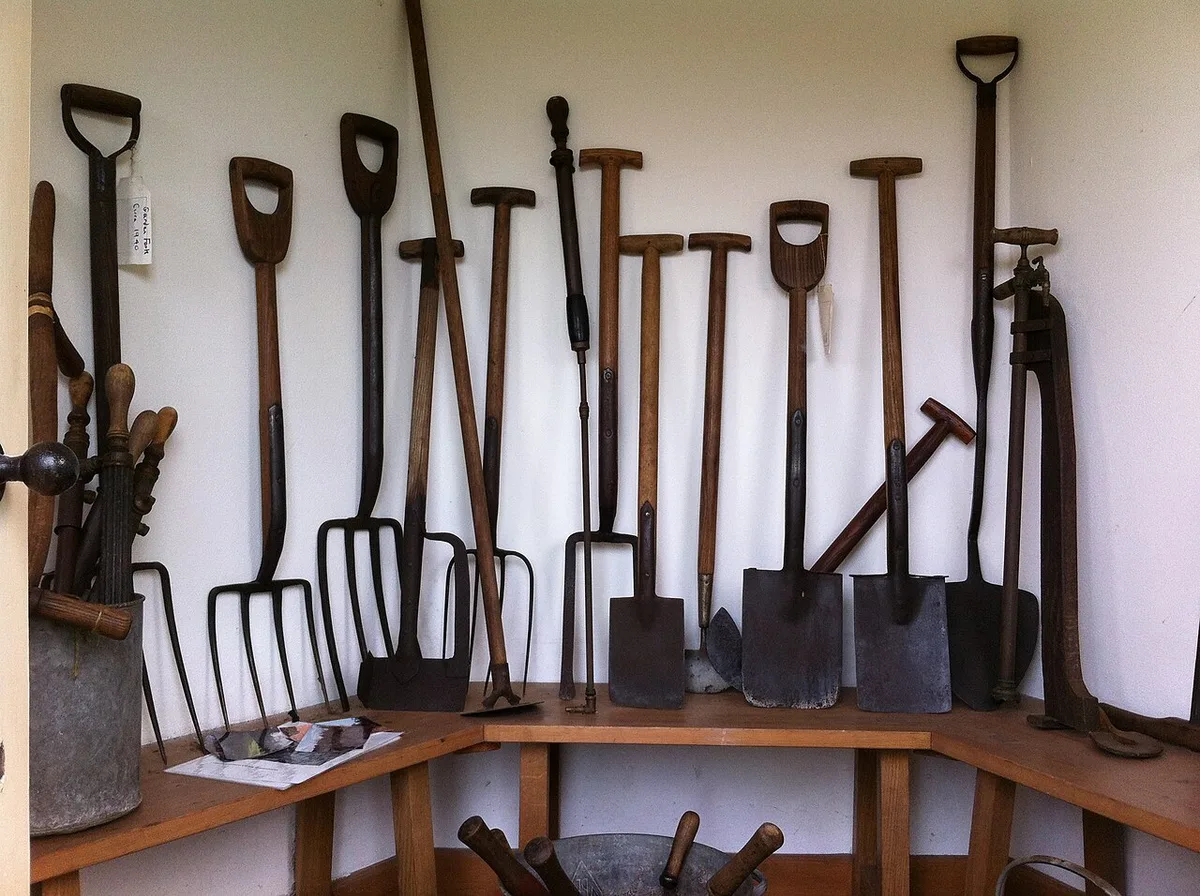
Record the approved replacement-part references where supplied. A product being described as repairable does not mean every repair is suitable for every owner. Ask the supplier about servicing if the required work is beyond your skills or equipment. The historical hand-tool display illustrates variety, rather than a common maintenance procedure for everything in the shed.
Compare the usable purchase
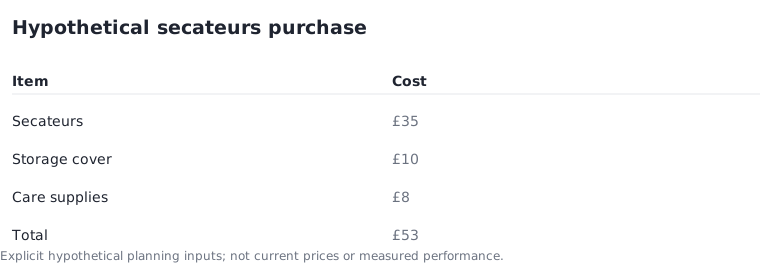
Suppose a pair of suitable secateurs costs an assumed £35, a compatible storage cover £10 and care supplies £8. The starting total is £53. If the cover is already included, the same assumed purchase is £43. These are invented planning amounts, not current offers or a requirement to buy every listed accessory.
Check what the package contains and keep optional extras separate. A lower tool-only price should not be compared with a complete package without noting the difference. Include maintenance access and the availability of instructions in the decision, rather than allowing a small price gap to hide a poor fit with your task.
Keep a simple ownership record
Save the model name, sizing description, manual and purchase details together. The RHS recommends cleaning hand tools after use and storing them dry. Follow the exact product instructions for cleaning, lubrication, locking and storage rather than inferring a method from the photograph.
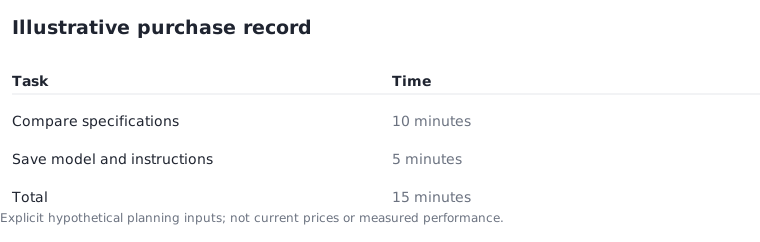
Allow an illustrative 10 minutes to compare specifications and 5 to record the chosen model and instructions: 15 minutes of preparation. This is an administrative example, not a prescribed time for assessing personal fit. The useful outcome is a tool whose purpose, handling and care are understood before it becomes part of the regular garden routine.