Check the route from shed to lawn
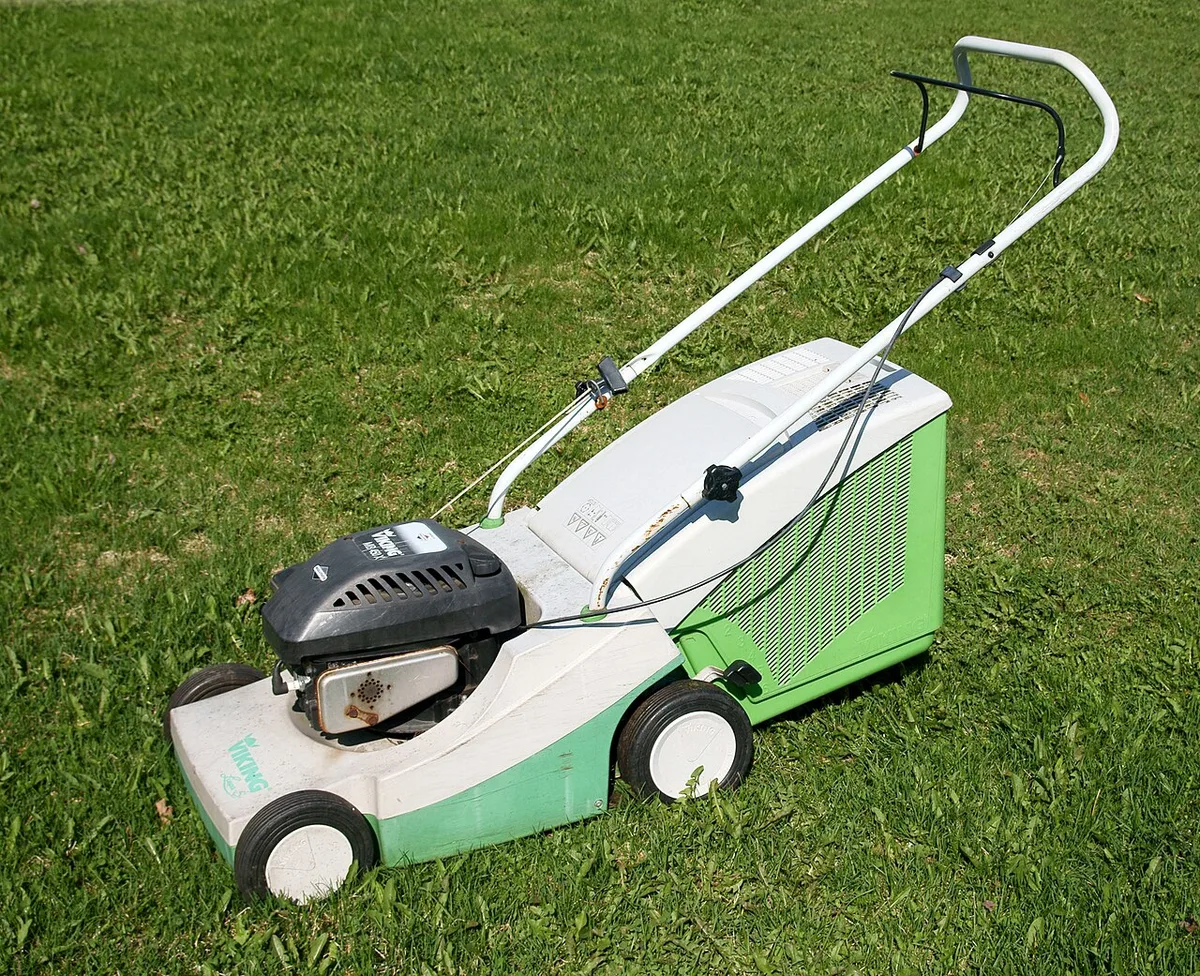
Measure gates, corners and storage space using the full mower dimensions rather than the cutting width.
Updated:
Measure the narrowest opening
Write down the clear opening through each gate or doorway on the route to the lawn. Measure the space the machine must actually pass through, including any fixed projection. Keep these measurements separate from the lawn area and the mower's cutting width.
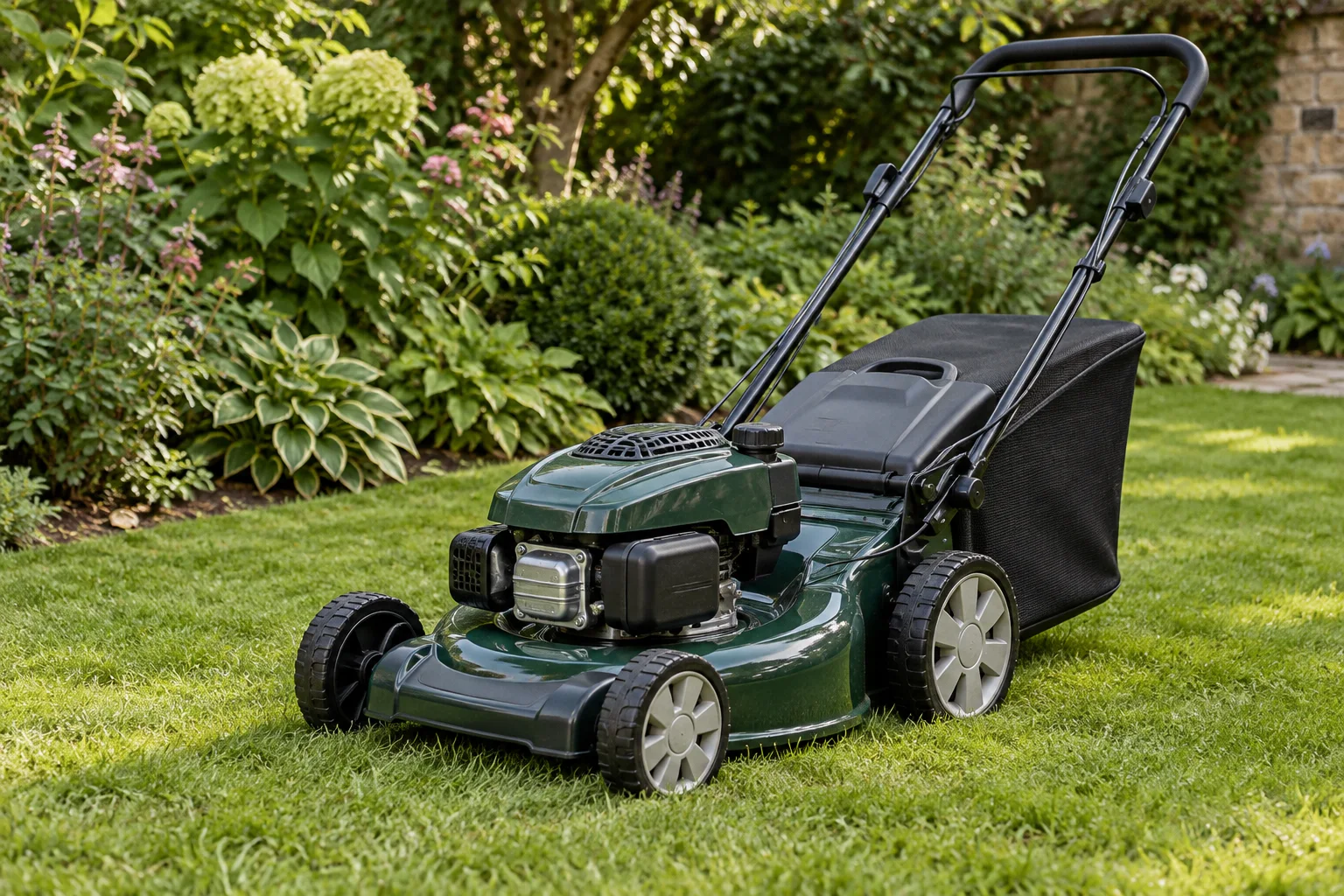
STIHL's buying guide lists cutting widths for individual models, but that specification alone does not describe the entire body. Obtain the outer dimensions of the exact mower from its product documentation or seller. A familiar deck size is not enough to settle whether the machine, handles and collection arrangement can pass through your route.
STIHL UK: lawn mower buying guide ?
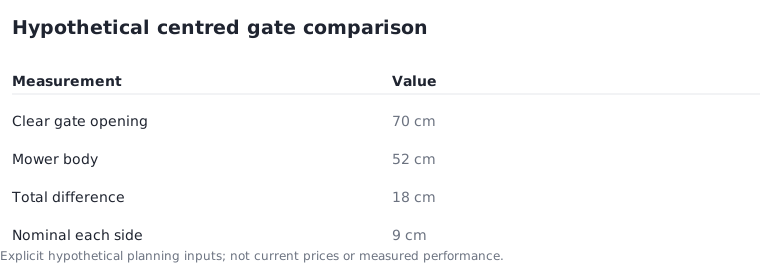
Compare a hypothetical gate
Assume a gate has a clear opening of 70 centimetres and a mower body is 52 centimetres wide. The arithmetic difference is 18 centimetres, or 9 on each side if the body is perfectly centred. The mower uses about 74% of the opening width. These are invented planning dimensions, not a recommended clearance standard.
The calculation ignores angle, handles, hinges, uneven ground and the person moving the machine. Check the actual route and the configuration allowed by the manual. A positive difference on paper does not certify safe access or prove that the mower can negotiate a turn immediately beyond the gate.
Look at the turn after the opening
Sketch the approach and exit as well as the opening itself. A narrow path followed by a right-angle turn may create a different problem from a straight passage of the same width. Include fixed planters, steps and the place where a door rests when open.
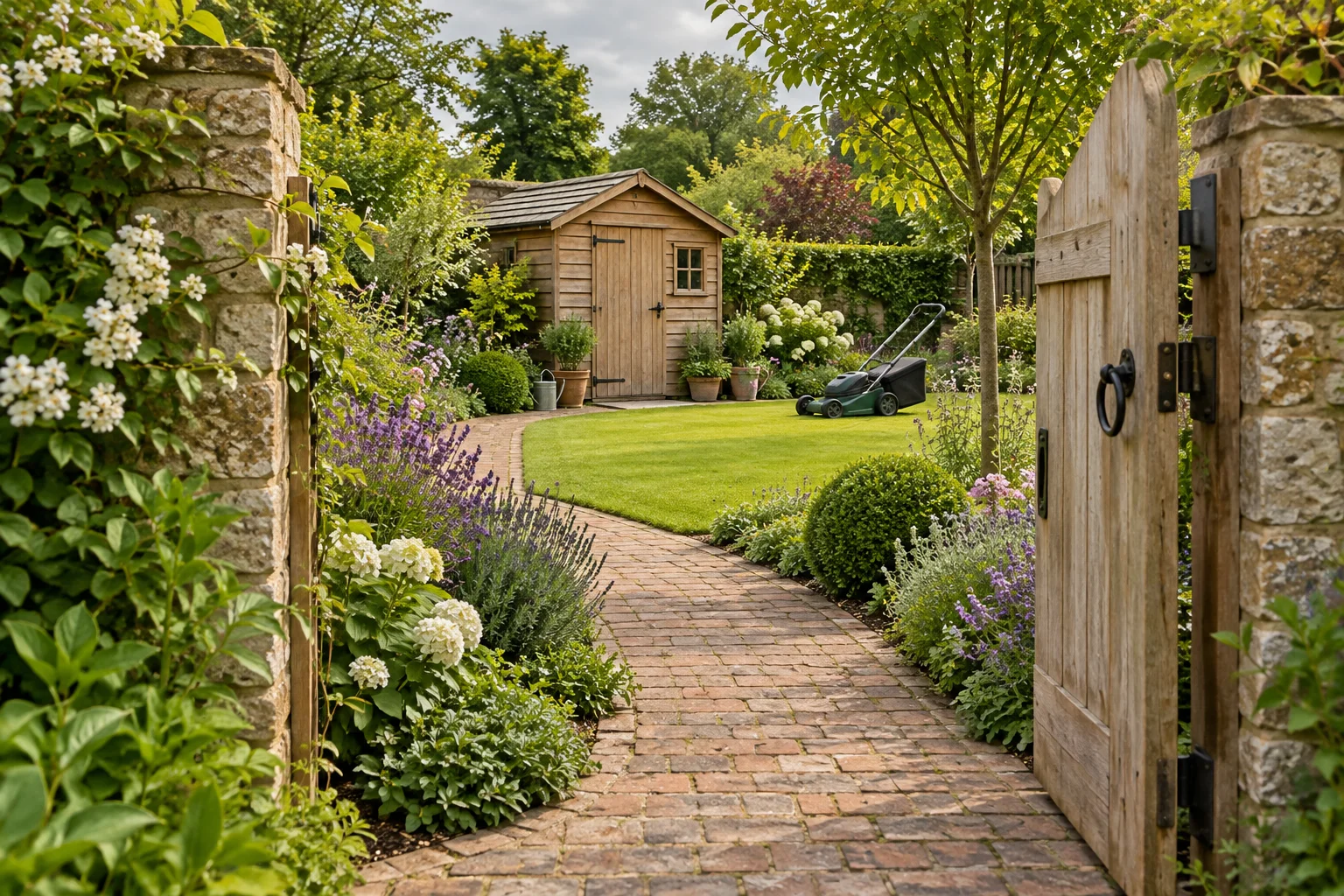
The real garden photograph shows a curved path beside the lawn, illustrating why access is more than a single dimension. It is not a scale drawing or a recommended mower route. If the movement is uncertain, ask the supplier for a suitable assessment rather than planning to force, lift or dismantle the machine in an unapproved way.

Allow space for retrieval and care
Measure the storage footprint with the handle and accessories in the configuration specified by the manufacturer. Check whether the collection box is stored attached or separately and whether the machine can be retrieved without moving unrelated heavy items. Keep battery storage and charging instructions separate from the dimensions of the mower body.
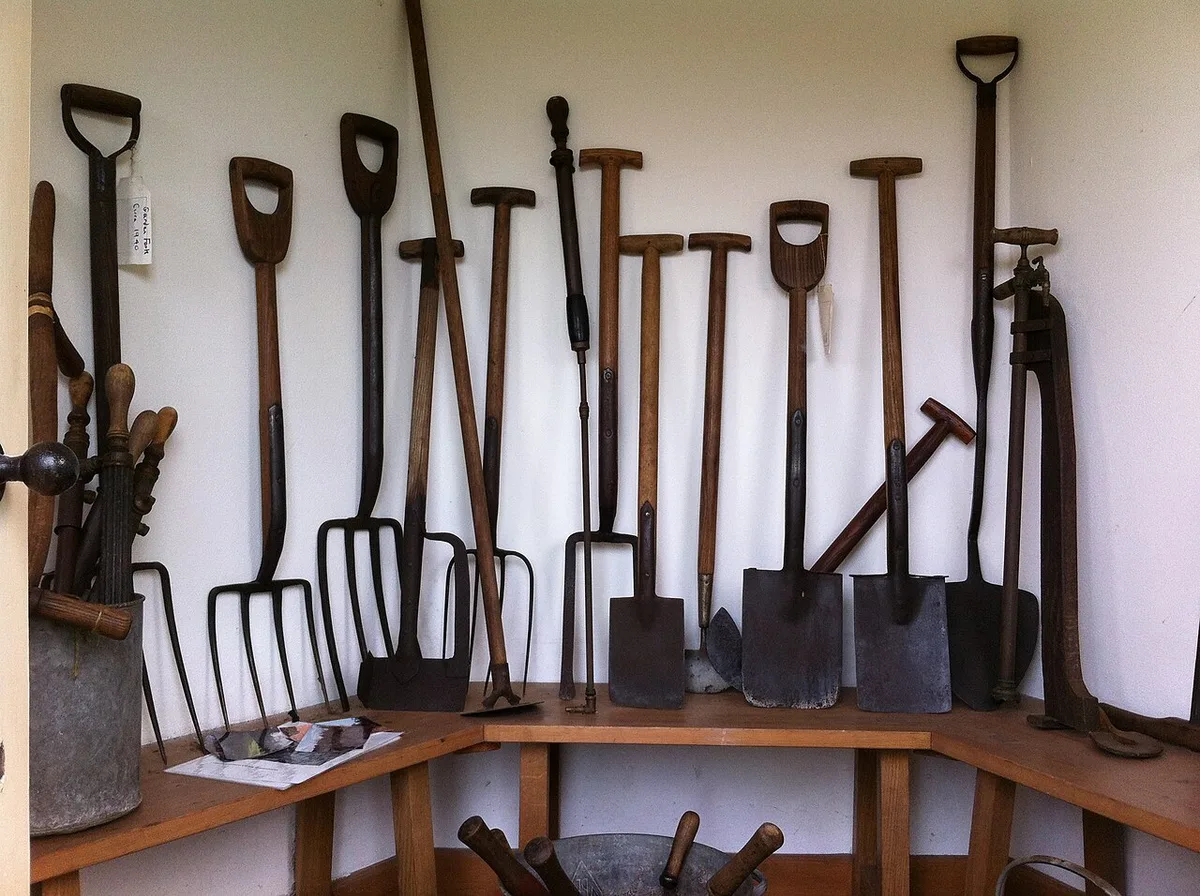
The RHS recommends dry storage for hand tools. That general point does not replace the particular storage instructions for powered equipment, fuels or batteries. The historical hand-tool display shows objects arranged indoors, but it is a museum display rather than a tested storage design for a modern shed.
Budget for the practical consequences
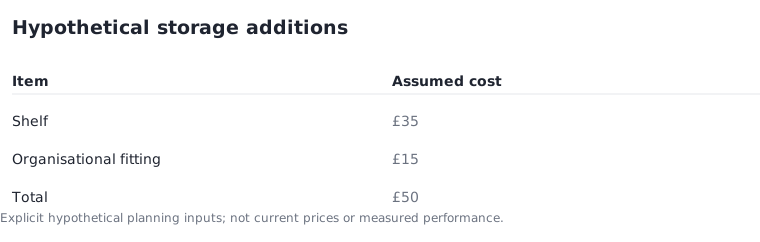
Suppose a suitable storage shelf costs an assumed £35 and a necessary organisational fitting costs £15. The extra allocation is £50. These invented figures show how access and storage decisions can affect a complete budget; they are not quotations or instructions to modify a building or safety-critical fitting.
Confirm what is actually required before buying accessories. Save the route sketch, model dimensions and permitted storage configuration together. The useful outcome is a clear path between storage and work, with unresolved constraints addressed before delivery rather than hidden behind a mower's headline cutting width.