Build a garden task budget that includes the tidy-up
Turn your own task estimates into a practical total without inventing mower performance figures.
Updated:
Start with the tasks, not a promised speed
List the work you intend to complete: mowing, selected edges, hand-tool work and returning equipment to storage. The RHS says mowing frequency varies with growth, weather and lawn style. That makes a fixed weekly assumption a planning choice to revisit, rather than a fact that applies to every garden.
Use your own observations where possible and label estimates where you have no record. A manufacturer's stated cutting width does not by itself establish the total session time. Turns, access, collection and the finish you want can all belong in the task description without pretending that this guide has measured their effect.
Keep different activities visible
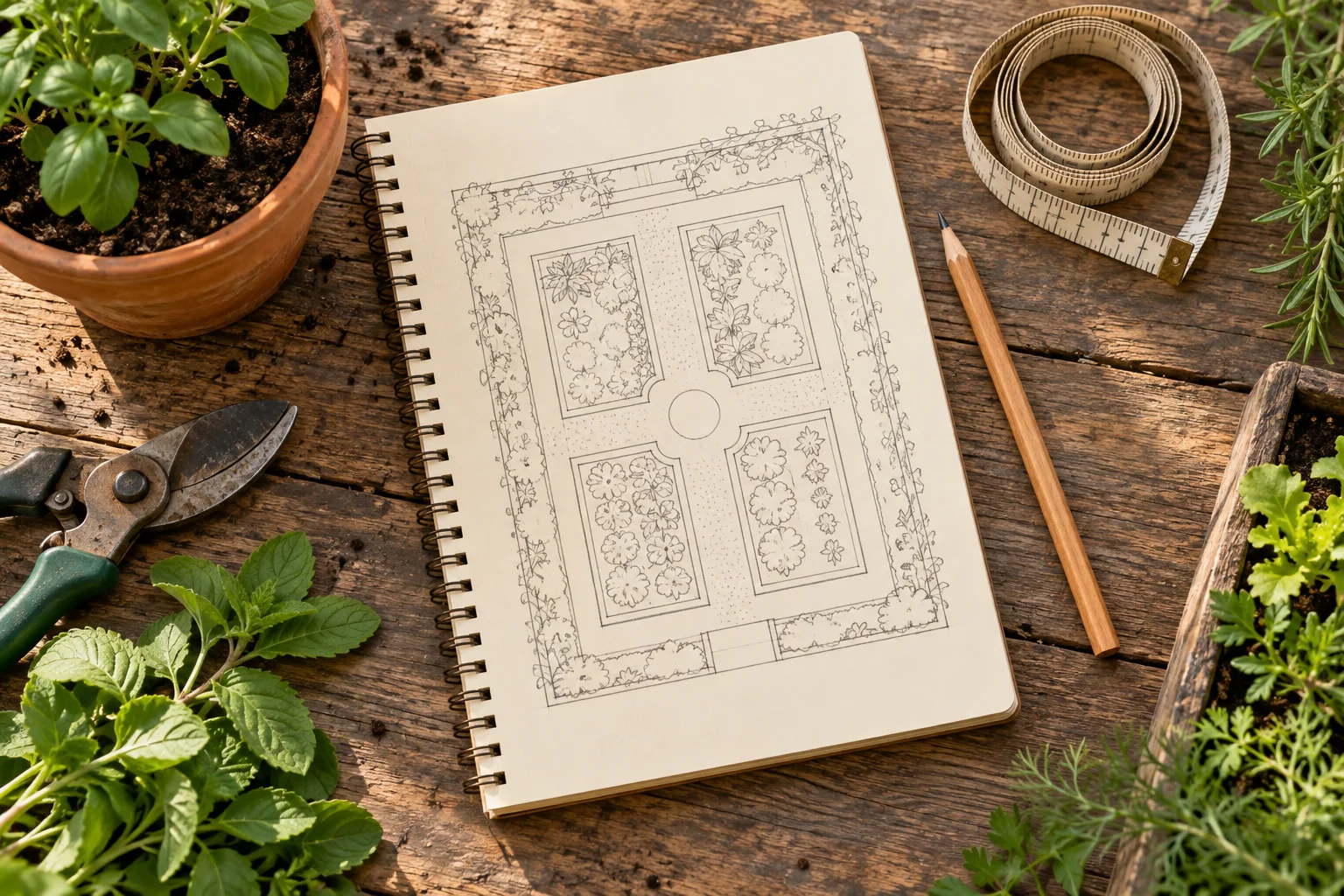
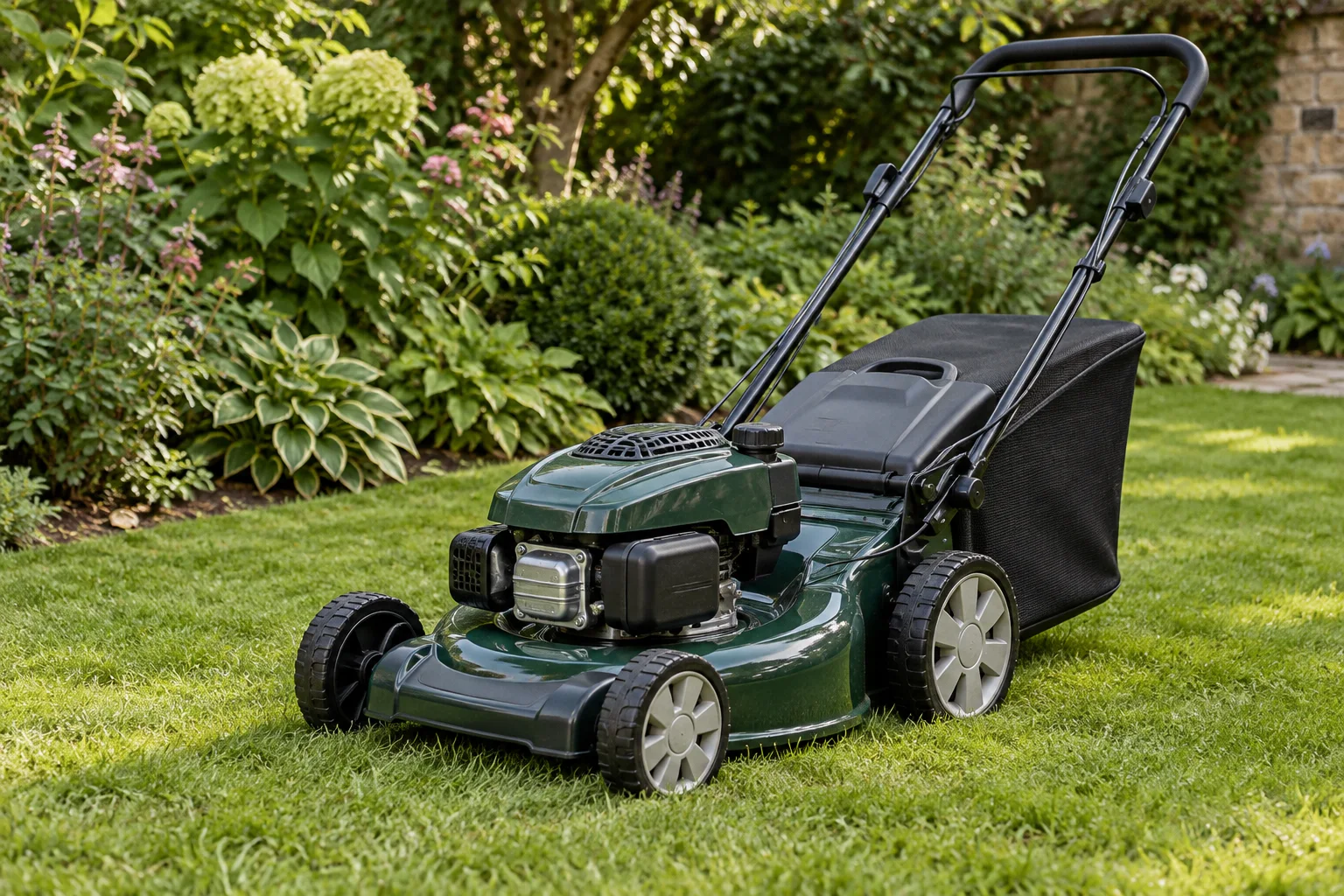
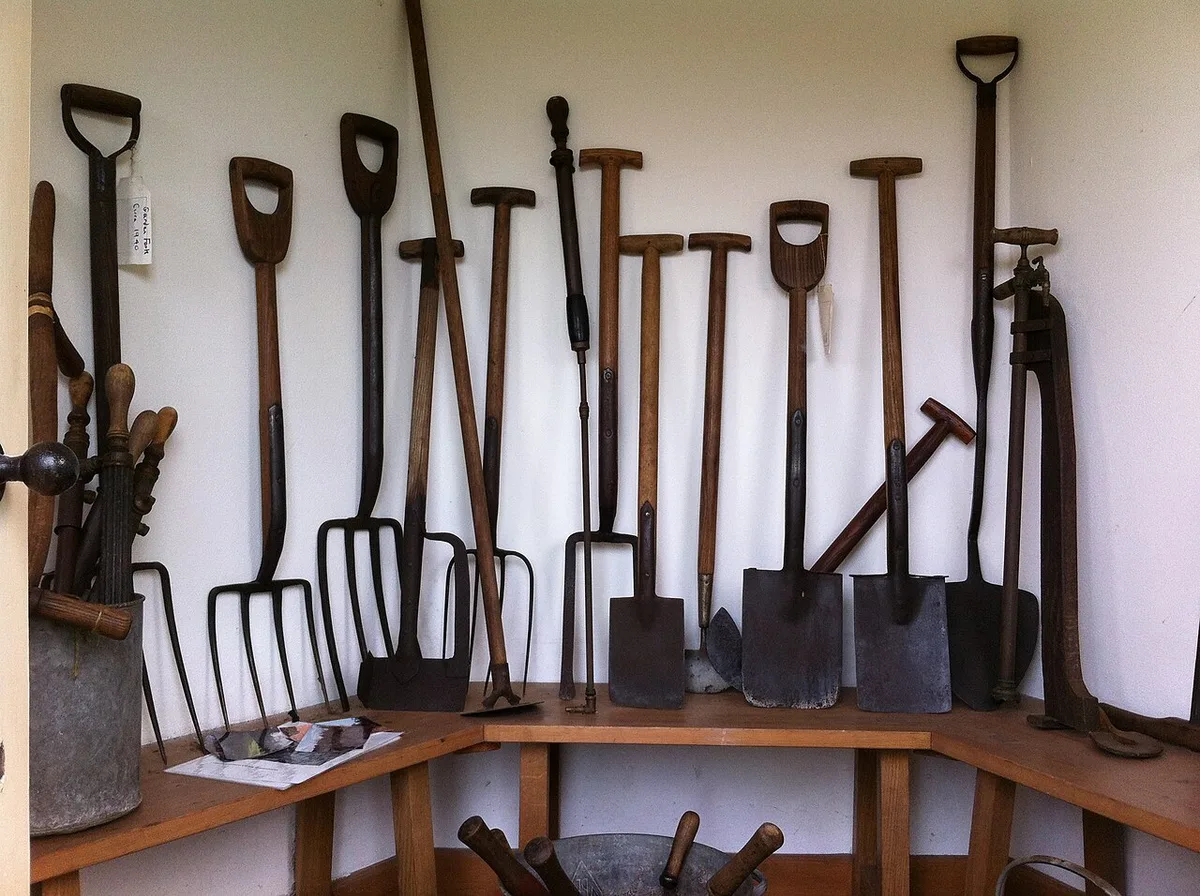
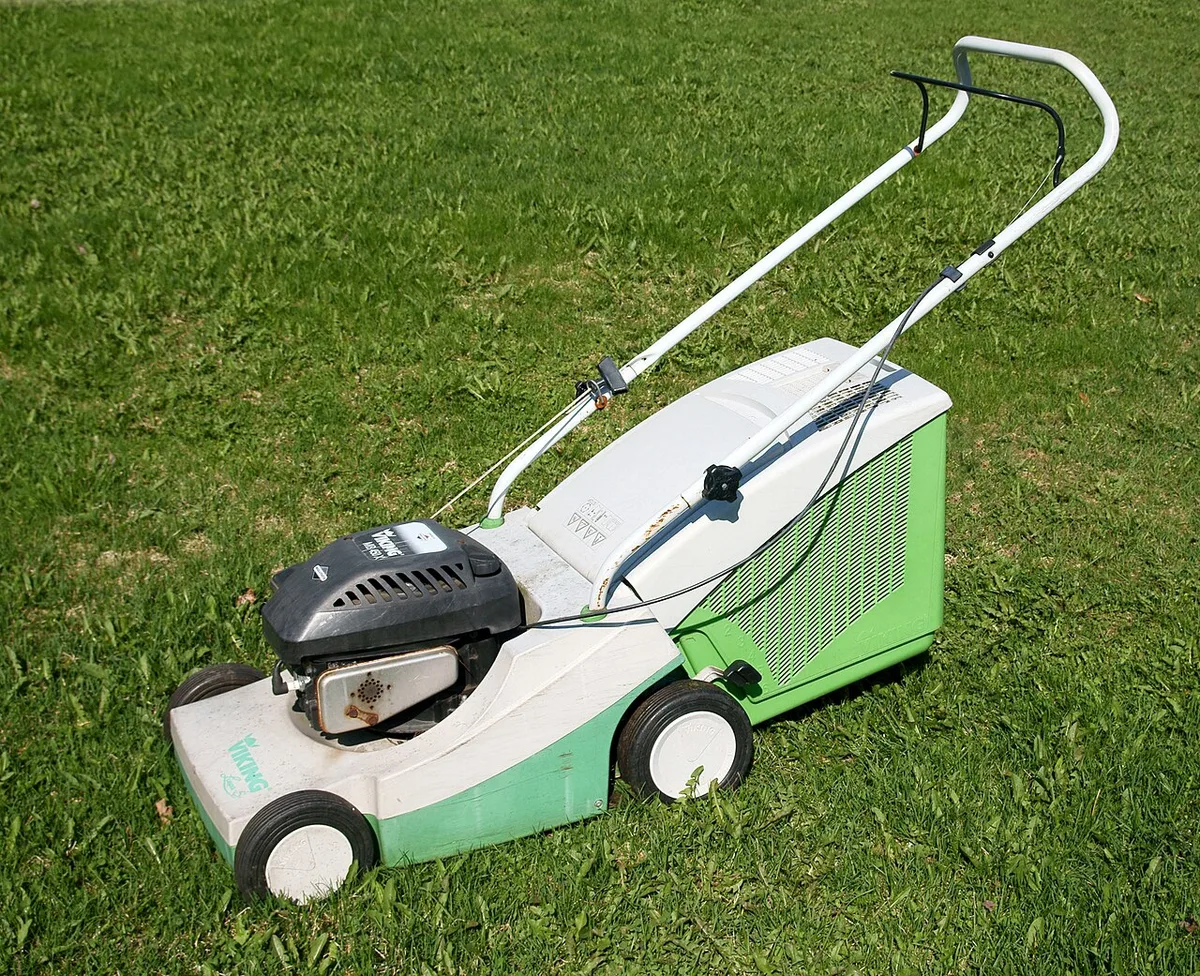
Write separate entries for the main task and the supporting work. The historical hand-tool photograph shows several tool forms, while the mower photograph illustrates a different kind of equipment. Their jobs should not be compressed into one vague gardening allowance if you want to understand where a session goes.
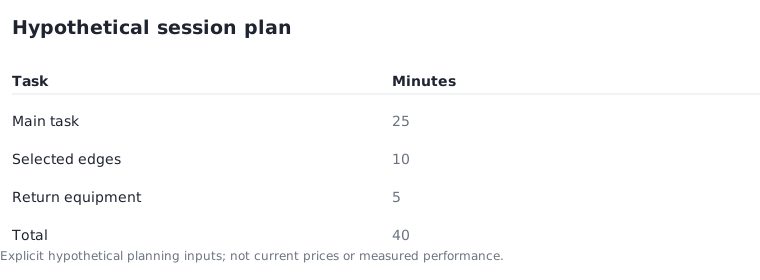
For an assumed session, allow 25 minutes for the main lawn task, 10 for selected edges and 5 for returning equipment: 40 minutes in total. These invented numbers demonstrate addition only. They are not a claim about the photographed mower, the size of garden it can cover or the time a reader should take.
Calculate repeated sessions carefully
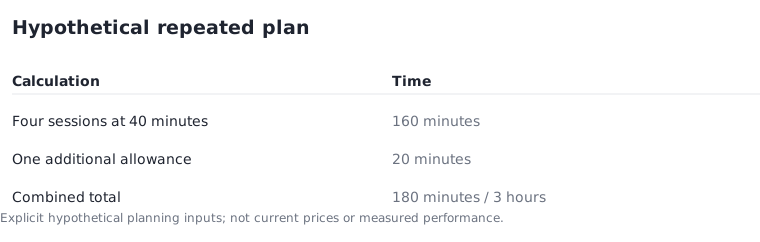
If four planned sessions each take an assumed 40 minutes, the repeated total is 160 minutes. Add a separate 20-minute planning allowance once, giving 180 minutes or 3 hours. Adding that one-off allowance to every session instead would produce 240 minutes, which is a different plan rather than a more accurate version of the same calculation.
The task-time tool on this site follows the simpler pattern of minutes per session multiplied by the number of sessions, then one additional allowance. Keep the inputs consistent with that structure. If individual sessions differ substantially, calculate them separately rather than forcing them into an average that hides the work.
Include care without prescribing a duration
The RHS recommends cleaning hand tools after use and keeping them dry. Include an allowance for the care your equipment actually requires, following the exact instructions for powered tools. The example timings in this article do not replace a cleaning procedure or establish how long any safety-related step should take.
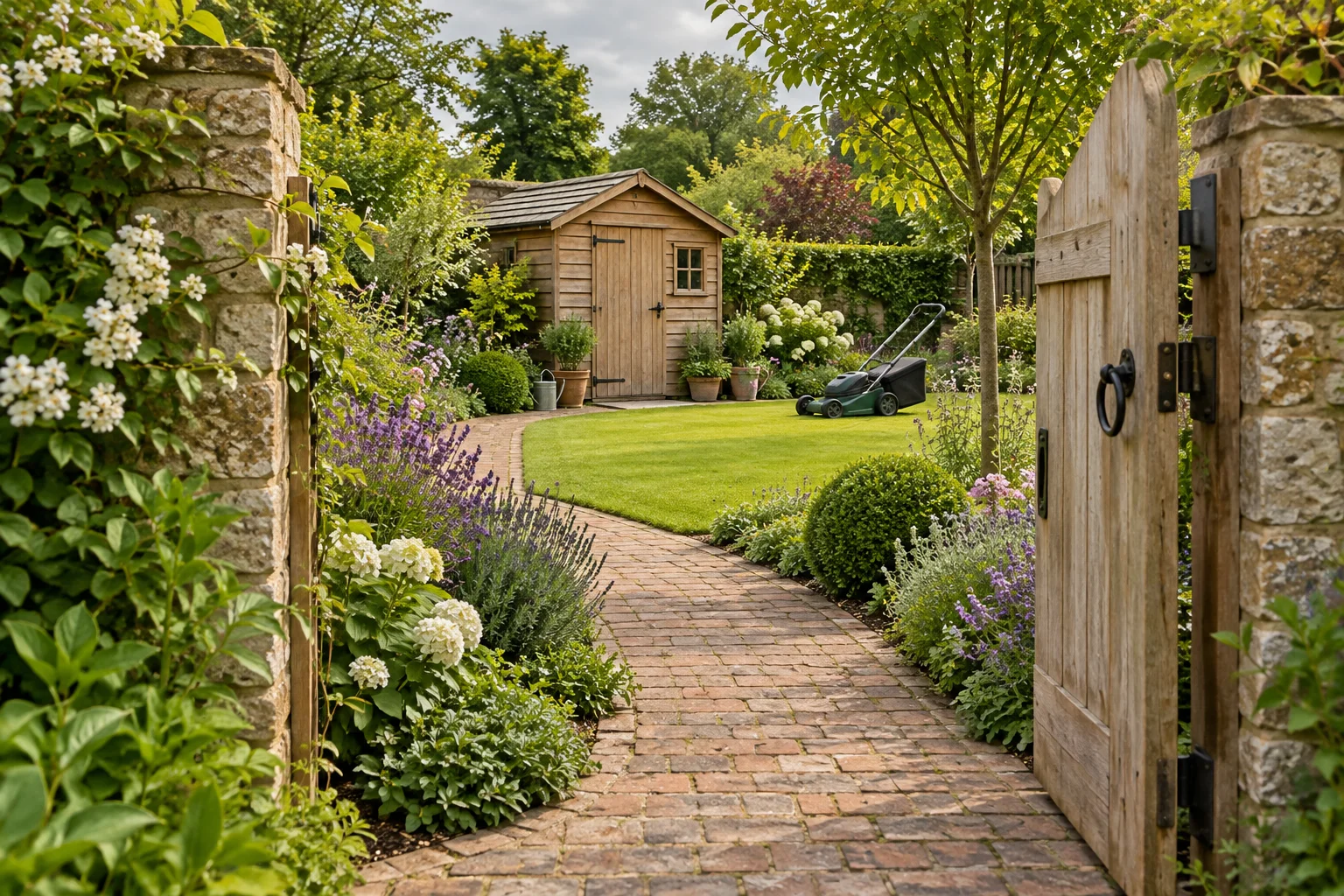
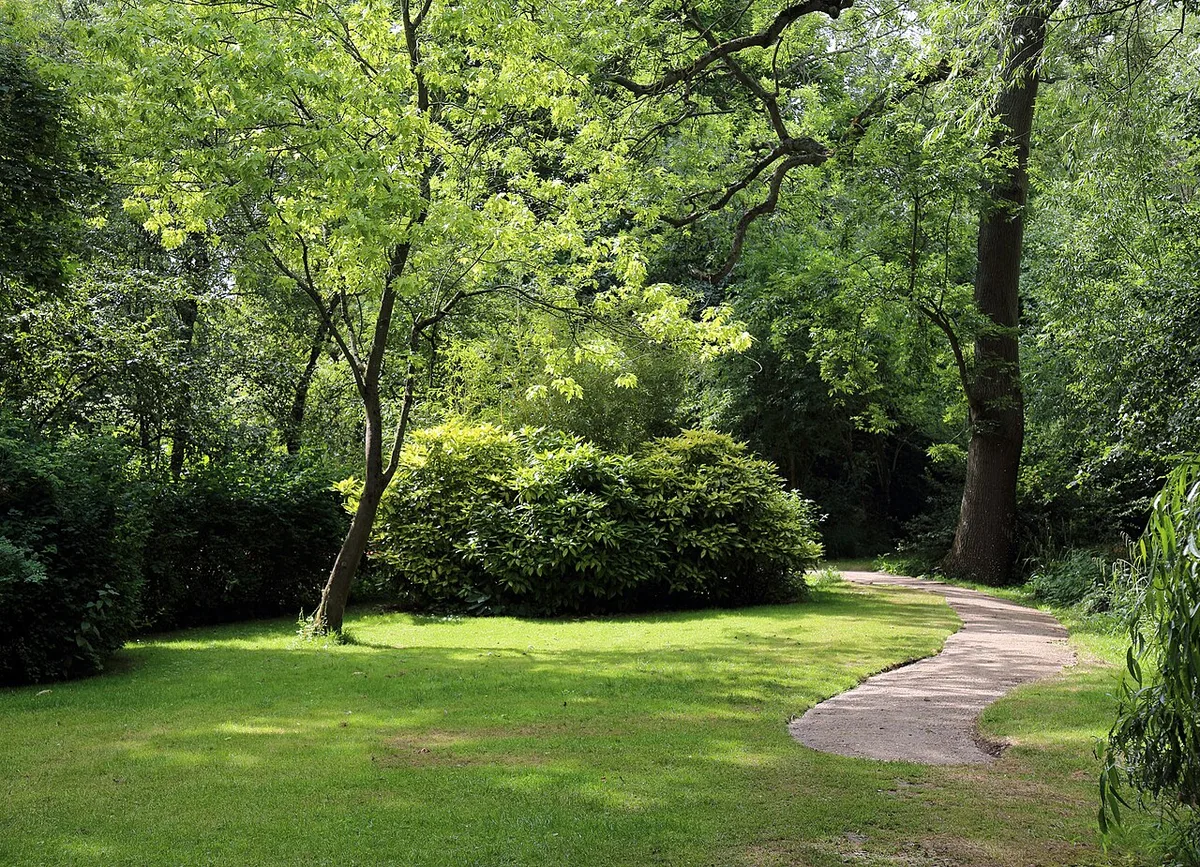
Do not shorten a necessary task simply to make the arithmetic fit a preferred total. If the available time is insufficient, reduce the planned scope or choose another suitable occasion. The garden photograph shows a mixture of lawn, path and planting, which is a useful reminder that a single outdoor space can contain several different jobs.
Compare the estimate with your own record
After a session, note the actual elapsed time and what was completed. Keep weather interruptions, missing supplies and unfinished work visible rather than treating every difference as equipment performance. A short personal record can help refine the next estimate without creating an unsupported comparison between products.
For an illustrative review, an estimated 40-minute session that takes 50 minutes differs by 10 minutes, or 25% of the estimate. That does not prove the tool is 25% slower; it only describes the difference between two recorded totals. Use the result to revise the task plan and investigate the cause before making a purchase decision.