Understand what cutting width tells you
Compare the strip a mower cuts with the complete machine footprint, turns and real working conditions.
Updated:
Read the exact specification
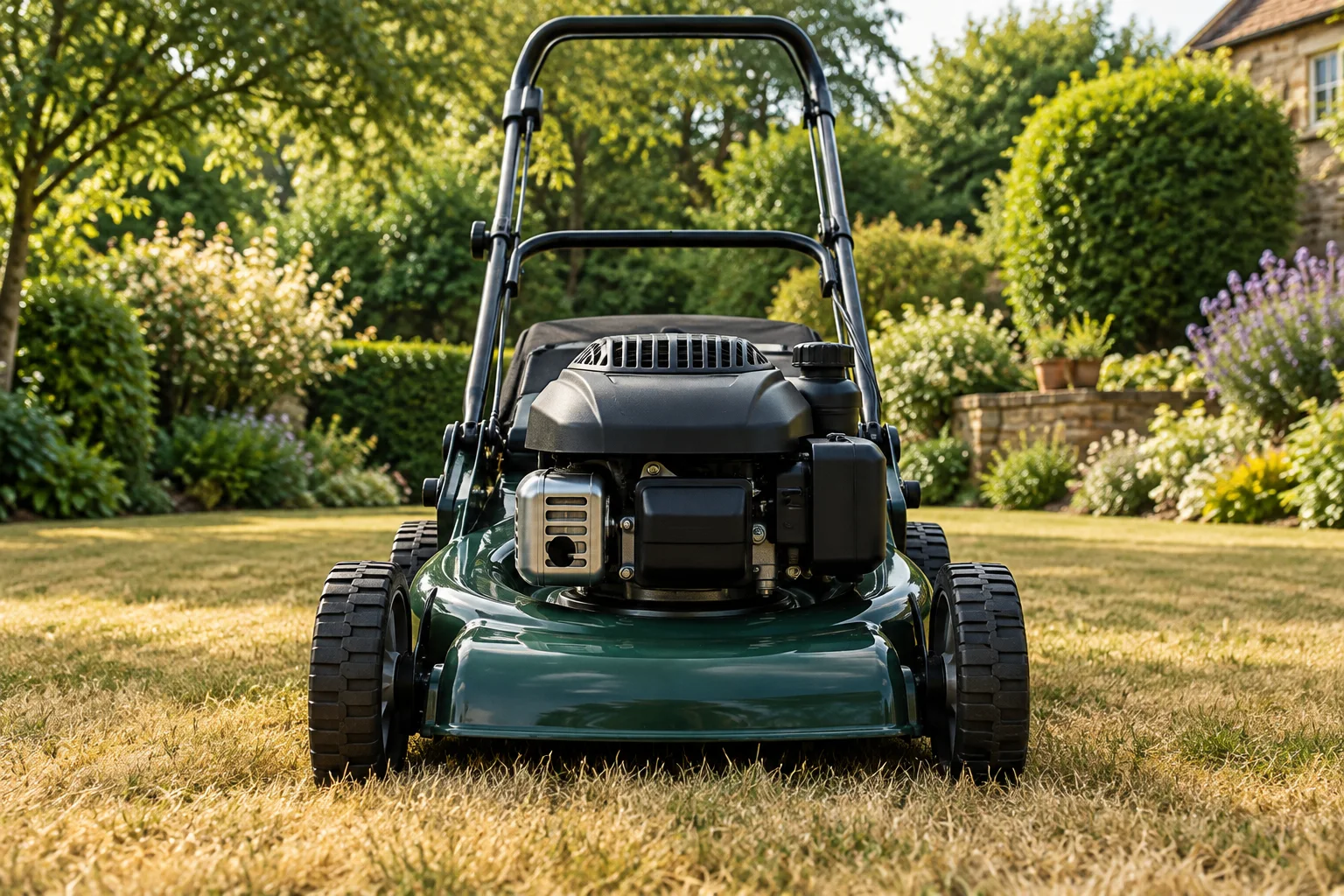
Cutting width describes a different measurement from the outer width of the mower. As examples checked on 27 October 2026, STIHL's UK buying guide lists a 33-centimetre cutting width for the RMA 235 and 37 centimetres for the RMA 239 C. These are manufacturer specifications, not independent performance measurements or a recommendation between the models.
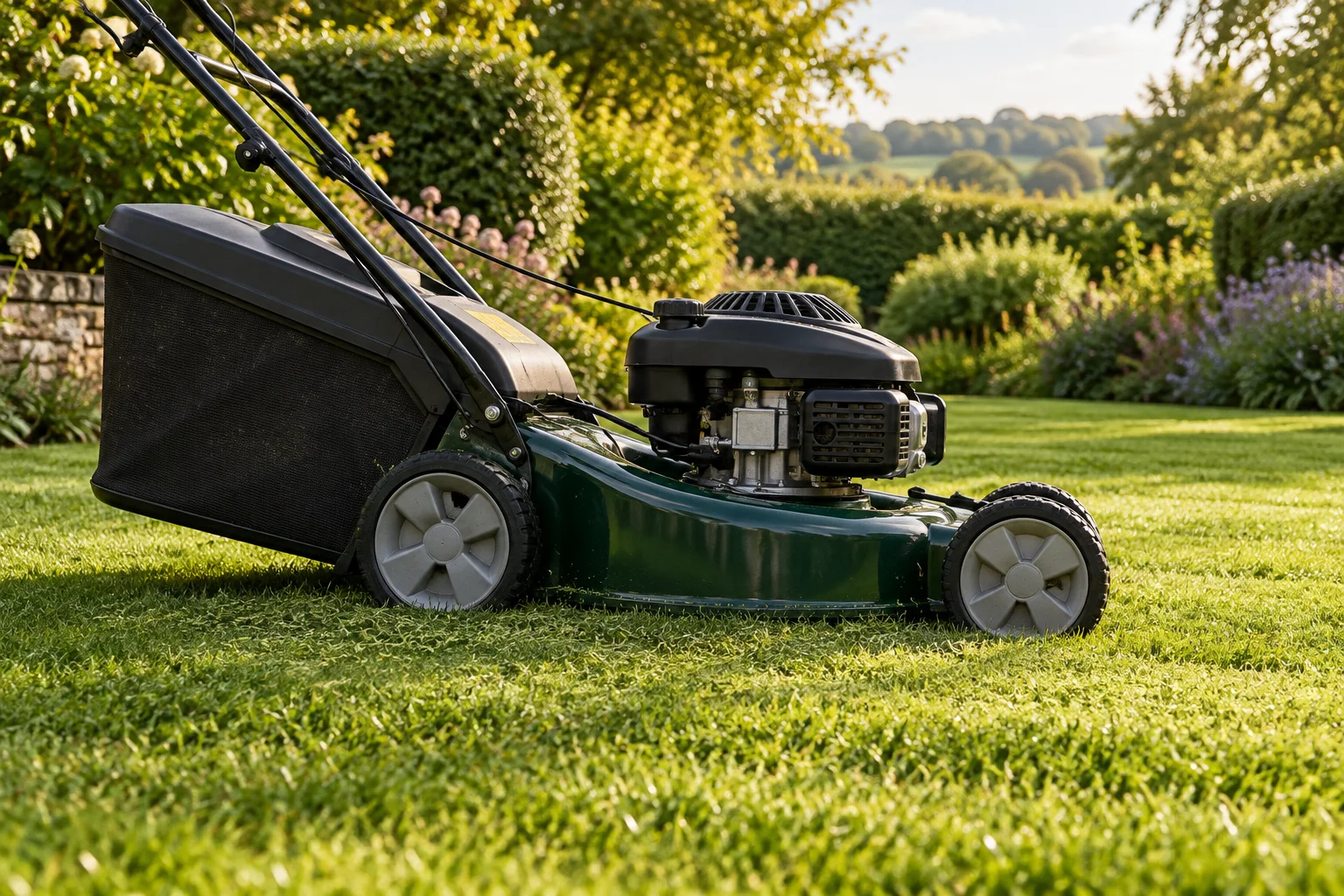
Record the exact model and current specification when building your own shortlist. A photograph of a mower deck does not supply a dependable measurement. Keep the outer dimensions on another line for gate and storage checks, and do not assume that a wider cutting strip means the complete machine is proportionally wider.
STIHL UK: lawn mower buying guide ?
Use a simple strip comparison carefully
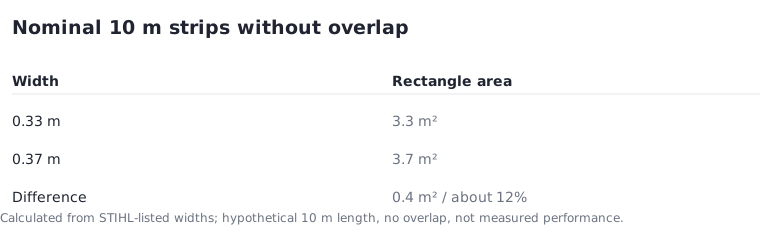
For a hypothetical straight strip 10 metres long, a 0.33-metre cutting width covers a nominal 3.3 square metres before overlap. A 0.37-metre width covers 3.7. The difference is 0.4 square metres, or about 12% more nominal area for the wider strip. This is geometry using the stated widths, not a claim about time saved.
Real mowing includes overlap, turns, obstacles and interruptions. The RHS describes slight overlap between successive stripes in its mowing guidance. The simple calculation omits that overlap deliberately, so it should be treated as an explanatory upper-bound rectangle rather than a prediction of completed lawn area per pass.
Keep handling and access visible
Write down narrow passages and the available turning space beside the width comparison. A machine needs to move through the route in the configuration permitted by its manual. Do not assume that removing a component or folding a handle is acceptable unless the product instructions allow it.
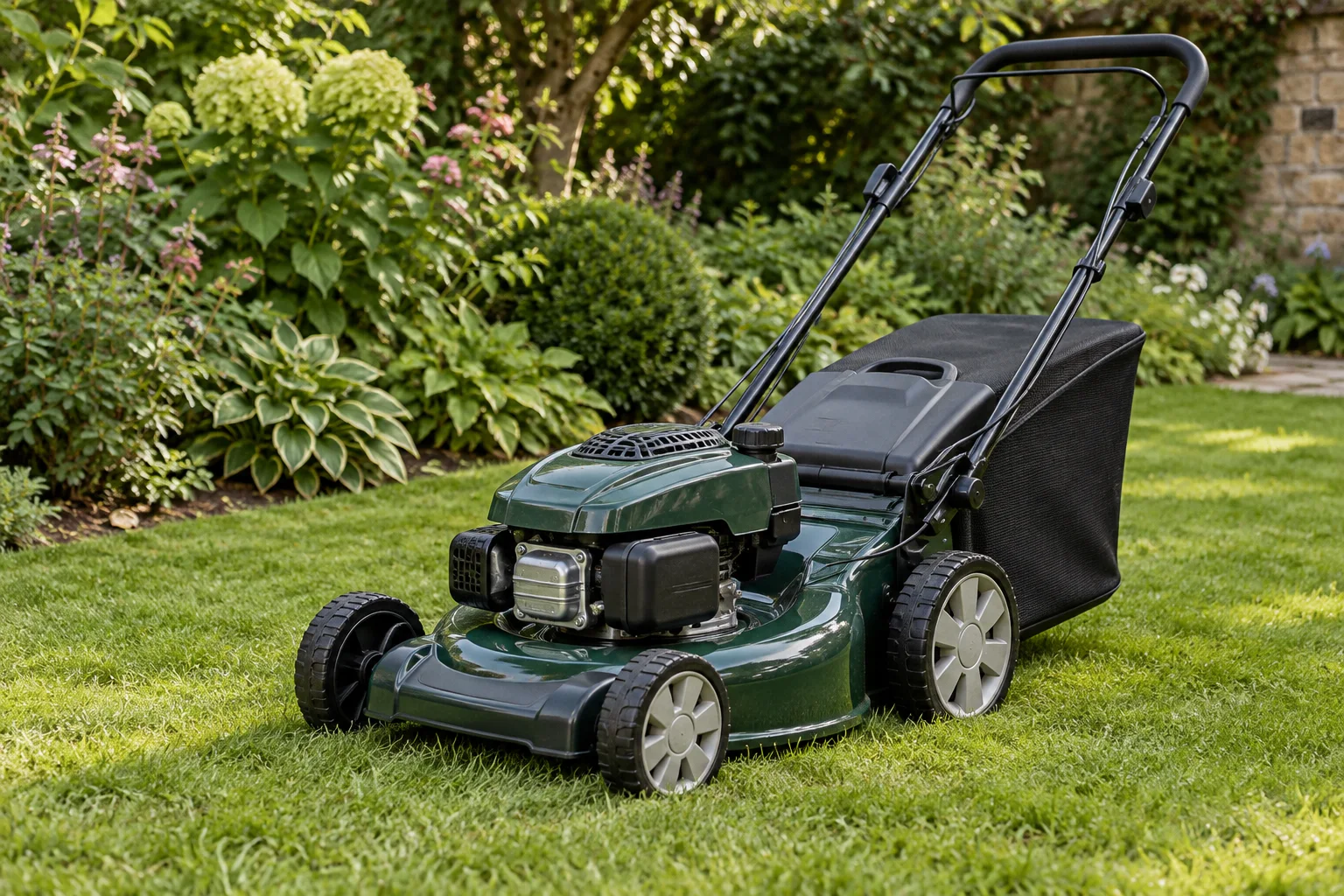
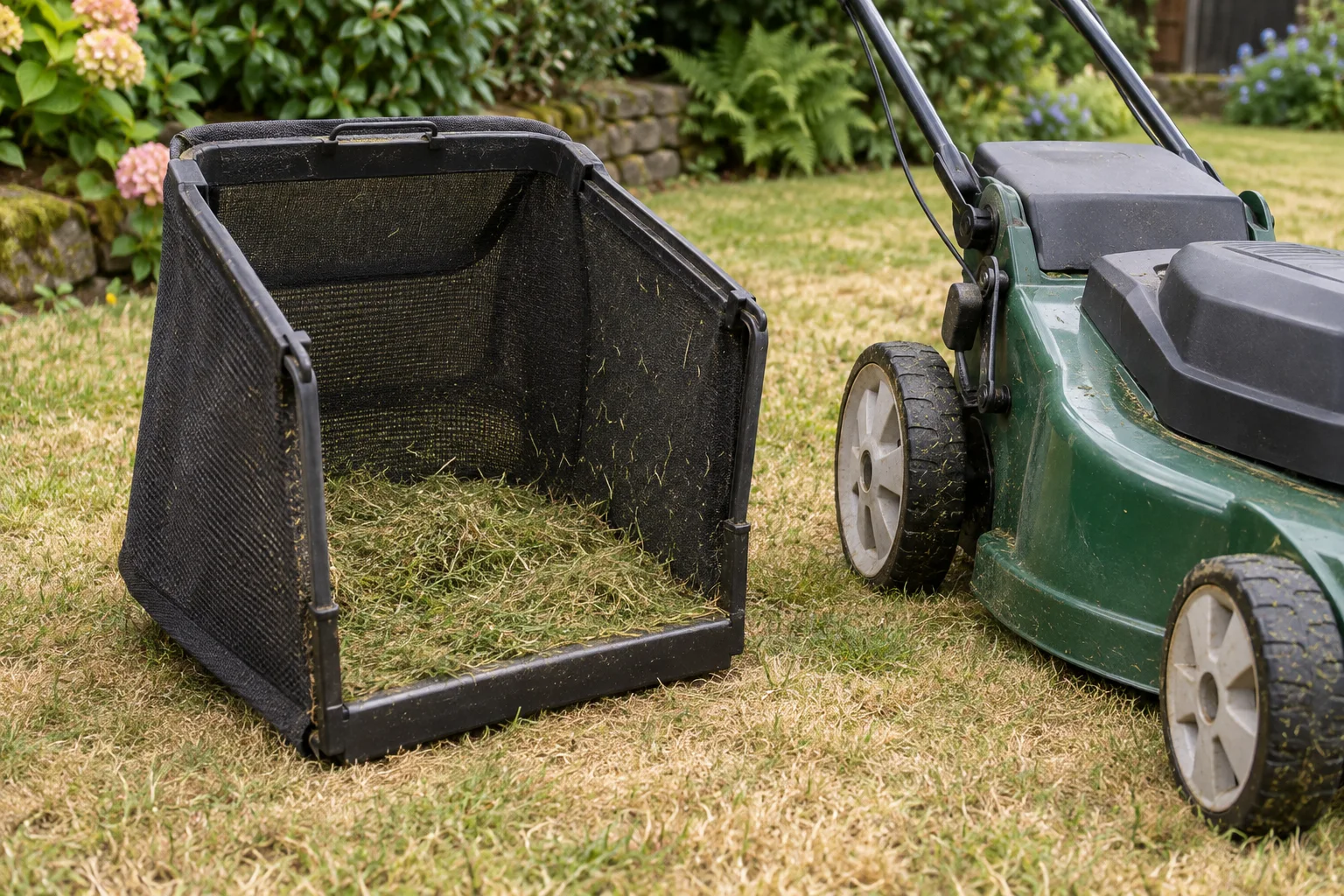
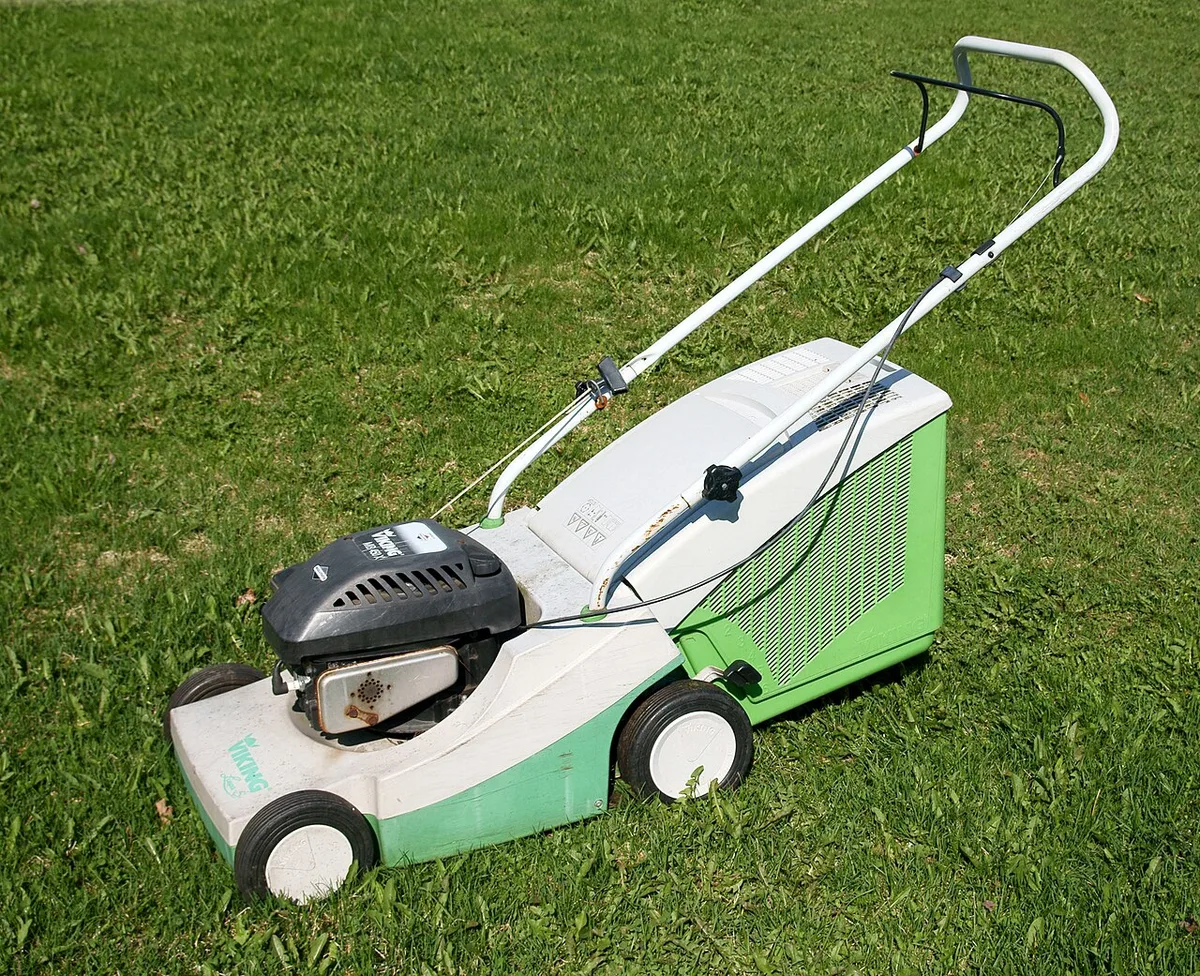
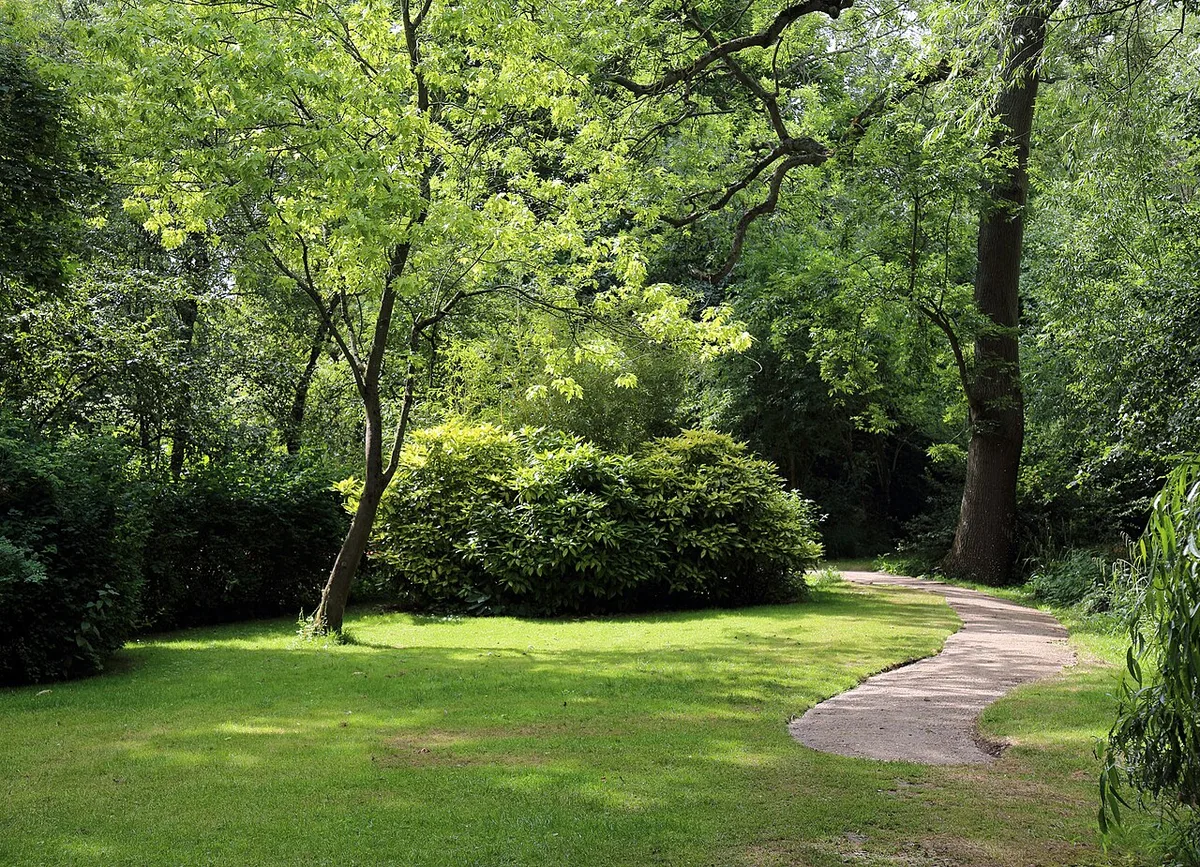
The garden photograph shows curves and borders that a single straight strip does not capture. The historical mower photograph shows a collection box behind the cutting deck. These images help distinguish the parts of the task, but they do not establish that a particular model can negotiate your garden.
Do not convert width directly into runtime
A wider deck does not by itself establish battery duration, walking speed or the number of interruptions. Check the exact manufacturer's runtime or coverage statement and its conditions separately. If those conditions differ from your own plan, keep the difference explicit rather than treating the figure as a guarantee.
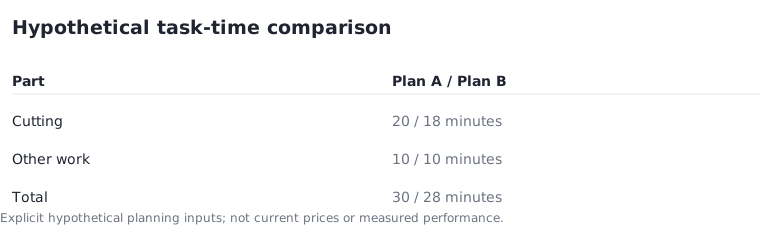
Imagine a planning session with 20 minutes of assumed cutting and 10 minutes of setup, emptying and care. The total is 30 minutes. Reducing the cutting assumption to 18 minutes changes the total to 28, not to a proportional reduction in every task. These timings are invented to illustrate the distinction, not measured results.
Compare the complete decision
Place cutting width beside outer dimensions, storage, required components and the complete quotation. Essential compatibility and access checks should remain separate from any preference for a larger number. A shortlist becomes more useful when every specification answers a particular question.
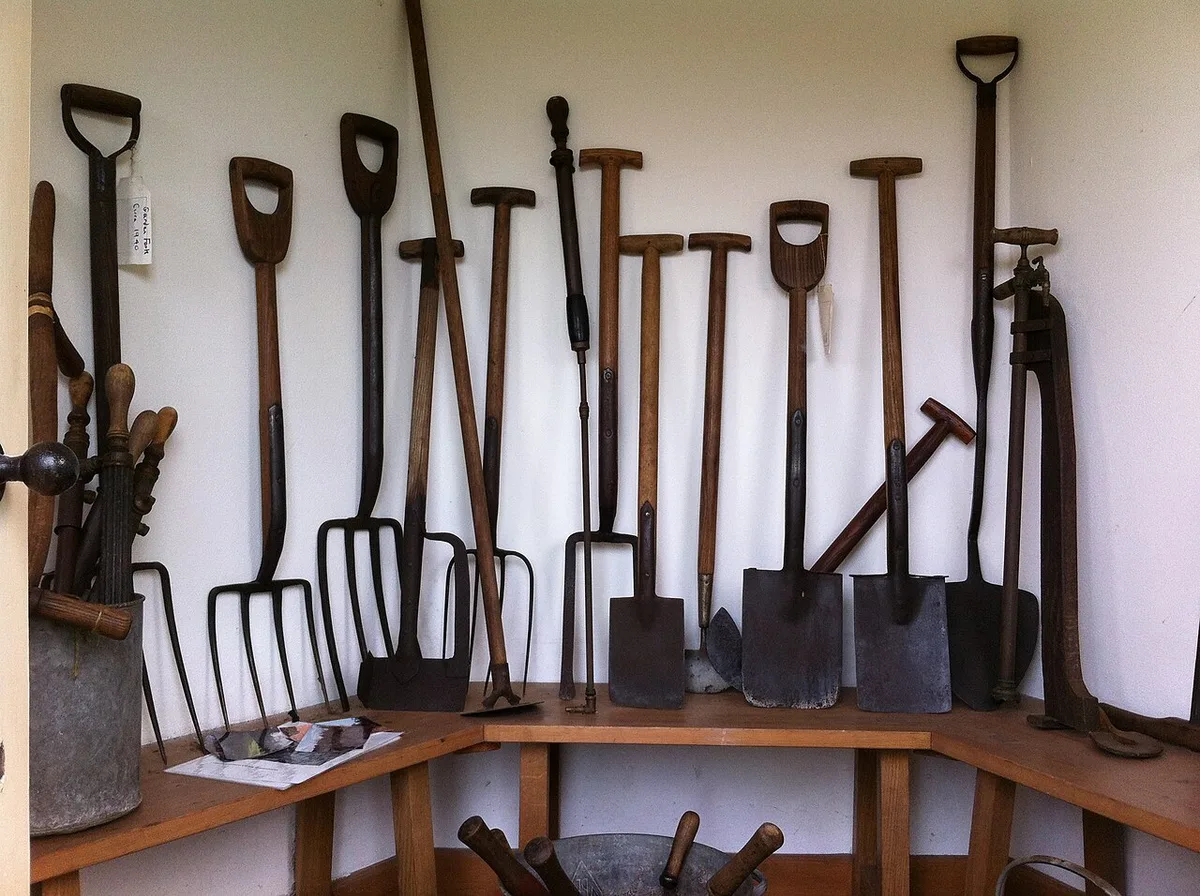
Keep a dated copy of the model information with the order. The historical tool display is a reminder that different jobs call for different forms, rather than a ranking by size alone. Choose the equipment around the actual task and your ability to use and maintain it according to the manual.