Plan what happens to the grass clippings
Include collection, emptying and the destination of clippings when comparing a mower setup.
Updated:
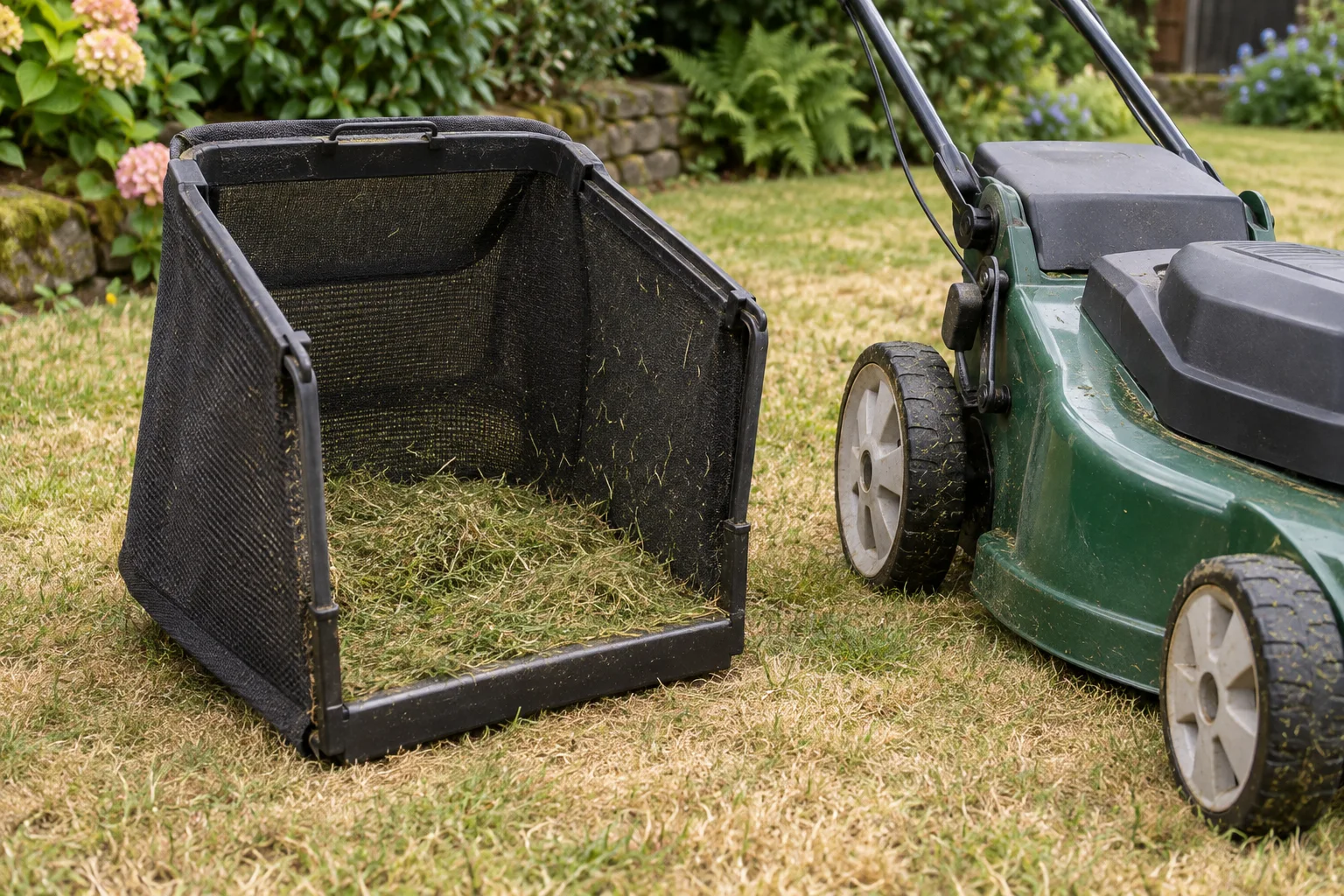
Identify the collection arrangement
Check whether the exact mower is supplied with a collection box or bag, and read how it is intended to be used. The RHS advises emptying the clippings box regularly during mowing. A large-looking container in a photograph is not a dependable indication of its capacity or how easy it will be for you to handle.
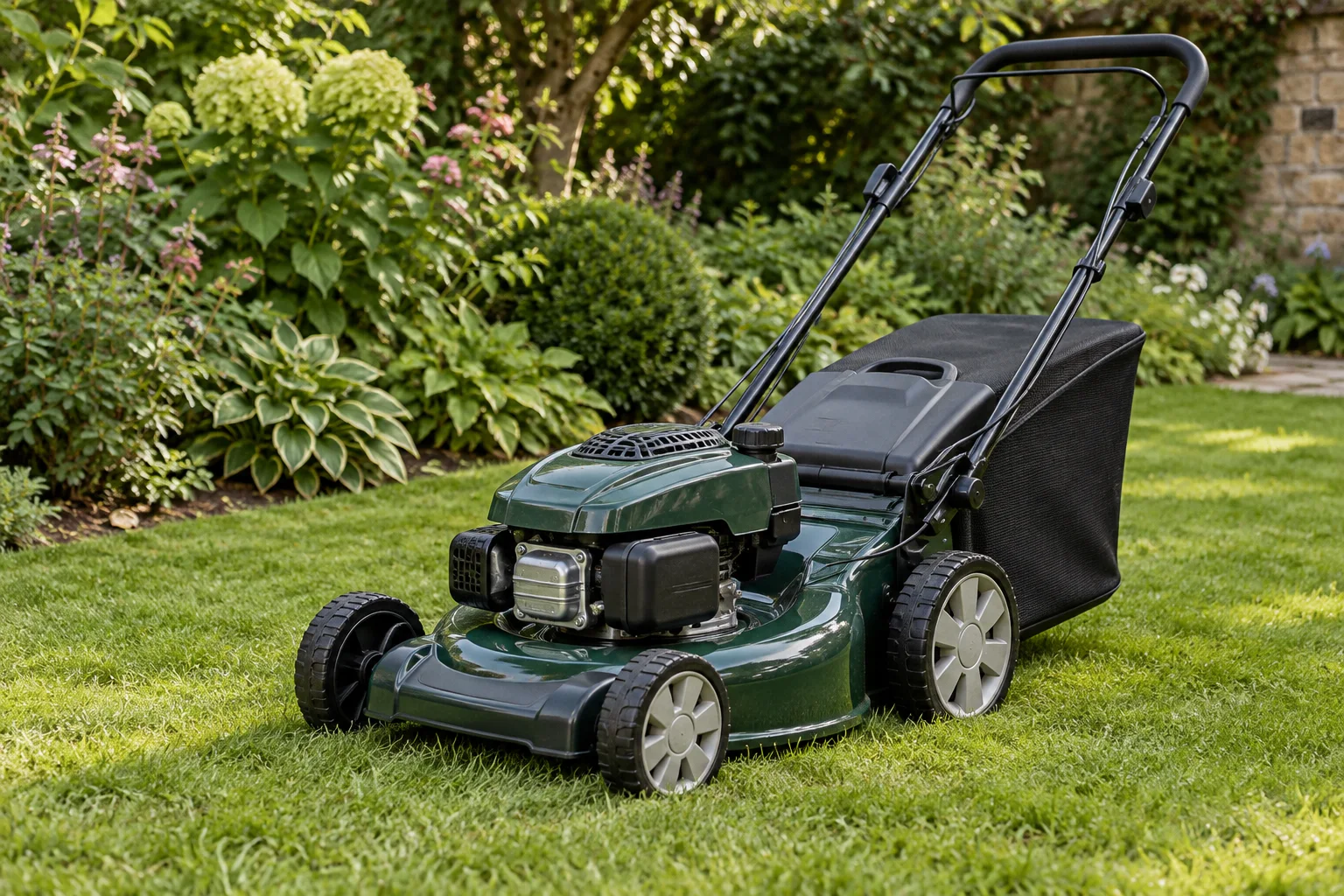
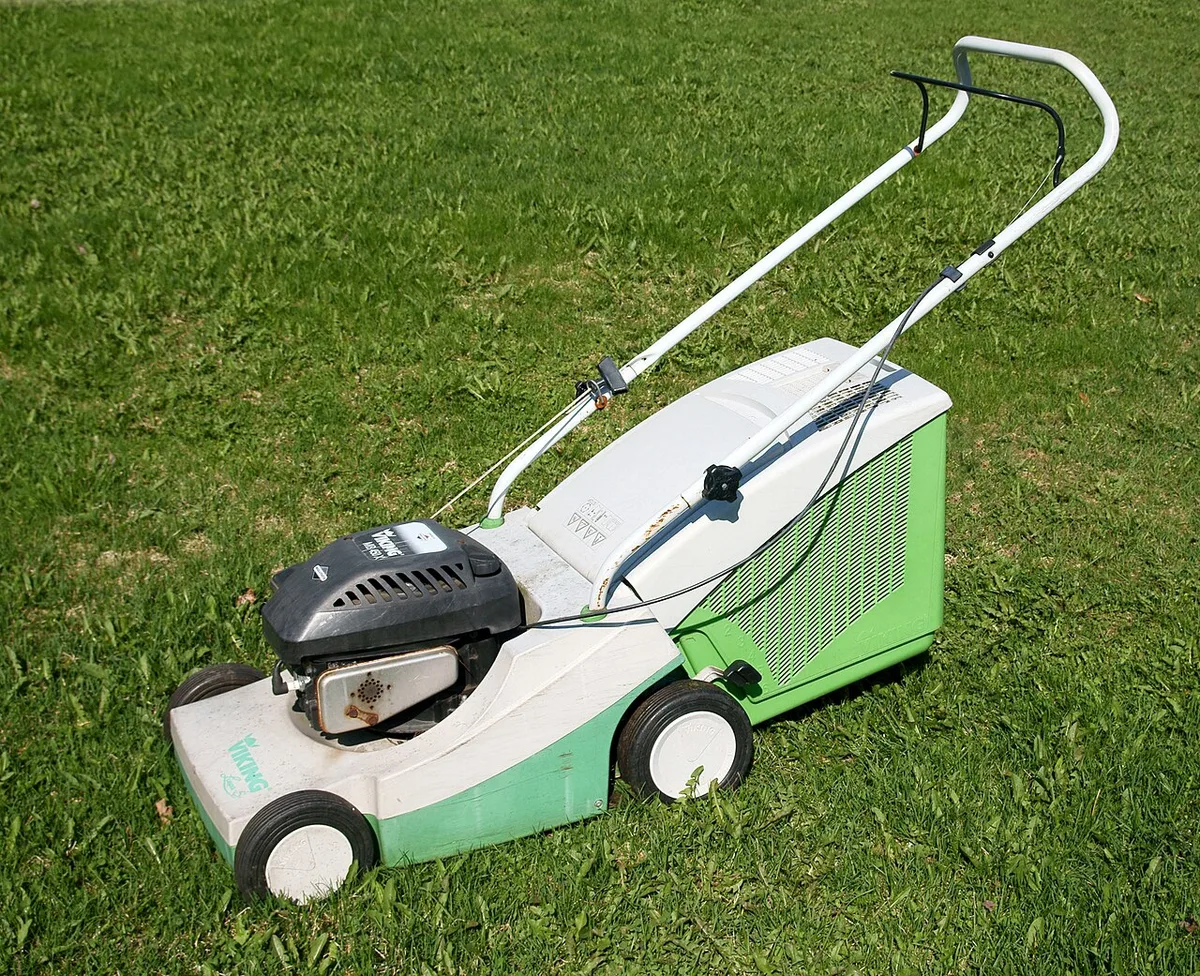
Record the stated capacity, attachment method and any relevant instructions from the product manual. Keep the machine and collector model together in your notes. The historical mower photograph shows a collection box behind the deck, but it does not provide a measured capacity or a recommendation for the photographed product.
Include the route to empty it
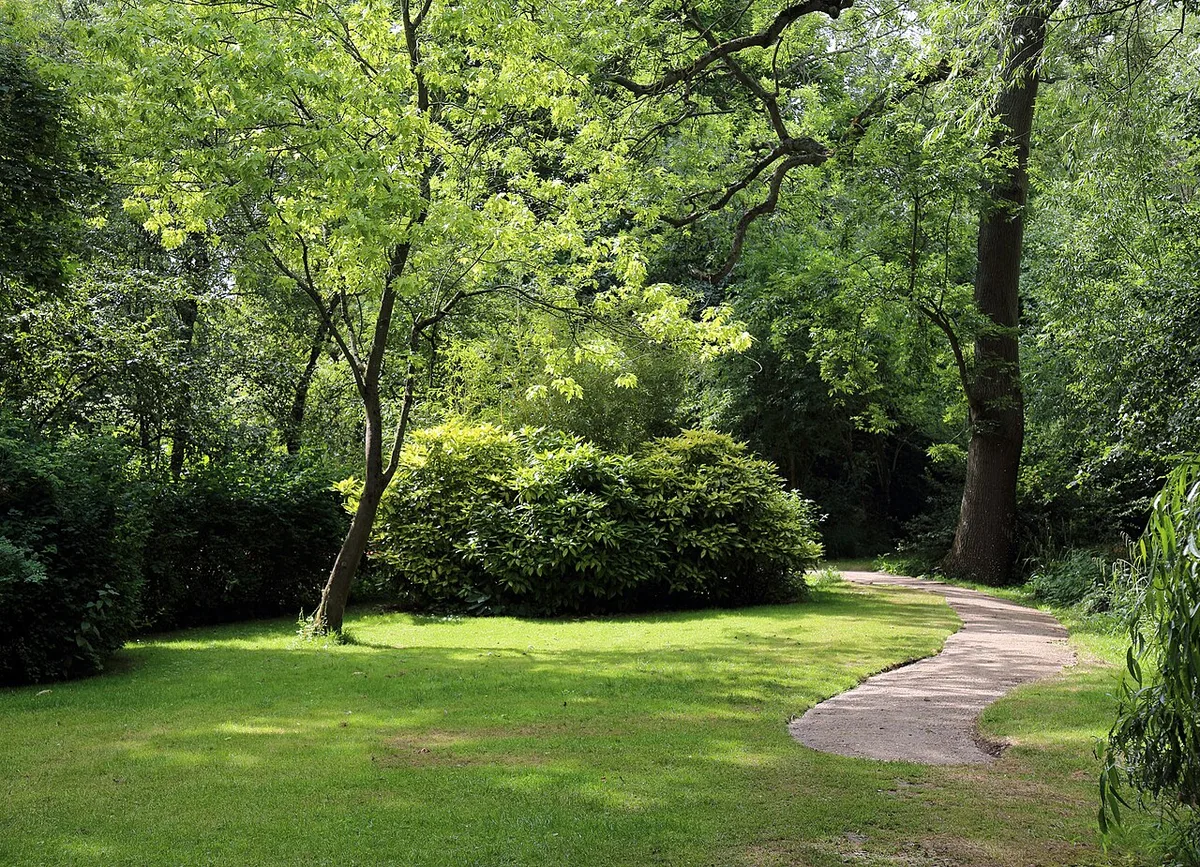
Think about where clippings will go and how the collector reaches that place. Mark any gate, step or narrow passage on the garden sketch. The total task includes those movements as well as the time the mower spends cutting grass.
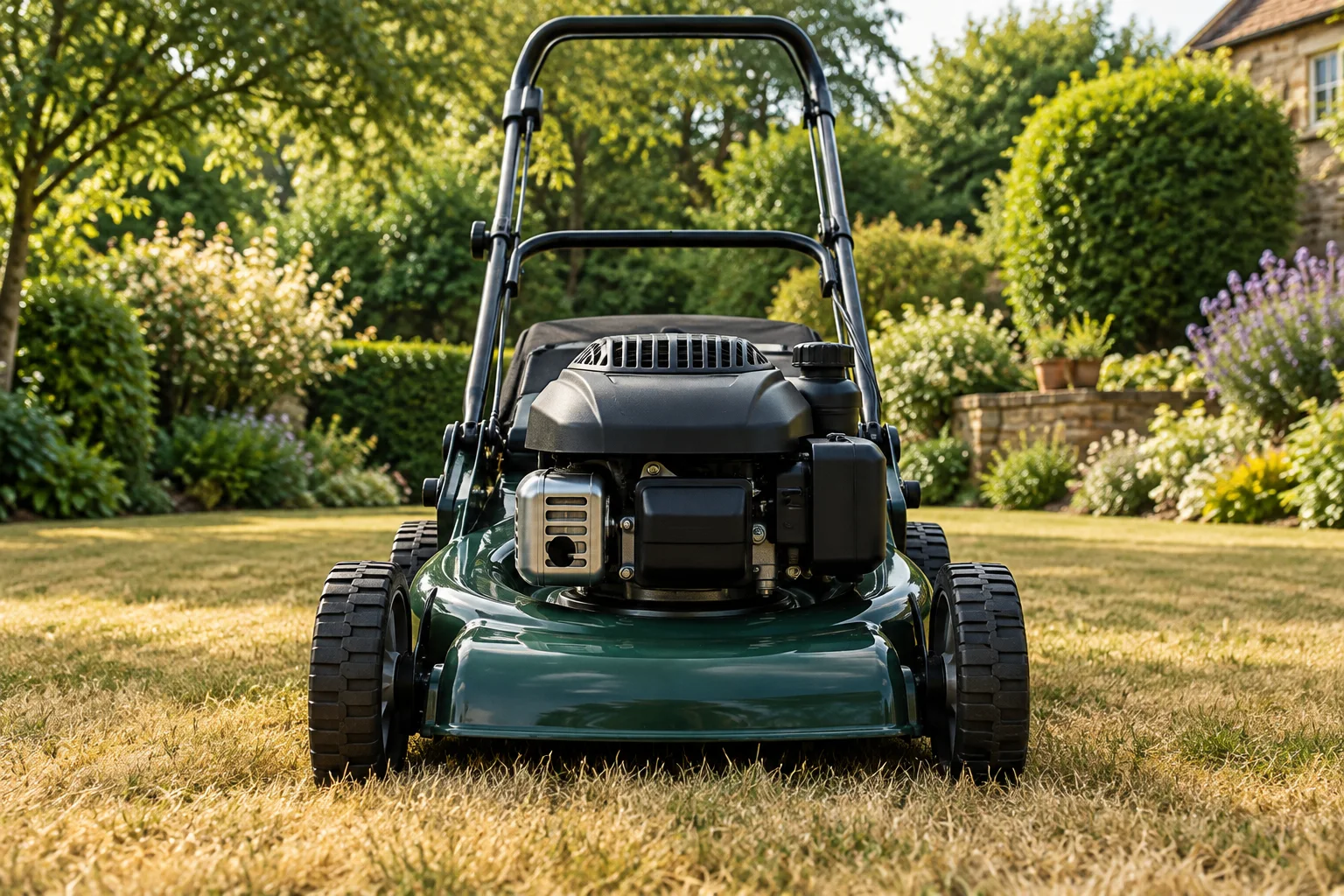
The garden photograph shows a path and planted borders around the lawn. It illustrates why the destination may not be immediately beside the cutting area. Do not assume that a container which fits the mower will be comfortable to carry when full. Check the permitted handling method and your own practical needs before treating capacity as the deciding number.
Use an honest time allowance
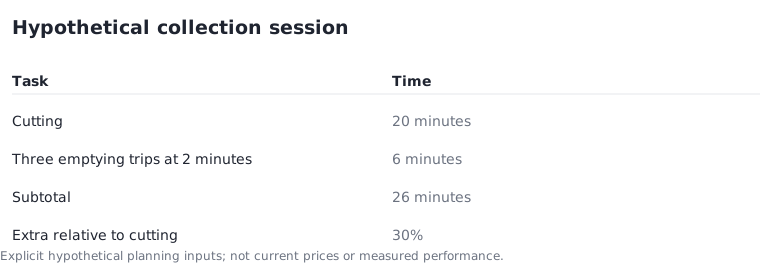
For a hypothetical session, assume cutting takes 20 minutes and each of three emptying trips takes 2 minutes. Emptying adds 6 minutes, producing a 26-minute subtotal before setup and cleaning. The extra work is 30% of the assumed cutting time. These are invented timings, not measured mower results.
If the actual route is longer or the clippings need further handling, add that work explicitly. Do not divide a published collection capacity by an invented grass volume and present the result as a reliable number of stops. Grass conditions and the amount removed vary, so a transparent scheduling assumption is more useful than false precision.
Compare collection and other modes precisely
The RHS distinguishes collecting mowers from mulching arrangements that finely cut and return clippings to the turf. Check what the selected model can actually do and whether a required accessory is included. Do not assume that removing a collection box turns any mower into an approved mulching configuration.
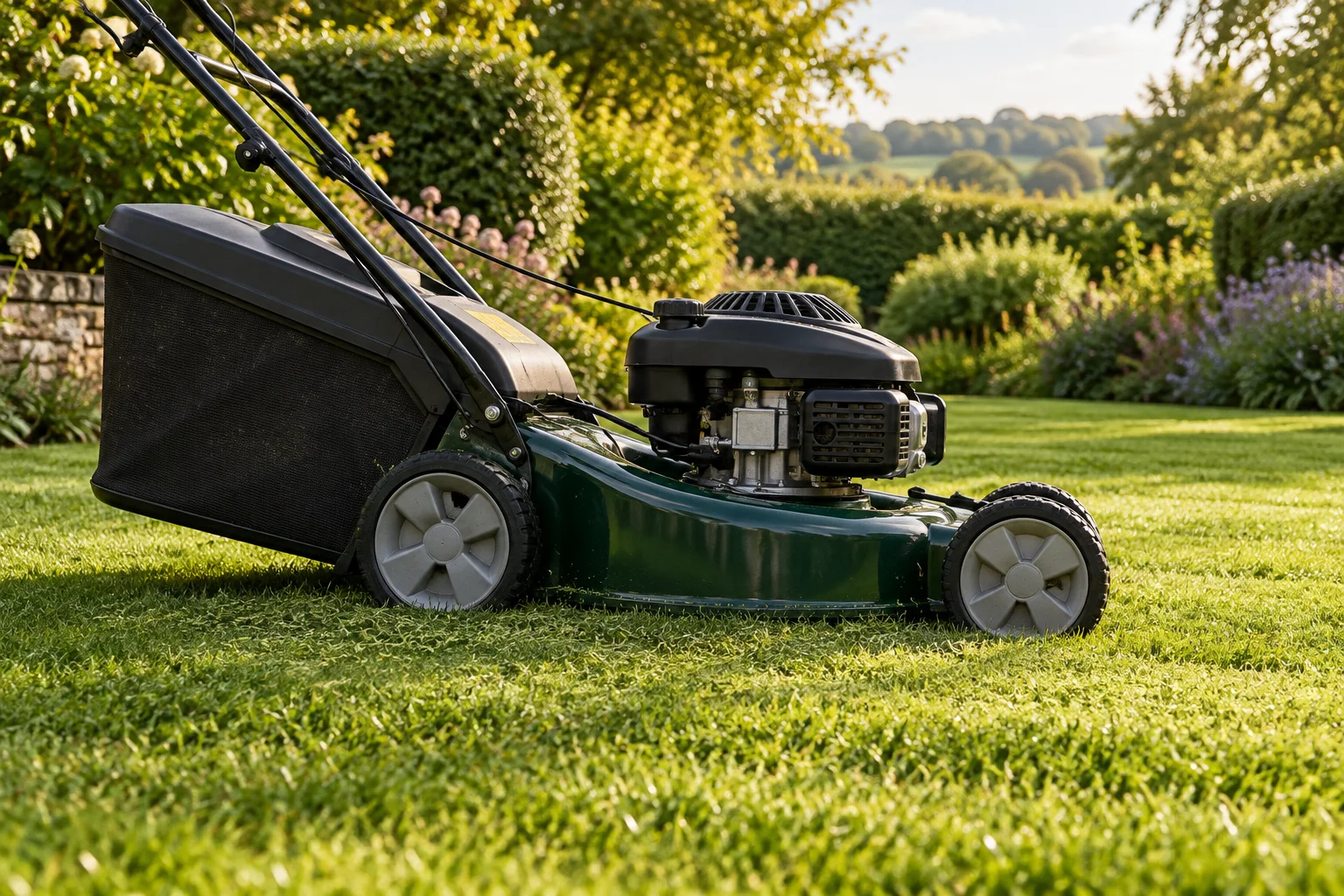
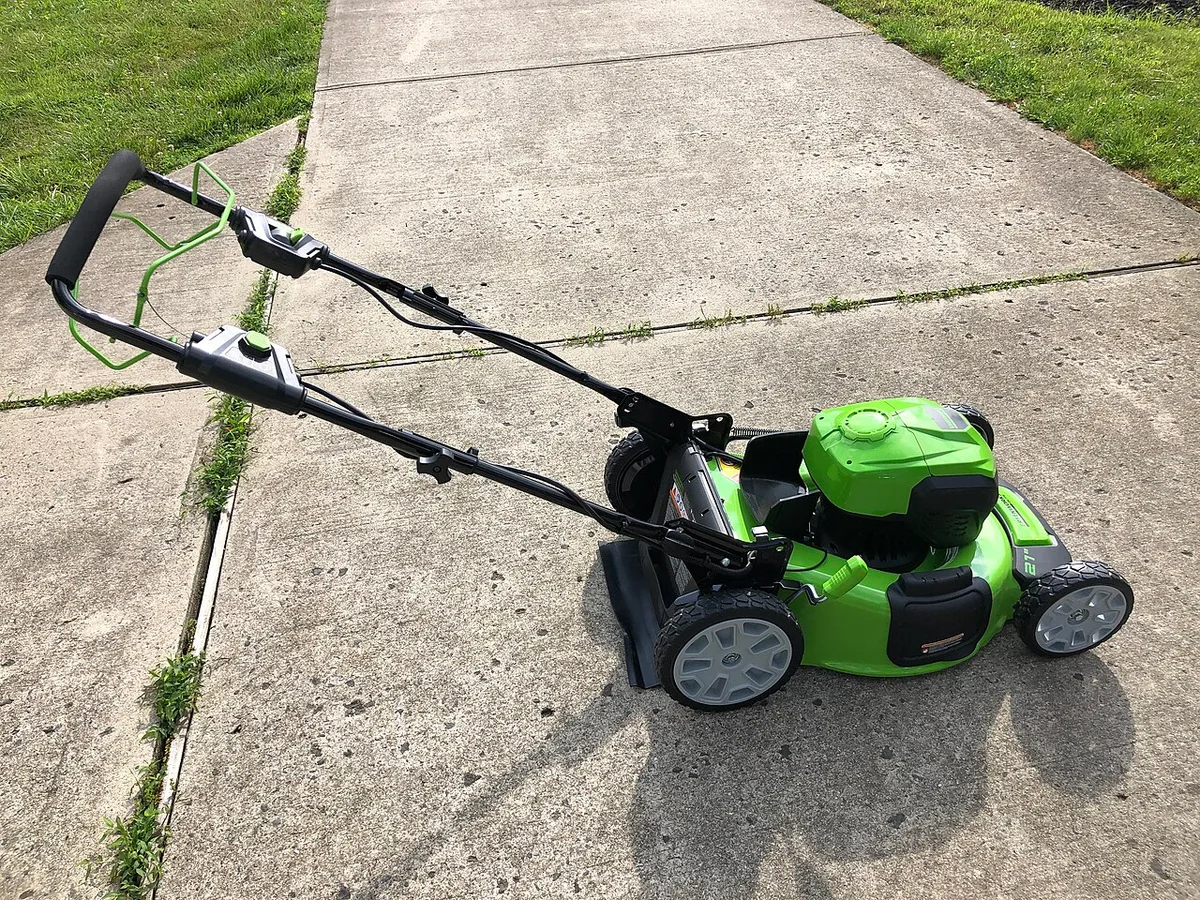
Read the manufacturer's instructions for changing modes and for the conditions in which each is intended to work. The cordless mower photograph is a separate historical example of machine form, not proof of a particular collection or mulching feature. Use product documentation to settle those details before comparing prices.
Add only the confirmed accessories
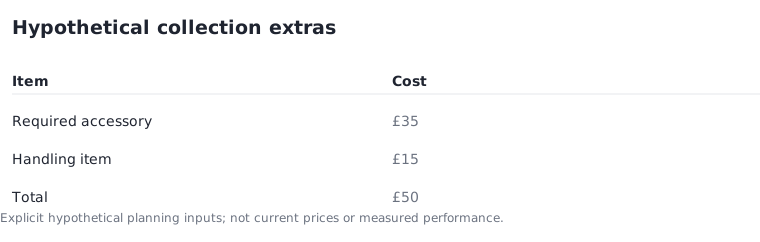
Assume a required collection accessory costs £35 and a separate handling item costs £15. The additional budget is £50 in this hypothetical example. If the collector is already included and no extra item is needed, do not add those assumed costs merely because they appear in a checklist.
Save the complete quotation and the instructions for the supplied arrangement. Confirm the appropriate destination for clippings in your own circumstances rather than assuming every local collection service accepts them in the same way. The useful decision connects the cutting method, handling route and complete task instead of stopping at the mower's headline specification.