Choose an approach for the edges the mower misses
Map boundaries and awkward corners before deciding whether a separate edging tool is needed.
Updated:
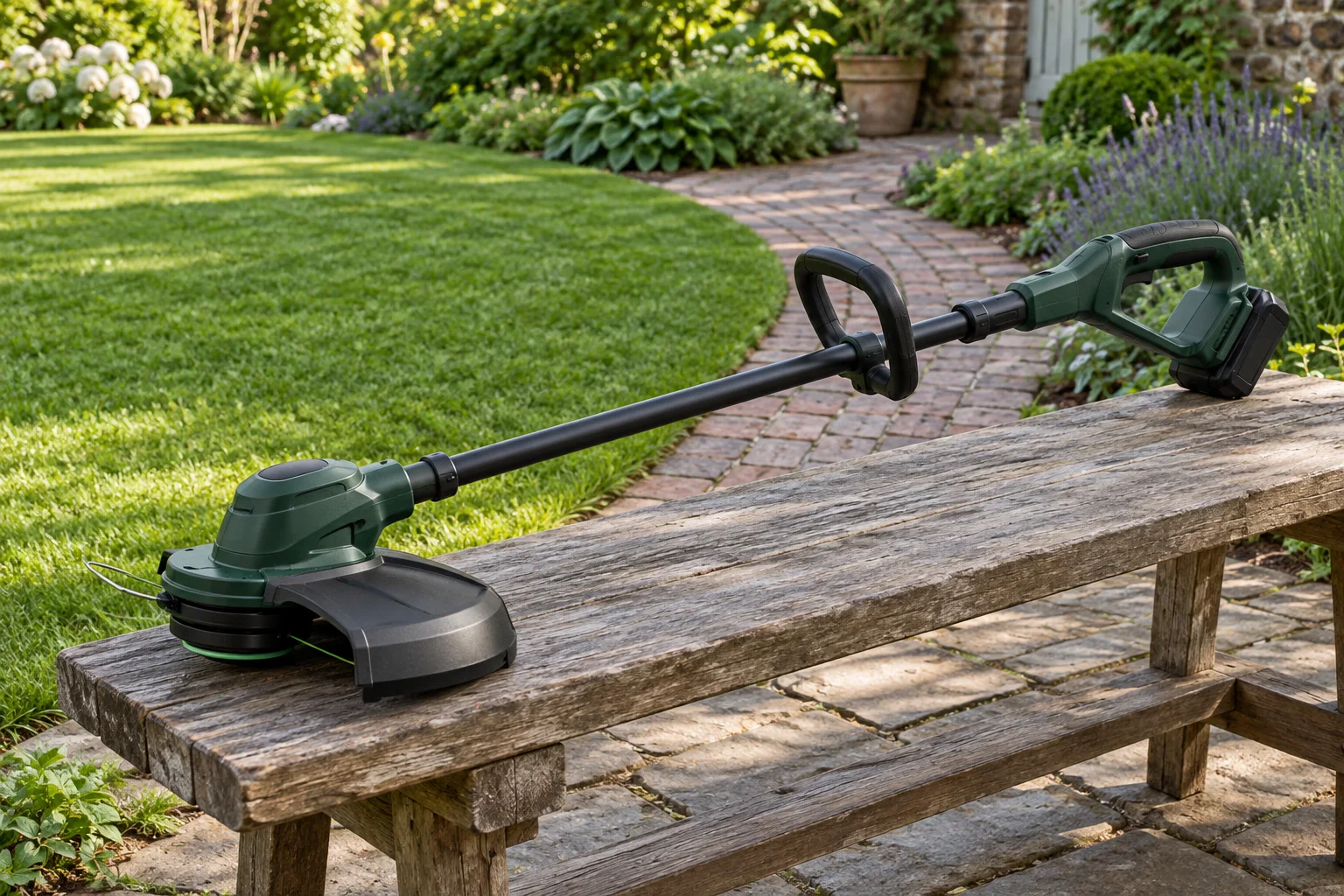
Map the unfinished parts separately
Look at the boundaries around the lawn and identify where a mower cannot complete the intended finish. The RHS notes that tight or enclosed corners may need separate attention with lawn shears or a strimmer. That does not mean every garden automatically requires another powered tool.
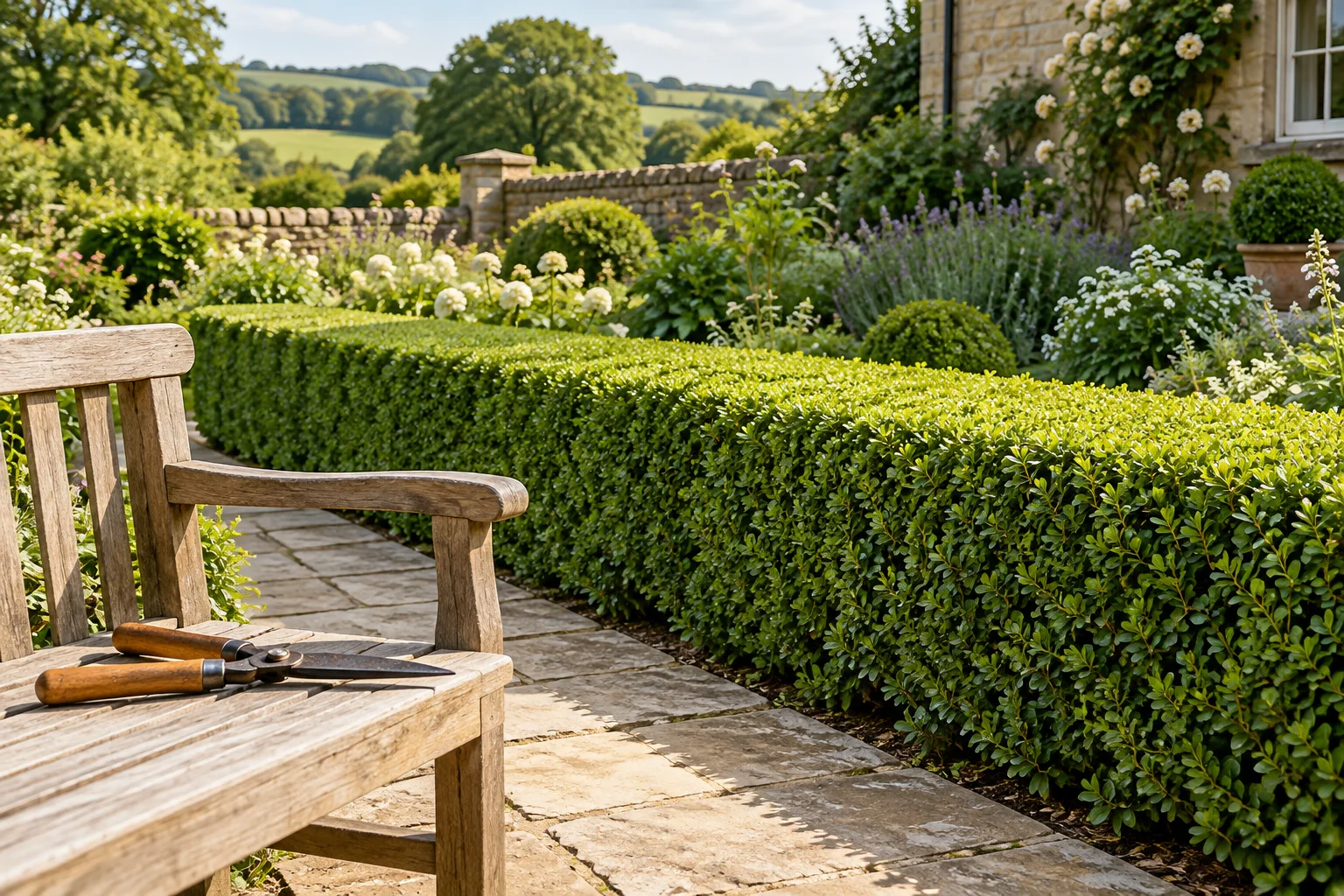
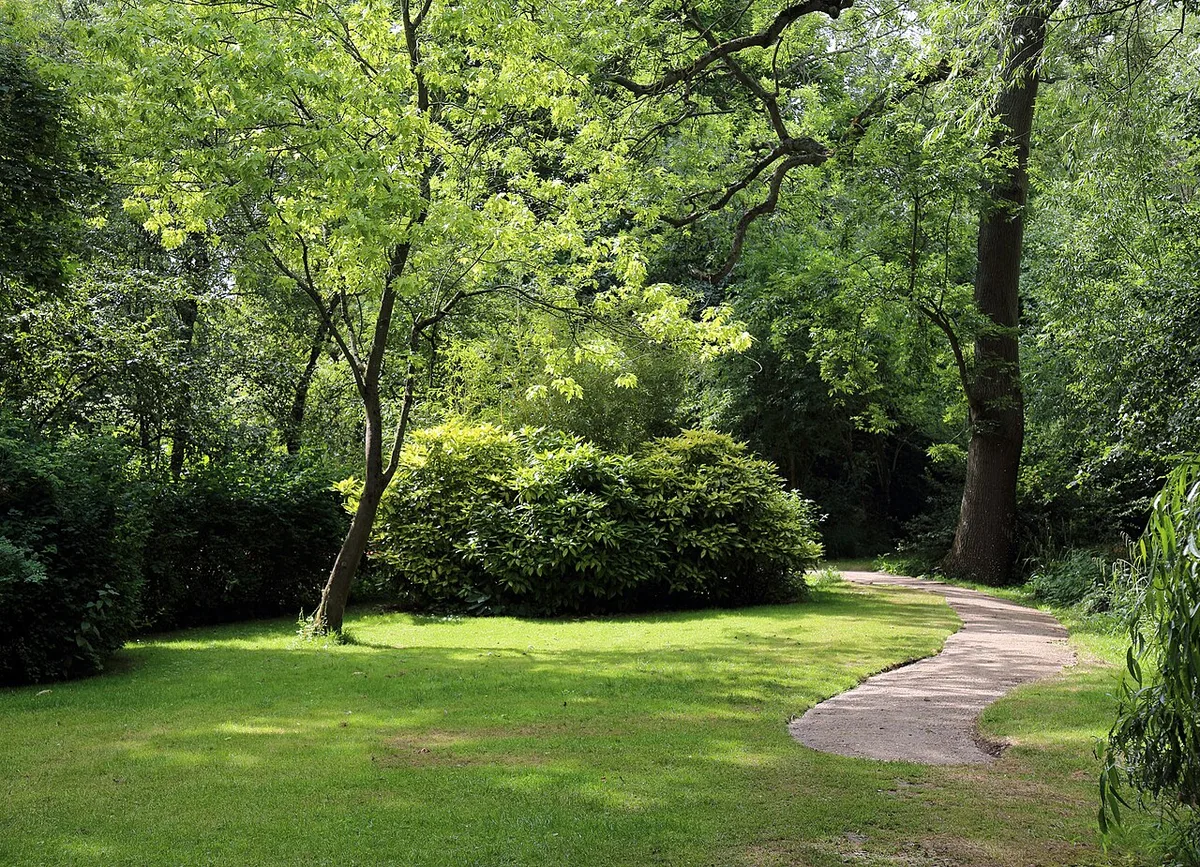
Mark the relevant edges on a sketch and distinguish grass beside a path from grass around planting or fixed objects. The garden photograph shows several surfaces meeting along a curved line. It illustrates the kind of boundary to inspect, but it is not a model for how every edge should look or a measurement of the work involved.
Describe the task before the tool
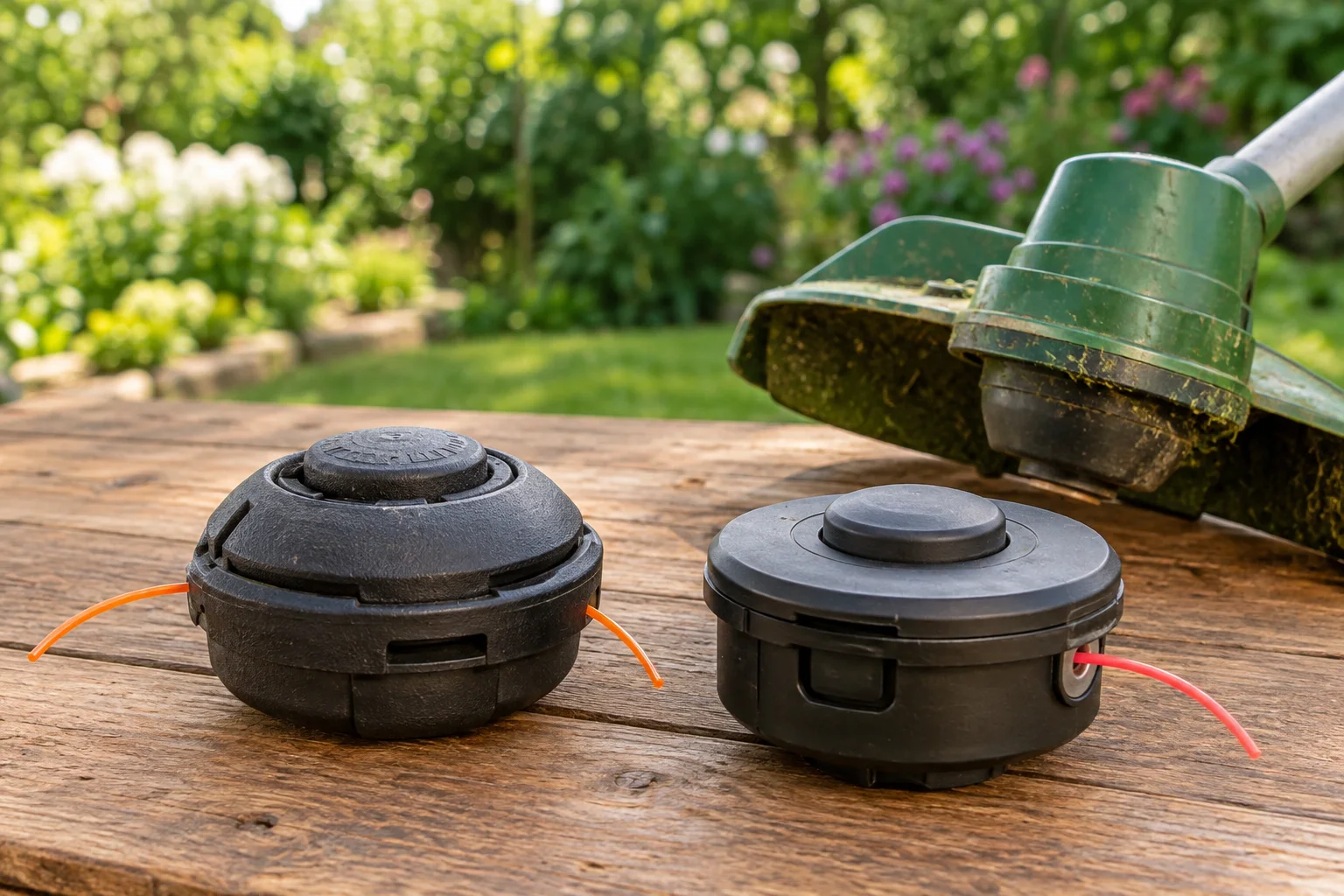
Write down what you want to change at each edge and the vegetation involved. A trimming task and reshaping an established boundary are not necessarily the same job. Check the intended use of the exact tool rather than assuming that a similar-looking cutting head is suitable for both.
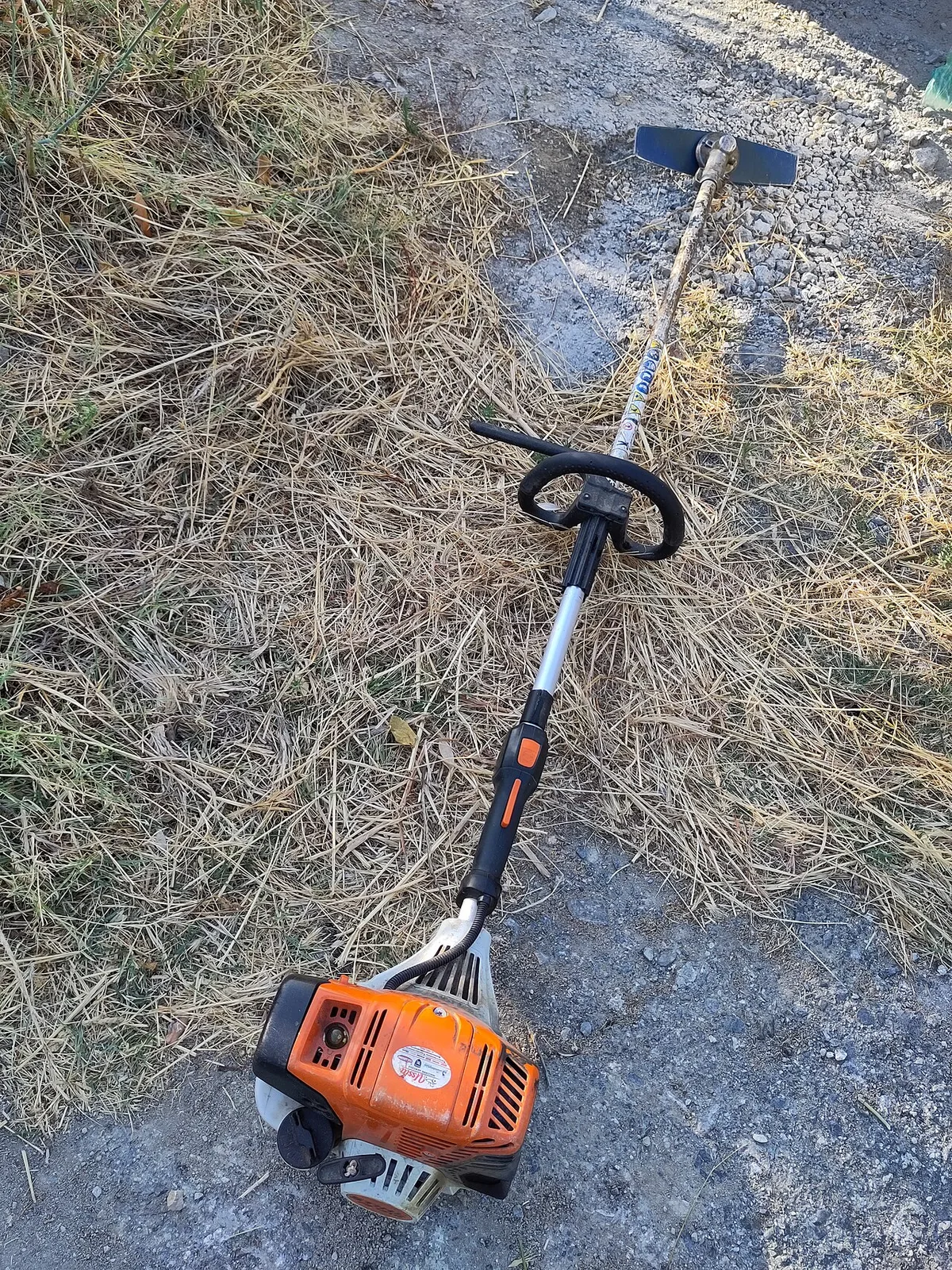
The historical brushcutter photograph shows a metal-blade arrangement, not a nylon-line trimmer or a recommended operating setup. It is included to make the distinction between tool forms explicit. Do not select an attachment by appearance, and do not treat a photograph as a substitute for the manufacturer's approved configuration and protective requirements.
Estimate the amount of edge work
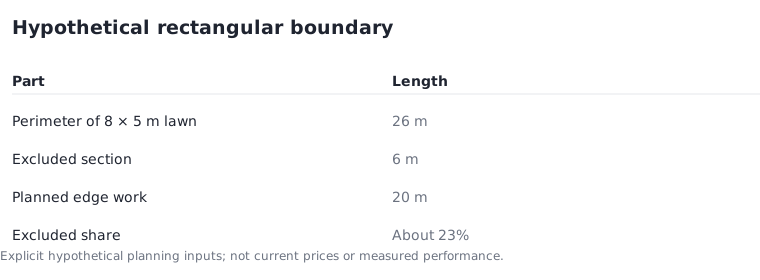
For a hypothetical rectangular lawn 8 metres long and 5 wide, the perimeter is 26 metres. If 6 metres of that boundary does not need separate attention, the planned edge length is 20 metres. About 23% of the original perimeter has been excluded. These are invented dimensions, not measurements of the photographed garden.
Keep curved edges and interrupted sections as separate estimates. A length total does not establish the time needed, because access and the work required may differ along the route. Use it to organise the task and ask better product questions rather than converting it into an unsupported performance promise.
Compare the complete addition
Assume a suitable manual tool costs £30 and care supplies £10, giving a £40 initial total. An alternative powered-tool plan might have an assumed £90 body, £50 required battery and £25 charger, totalling £165. These invented figures show how scope changes the budget; they are not current offers or a claim that either approach is better.
Only compare options that actually suit the task and the person using them. Include an existing compatible battery at zero cost only after checking it. Keep the practical handling, storage and manual requirements alongside the price so a cheaper total does not conceal a mismatch.

Plan the finish and the tidy-up
Include collecting loose material and returning tools to storage in the task plan. The RHS recommends cleaning hand tools after use and keeping them dry. Powered tools require their own exact cleaning and isolation instructions, so do not transfer a hand-tool method to a motorised cutting head.
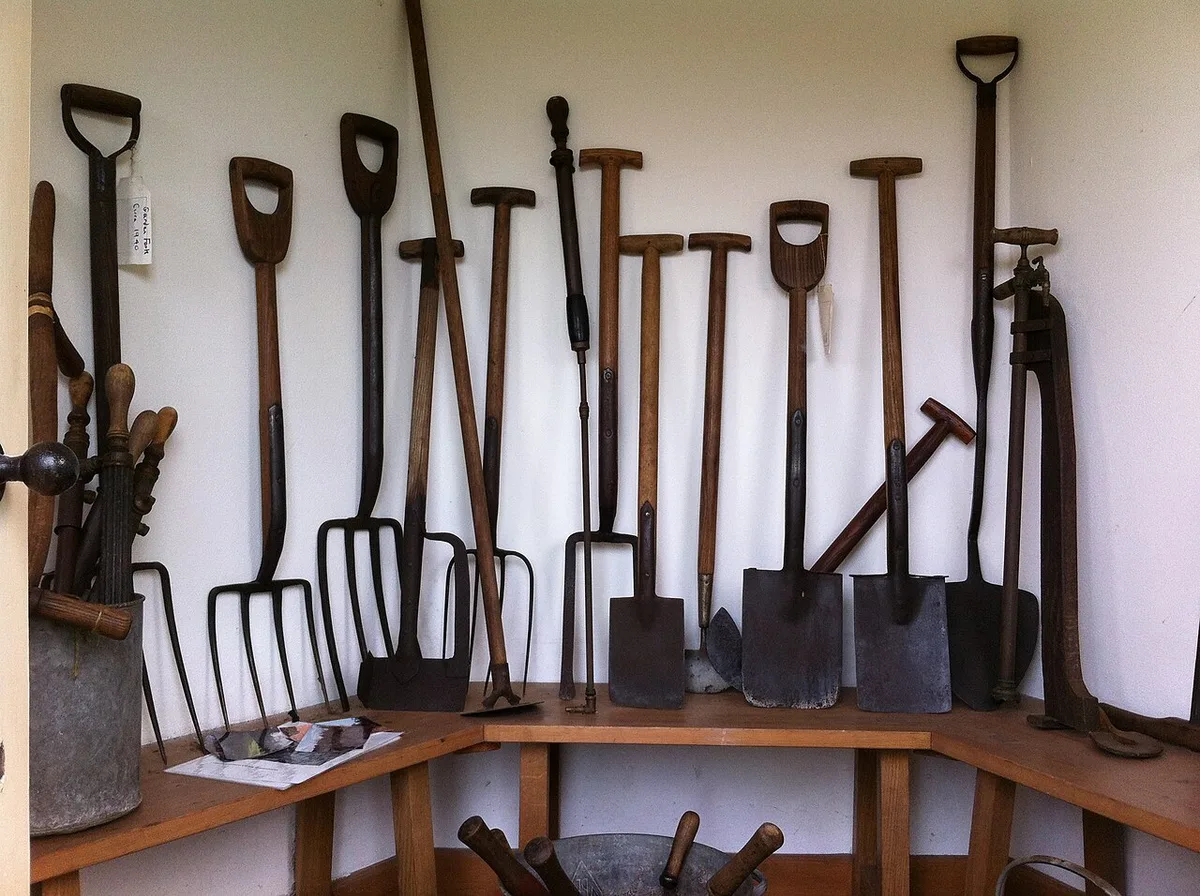
The historical hand-tool display shows several forms that need separate care and storage decisions. Keep a record of the edge lengths, selected tool and relevant instructions. The useful outcome is an approach for the actual unfinished areas, rather than another purchase justified only by the fact that the garden has a lawn.