Choose hedge tools around the growth and access
Consider the hedge type, reachable work and wildlife checks before comparing shears and powered tools.
Updated:
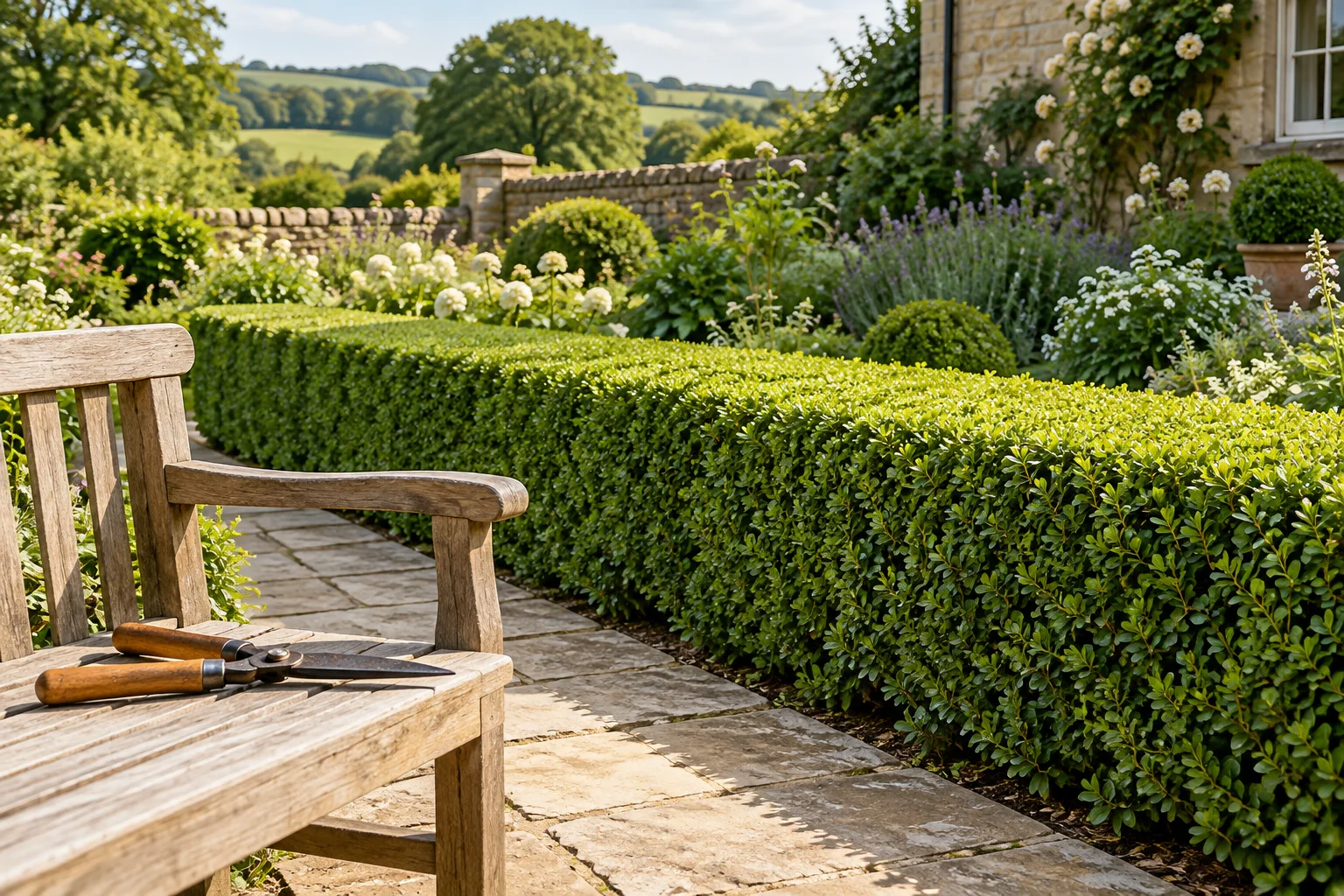
Identify the hedge and the intended change
Start by identifying the plant and deciding whether the task is a light trim or a more substantial change. The RHS distinguishes tool choices by hedge size and growth, including hand shears for small hedges and soft growth. Its guidance also treats large-leaved evergreen plants differently from a simple uniform clipping task.
Do not begin with the assumption that the longest powered blade is the best purchase. Describe the hedge, the reachable work and the finish you intend to achieve. If the task goes beyond your knowledge or safe access, seek suitable professional advice before selecting equipment or attempting a substantial reduction.
RHS: choosing tools and planning hedge trimming ?
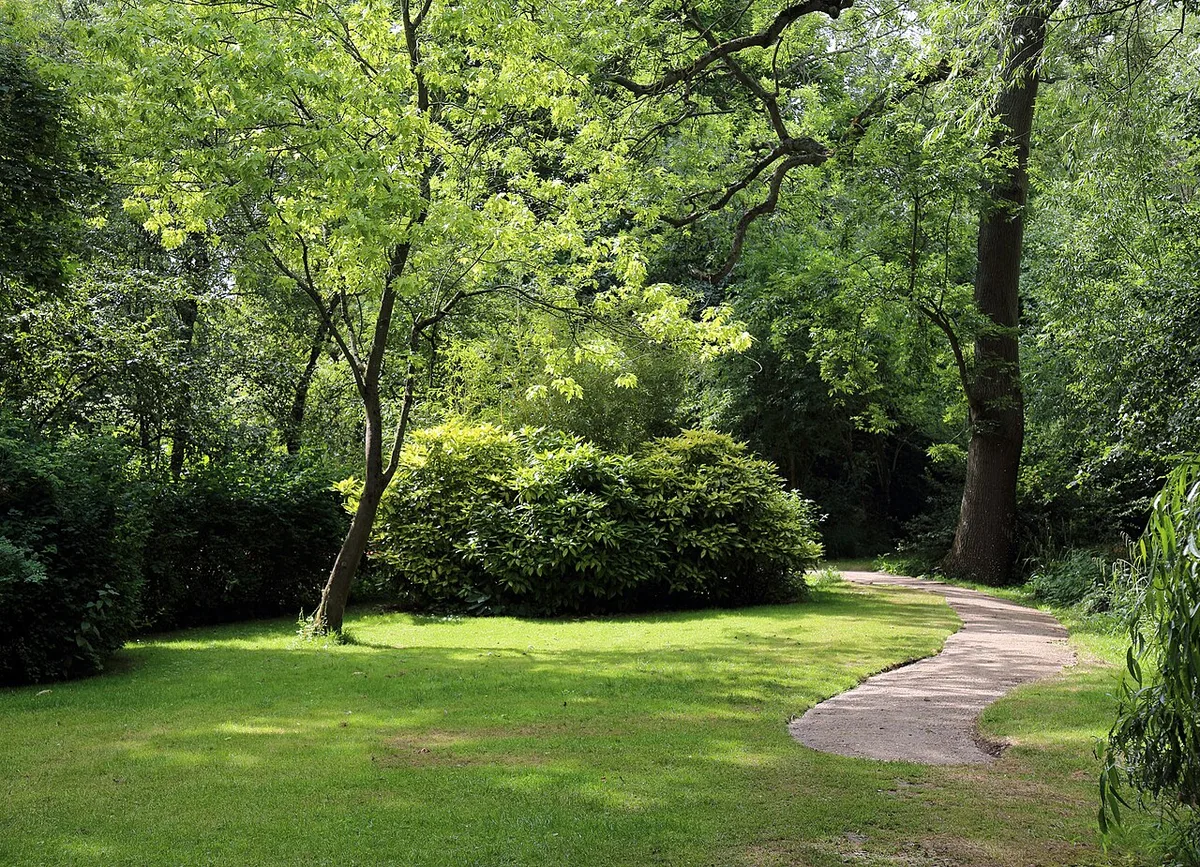
Check wildlife before scheduling the work
The RHS advises checking a hedge for active birds' nests before trimming and delaying work if one is found. Its guidance notes that nesting can extend beyond the usual main season. A calendar date alone therefore does not establish that a hedge is clear to work on.
Build that check into the plan rather than treating the purchase of a tool as permission to proceed. This article is a planning guide, not a full account of wildlife law or a species assessment. Use current official advice and appropriate specialist help where needed, and avoid disturbing a suspected active nest while trying to inspect it.
Map the accessible work
Sketch the hedge length, the sides that can be reached and any obstruction along the base. Keep height and width separate from the length total. A product's reach description does not certify that you can work safely from a particular position, and this guide does not recommend improvising ladders or platforms.
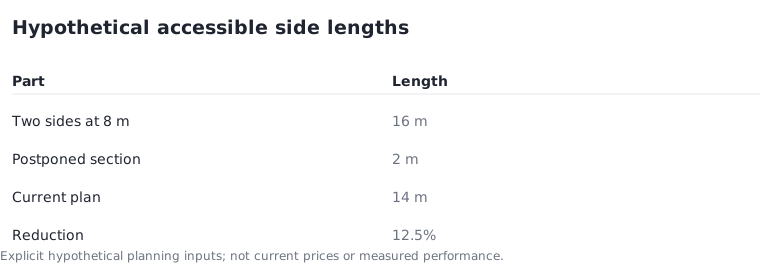
For a hypothetical low hedge with two accessible sides each 8 metres long, the side-length total is 16 metres. If one 2-metre section must be postponed, the current planned side-length becomes 14 metres, a 12.5% reduction. This is a simple work-record example, not a cutting-time estimate or a safety clearance.
Budget for the whole task
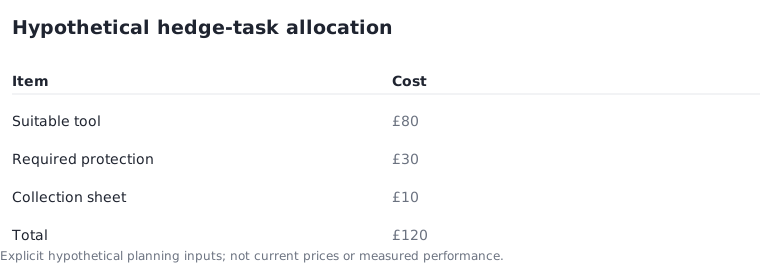
Assume a suitable tool costs £80, required protective equipment £30 and a collection sheet £10. The initial total is £120. These invented figures illustrate a complete allocation, not current prices or a statement that this equipment list satisfies every manual or task.
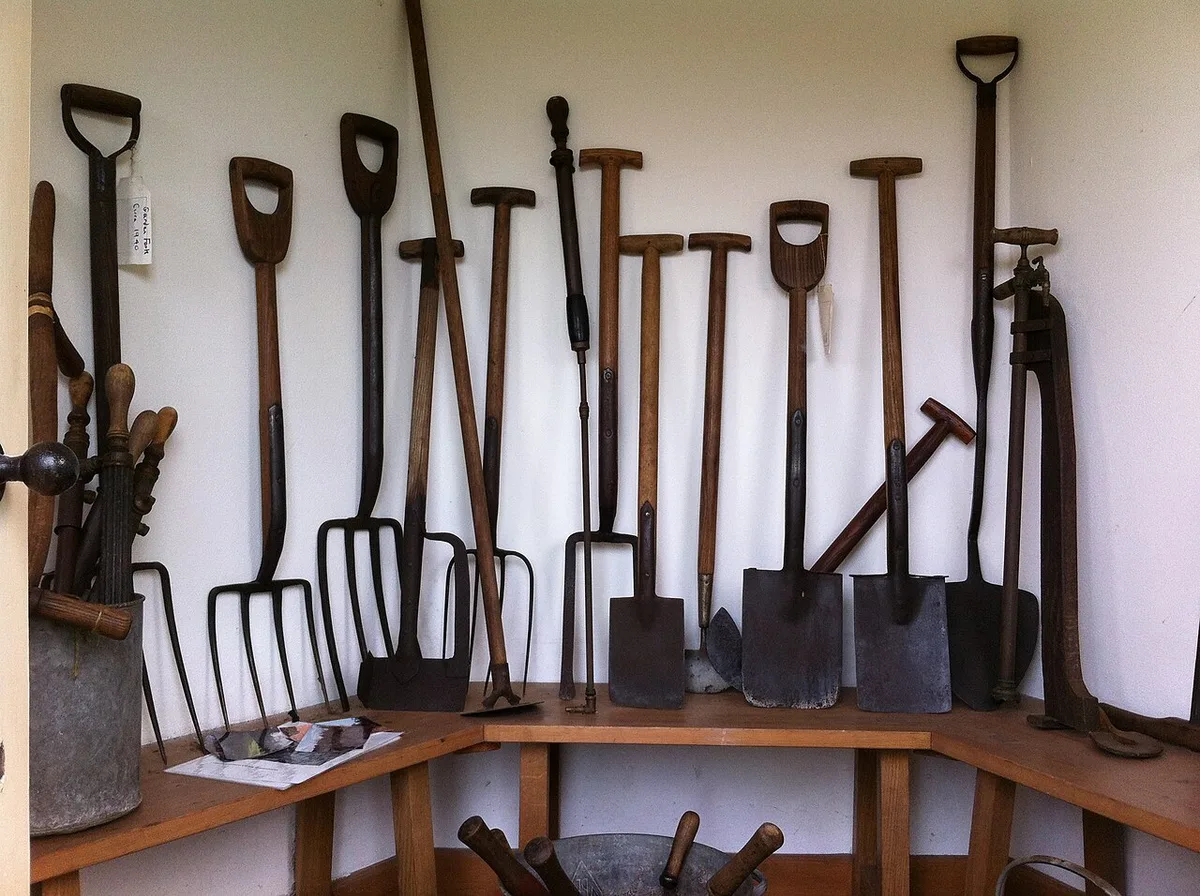
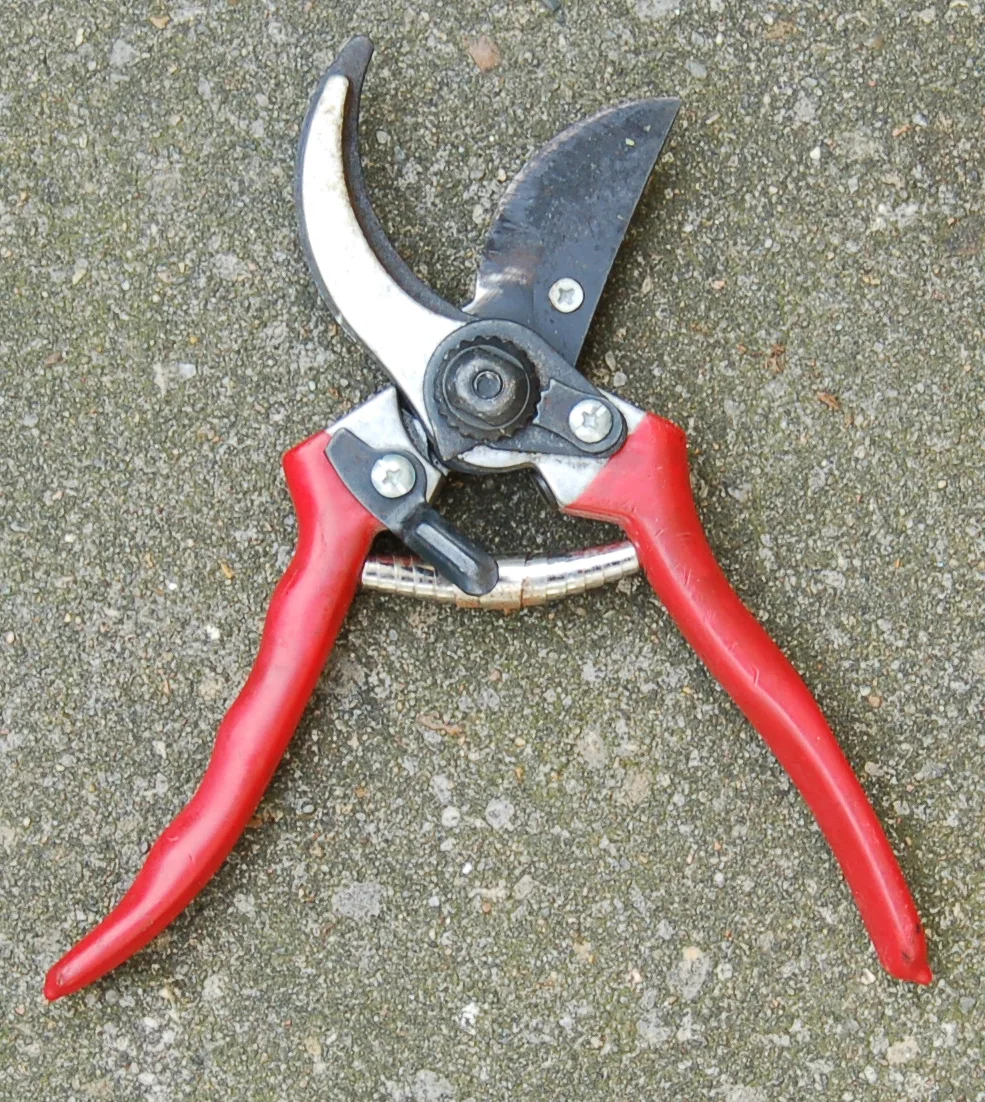
Check the exact tool instructions for required protection and approved use. Include any battery or charger that is genuinely needed, and keep optional accessories separate. The secateurs and historical hand-tool photographs show different forms that may arise in a garden inventory; they are not a tested recommendation for the hedge you own.
Plan collection and care as well
Decide how cut material will be collected and moved without obstructing the work area. Read the manufacturer's care and isolation instructions before cleaning a powered tool. The RHS recommends cleaning hand tools after use and dry storage, but that advice should not be turned into an improvised procedure for a motorised blade.
Save the hedge notes, tool model and current instructions together. Reassess the plant condition, access and wildlife before each planned task. A useful equipment choice supports an appropriate piece of work; it does not remove the need to decide whether that work should happen at all on a particular day.