Keep a useful care record for your secateurs
Separate routine cleaning, inspection and model-specific servicing in a simple record.
Updated:
Start with the exact tool
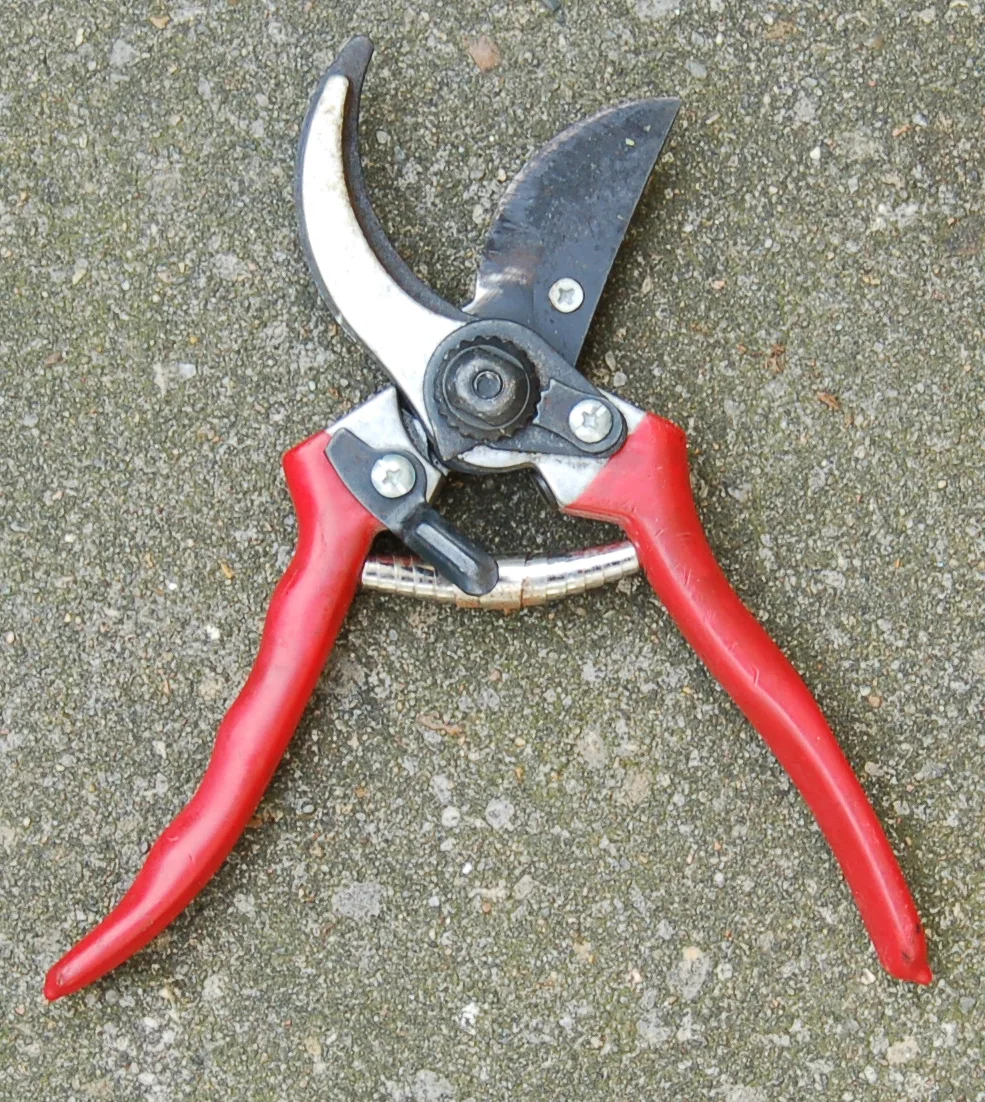
Record the maker, model and any replacement parts already fitted. The RHS sharpening guide notes that not all secateurs can be dismantled. A familiar-looking pivot therefore does not establish that your pair should be taken apart, or that another model's instructions apply.
Keep the original instructions or a verified manufacturer link with the record. If the model cannot be identified, mark that uncertainty rather than filling the gap from a similar product photograph. The open secateurs pictured here illustrate the blade and pivot arrangement of one historical tool; they are not an exploded diagram or a servicing procedure for yours.
Make cleaning a separate entry
The RHS recommends cleaning hand tools after use and keeping them dry. Record whether that routine task has been completed, following any more specific requirements for the tool and materials involved. Do not combine a cleaning tick with an assumption that the blades have also been inspected or sharpened.
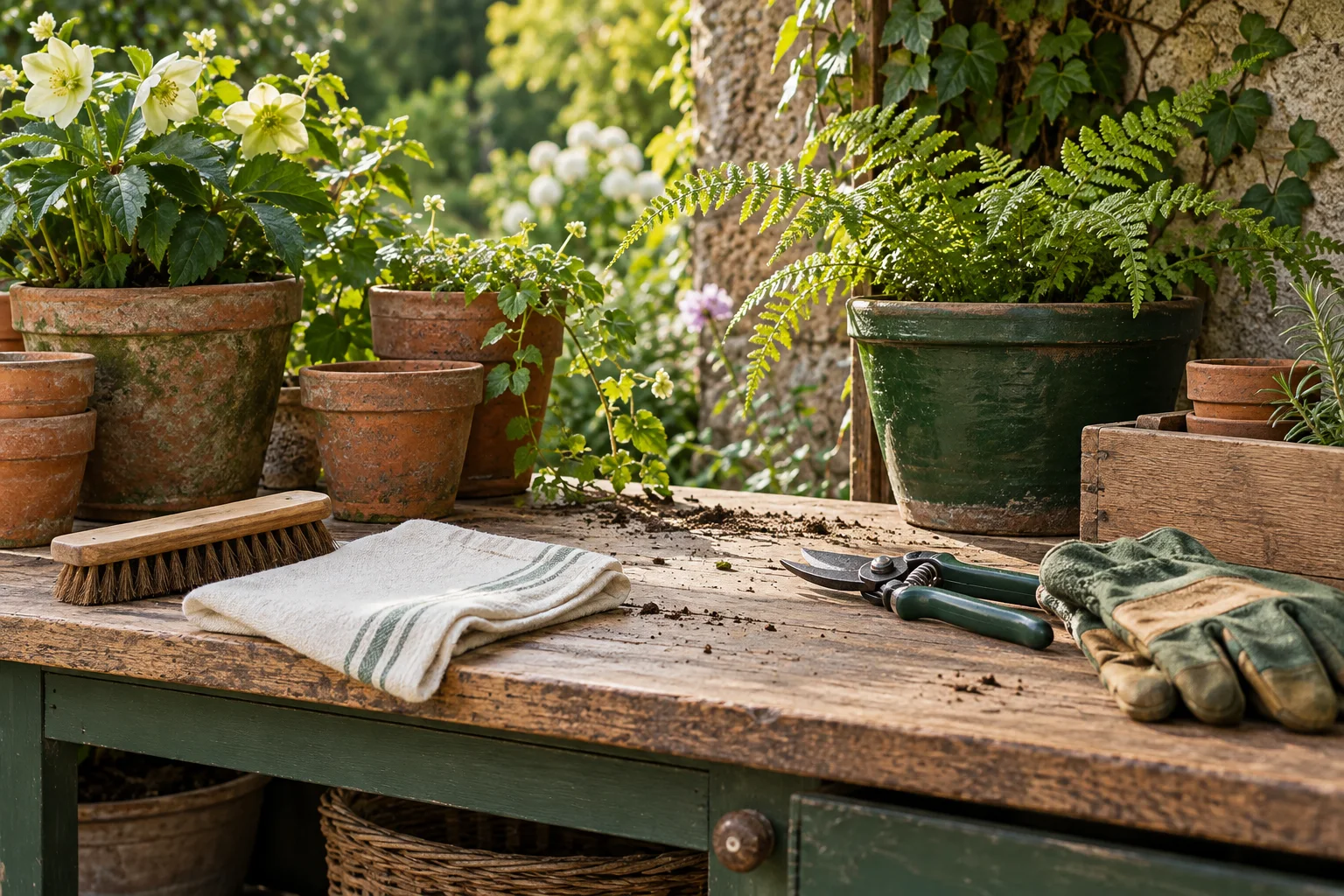
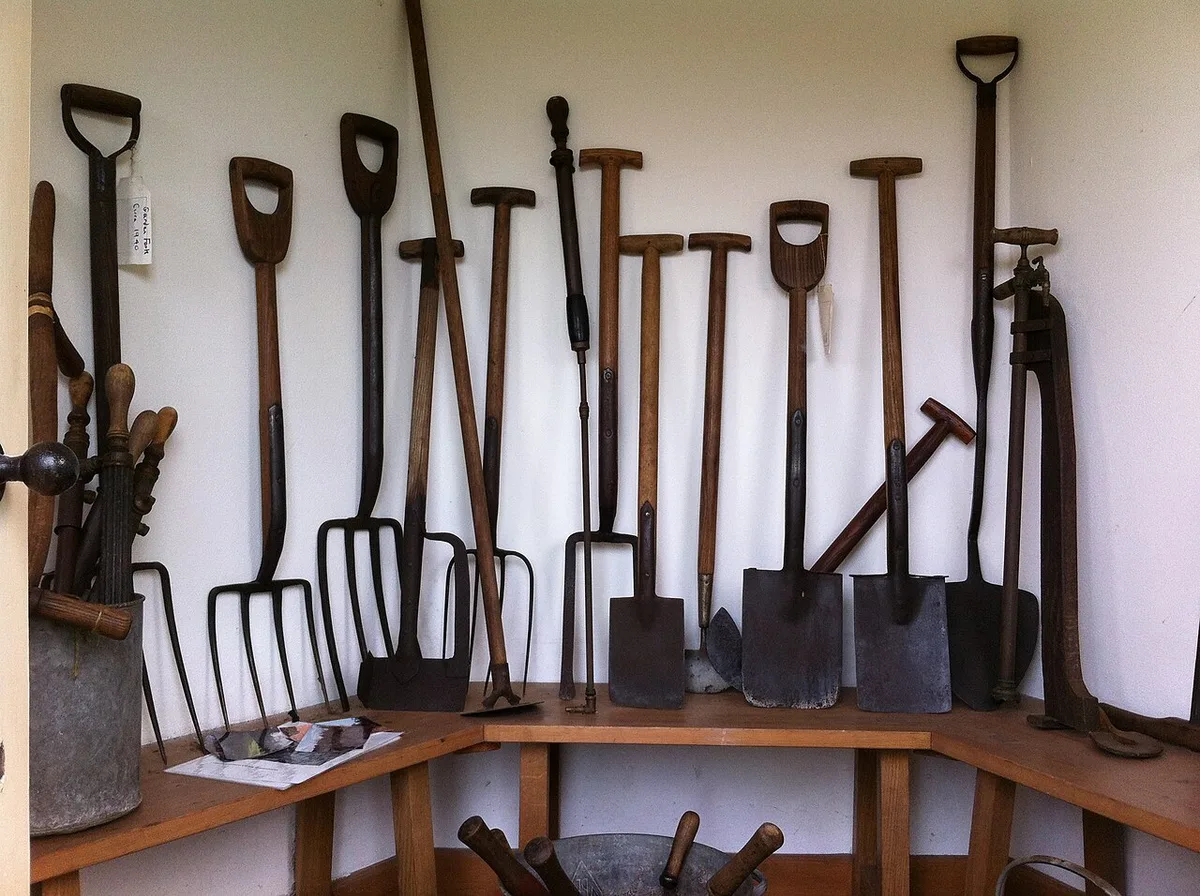
A small record can have separate columns for date, cleaning, visible concern and next action. This makes an unfinished task easier to recognise when the tool is next needed. The historical garden-tool display shows why a single vague note such as tools done may conceal several different items with different care requirements.
Describe observations without diagnosing them
Write down what you actually noticed: a loose-feeling component, damaged handle covering or a cutting result that needs investigation. Do not turn a symptom into a diagnosis simply because a common online repair looks plausible. Stop using a tool with an unresolved safety concern and consult the maker or a suitable service provider.
Keep sharpening and replacement decisions tied to the exact product guidance and your competence. This article provides a record structure rather than a universal blade angle, lubricant specification or dismantling sequence. A dated observation is more useful to a supplier than a confident but unsupported statement about which component must be replaced.
Allow time for the record itself
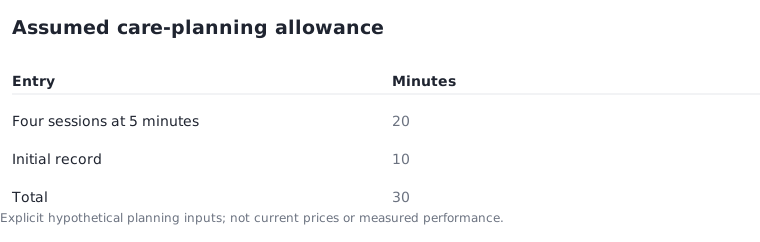
As an explicit planning example, assume four gardening sessions each need 5 minutes for an end-of-session tool-care allowance. Add 10 minutes once to identify the model and save its instructions. The planned total is 30 minutes. These are invented scheduling inputs, not a recommended cleaning duration or a measure of how long servicing takes.
If a separate specialist inspection becomes necessary, add its quoted time and cost independently. Do not absorb it into the routine allowance or assume it must fit the original total. The garden photograph provides context for repeated tasks over a season, but no timing has been measured at that location.

Use the record at the next decision
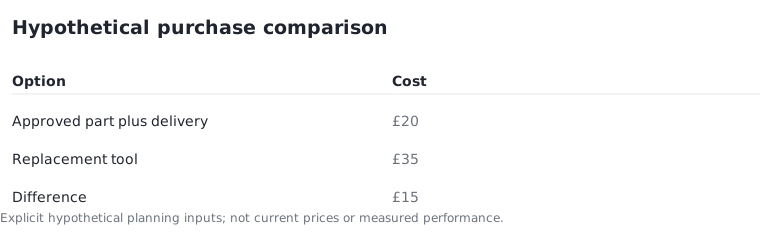
Before buying a replacement, compare the unresolved issue, the official availability of a suitable part and any service quotation with the intended use. For a hypothetical budget, a £12 approved part plus £8 delivery totals £20; a £35 replacement tool would be £15 more. Those are assumed prices, not offers or a recommendation to repair.
The cheaper route still needs to be appropriate and safe. Save the supplier's answer and update the model record if the tool is replaced. A short history helps avoid repeatedly buying incompatible parts, while leaving the technical decision with the relevant instructions and qualified help when needed.