Plan storage around the tools you actually own
Measure access, separate equipment requirements and leave room to retrieve tools without rearranging everything.
Updated:
Inventory before buying storage
List the equipment already in the garden and distinguish hand tools, powered equipment, batteries and consumables. The RHS advises keeping hand tools clean and dry. That is useful context for choosing a location, but it is not a complete storage specification for every material or powered product.
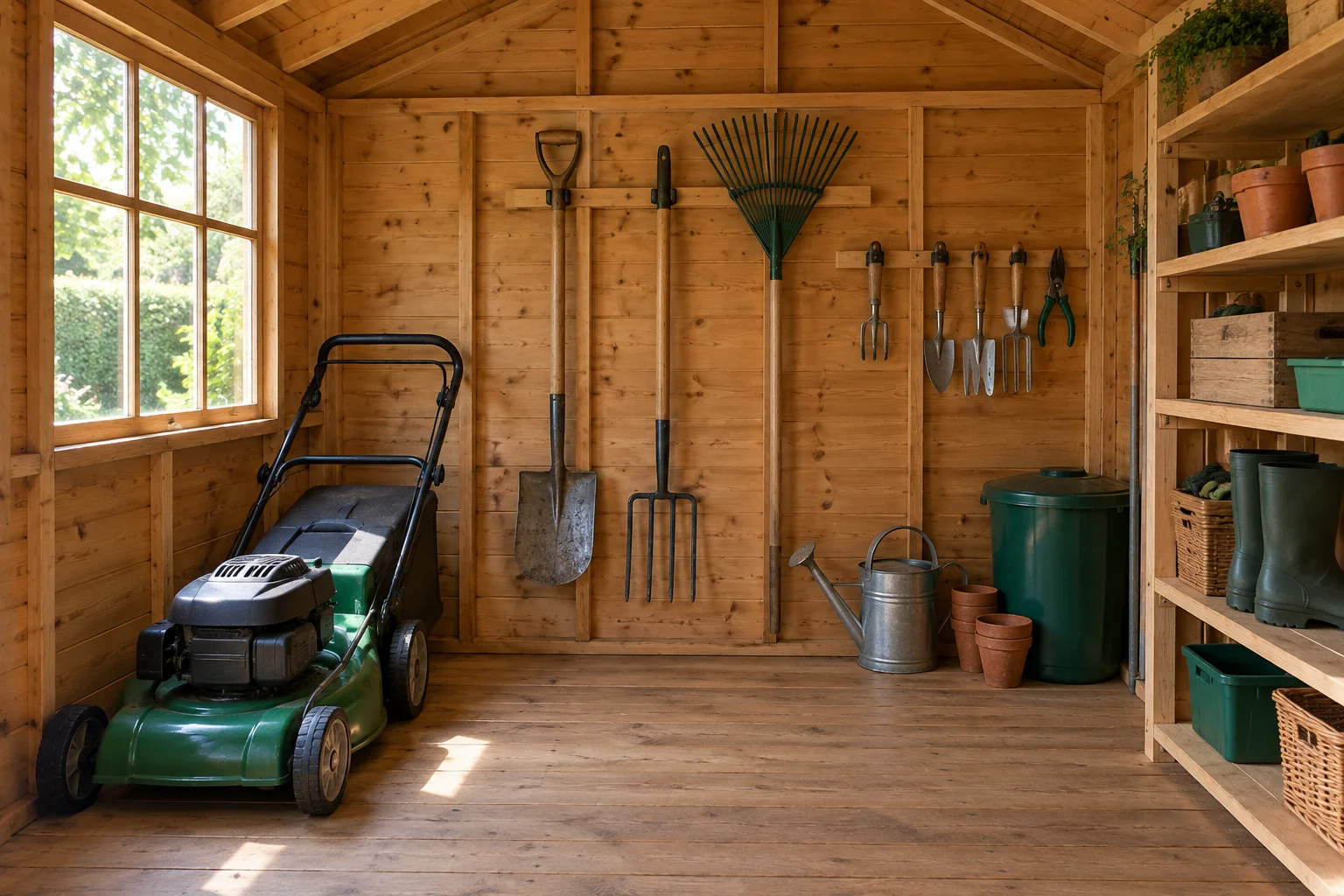
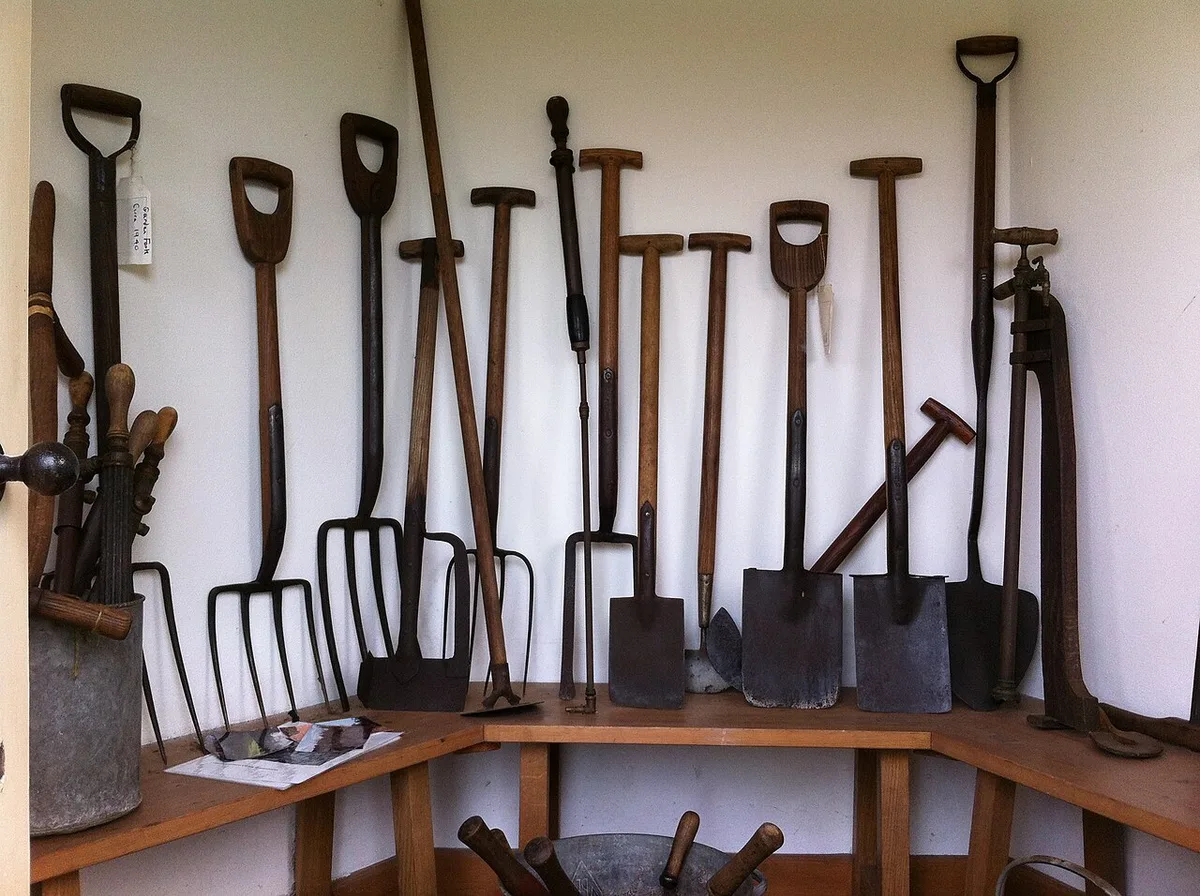
Start with the exact manufacturer instructions for each item. A mower, battery and hand fork may have different requirements, so a single attractive shed photograph cannot establish that one arrangement suits all three. The historical tool display included here shows several shapes to account for; it is a museum display, not a recommended modern storage installation.
Measure the route as well as the space
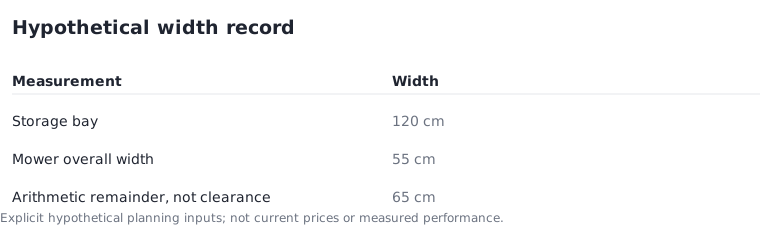
Measure the door opening, any change of direction and the intended resting space. Record the actual product dimensions in the manufacturer-approved storage configuration, rather than using cutting width as a substitute for the whole mower. A folding handle should only be treated as available where the exact model permits it.
For an assumed storage bay 120 centimetres wide and a mower 55 centimetres wide, the arithmetic remainder is 65 centimetres. That remainder is not an approved access clearance. It simply shows the space before accounting for other objects, the way the equipment is moved and any requirements in its instructions.
Keep powered equipment requirements explicit
Save the storage instructions for the mower, battery and charger separately. STIHL describes compatibility within named battery systems, but that does not make every component interchangeable or give every product identical storage conditions. Check the exact combination rather than copying a general rule from another tool.
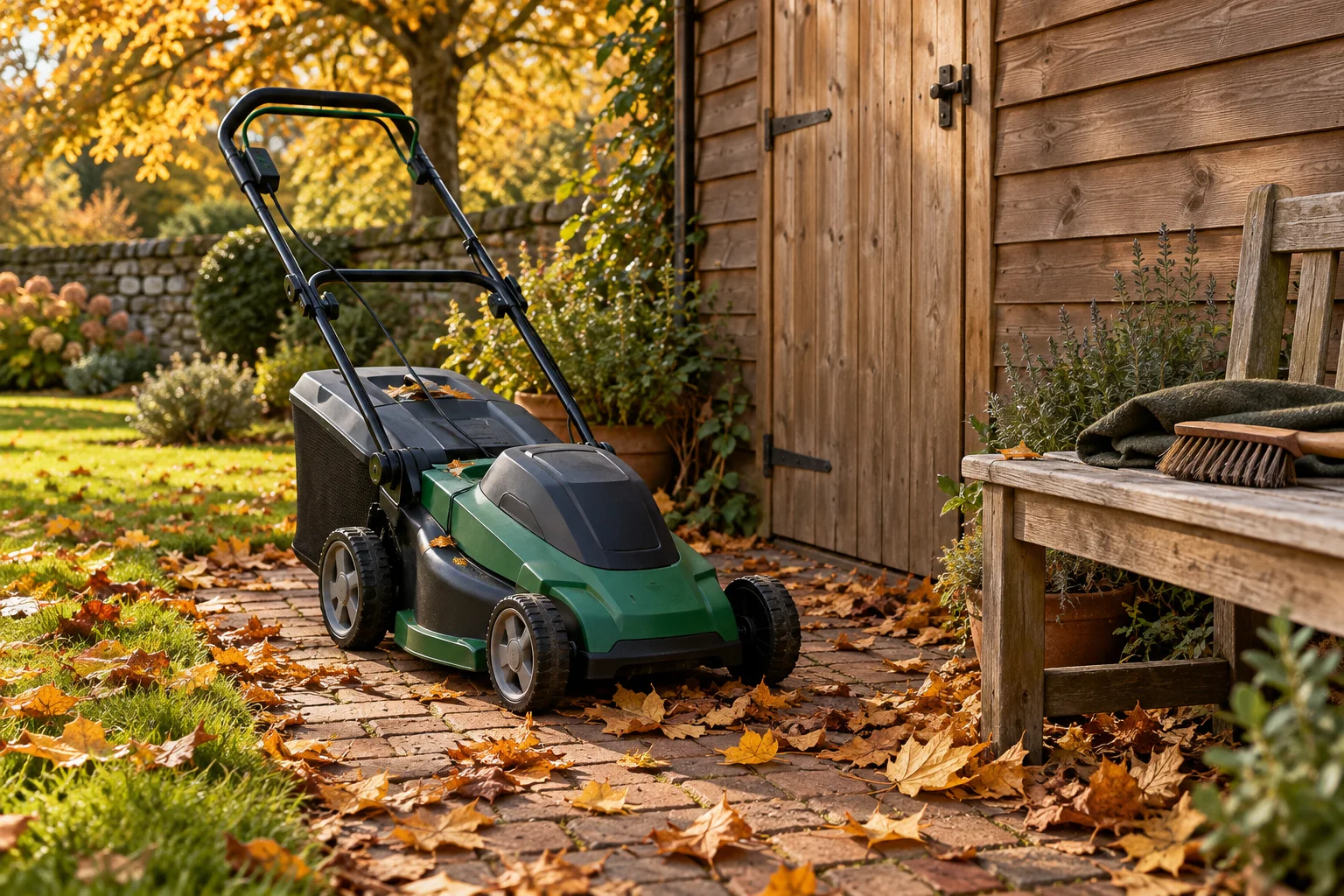
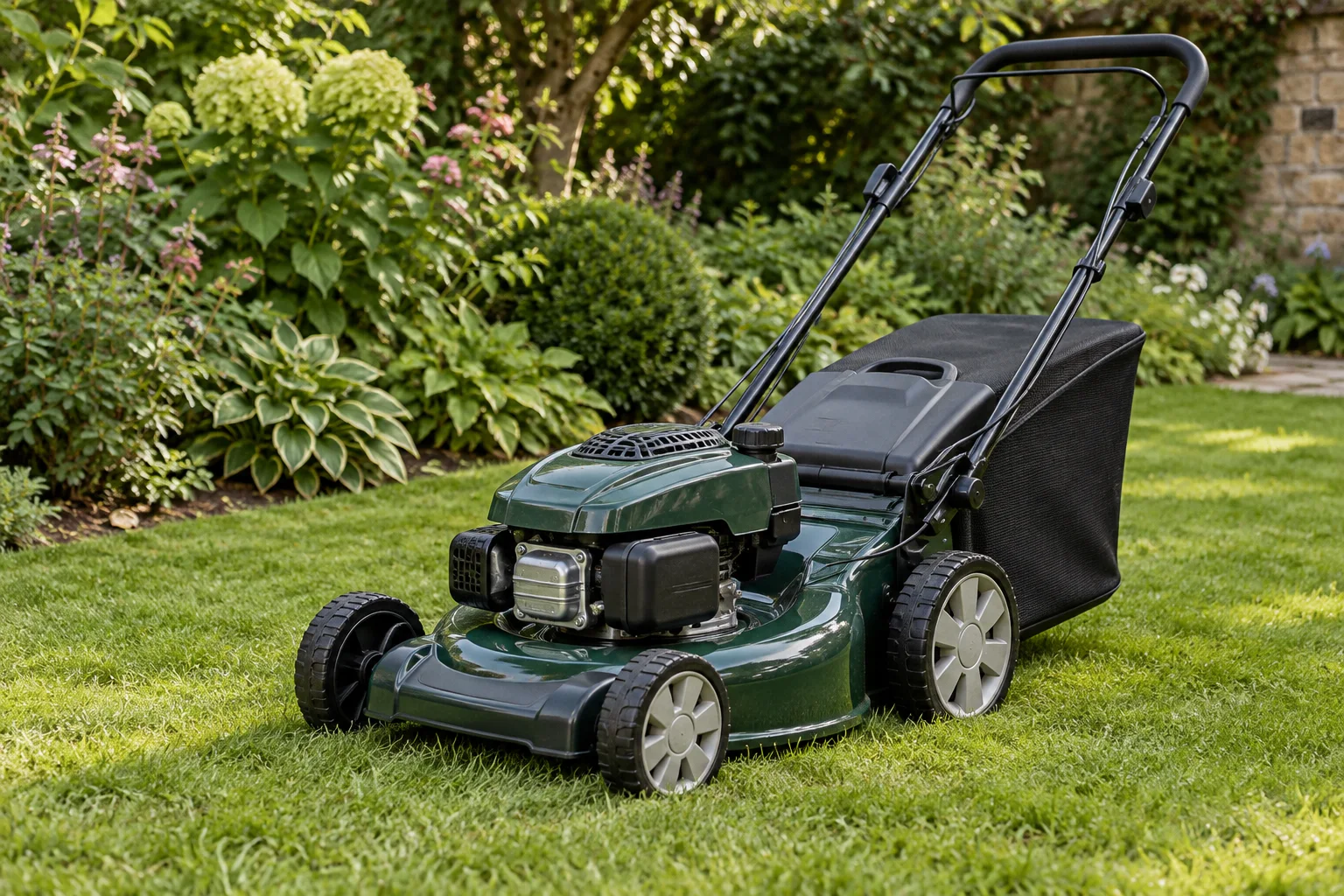
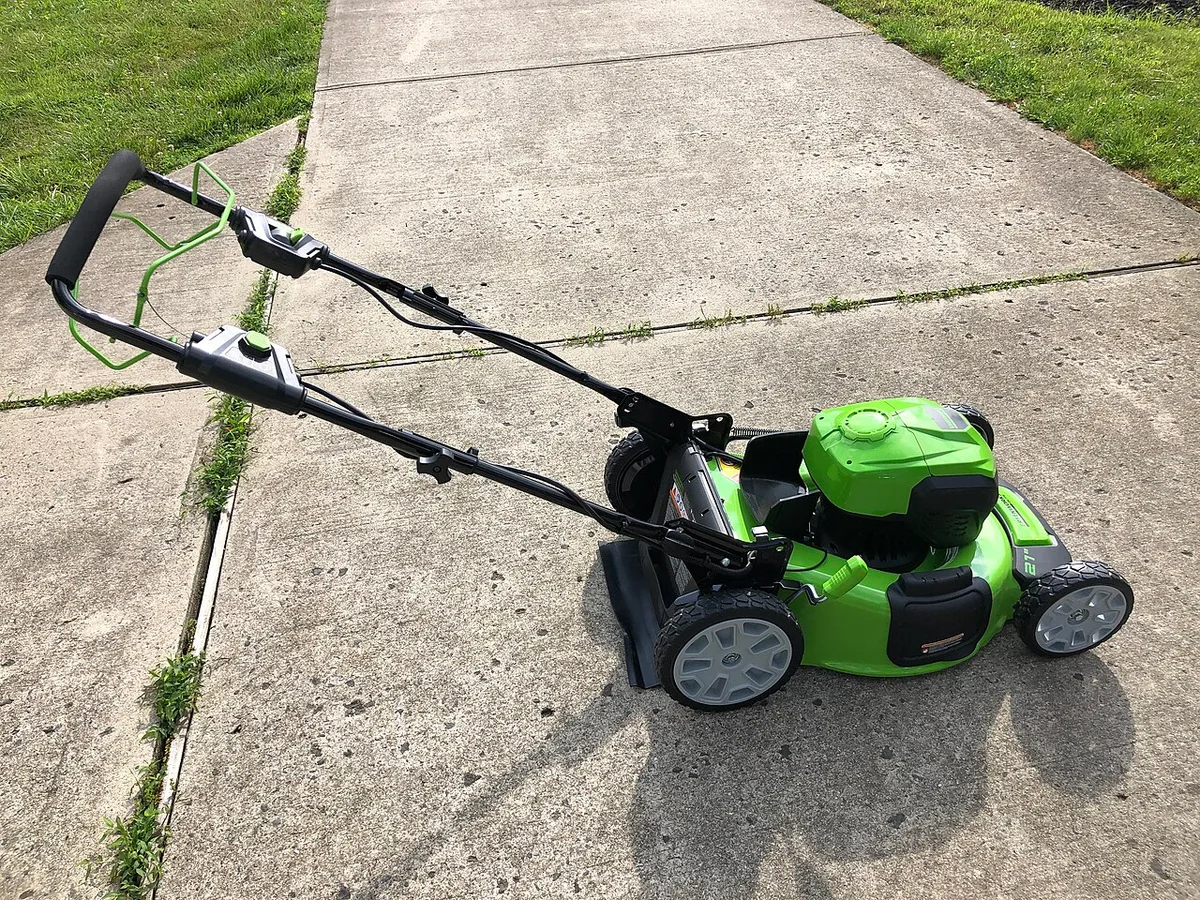
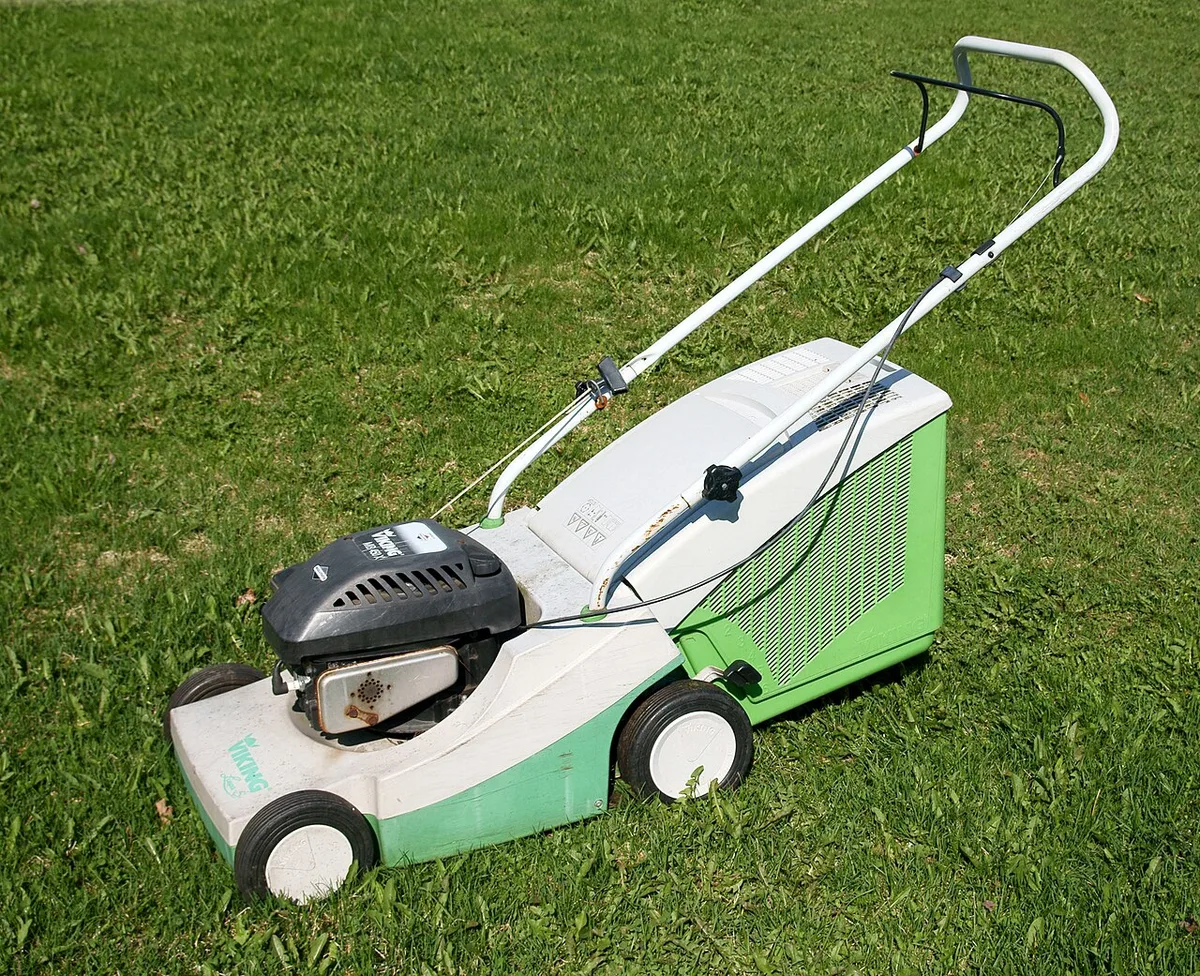
The cordless mower photograph and petrol mower photograph deliberately show different equipment types. Neither establishes what should remain connected, how fuel should be handled or where a battery should be kept. Use the relevant manual for those details and seek manufacturer advice when the instructions are missing or the intended location is unsuitable.
STIHL UK: battery systems and compatibility ?
Budget for a usable arrangement
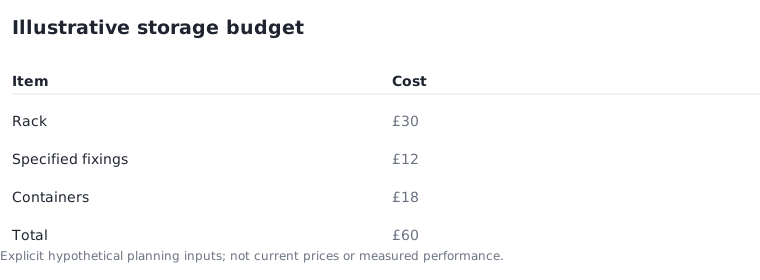
An illustrative hand-tool storage plan might allow £30 for a suitable rack, £12 for the specified fixings and £18 for labelled containers: £60 in total. These are assumed planning amounts, not current prices, and they do not certify that a particular wall can support a rack or that the containers suit chemicals or batteries.
Check the load rating, fixing method and substrate with appropriate product guidance. Keep potentially hazardous materials in their specified storage conditions rather than treating an ordinary box as a universal solution. A low purchase total has little value if the arrangement makes tools difficult to retrieve or introduces an avoidable risk.
Test the everyday retrieval sequence
Before committing to a layout, walk through how each frequently used item will be reached and returned. Avoid a plan that requires moving heavy equipment whenever a small hand tool is needed. Keep access routes and door movement visible on the sketch, and account for anyone else who uses the space.
Review the inventory when equipment changes. A new mower or battery system can alter the requirements even if the shed dimensions remain identical. The useful outcome is a measured, documented arrangement that follows the actual product instructions, with enough practical access to keep routine care from becoming an inconvenient afterthought.